Peru seizes more than 3,000 tarantulas hidden in dirty socks bound for Germany
Wildlife officers at a Lima airport found the spiders packed inside socks in three suitcases carried by two German citizens and a Polish citizen, authorities told AFP.
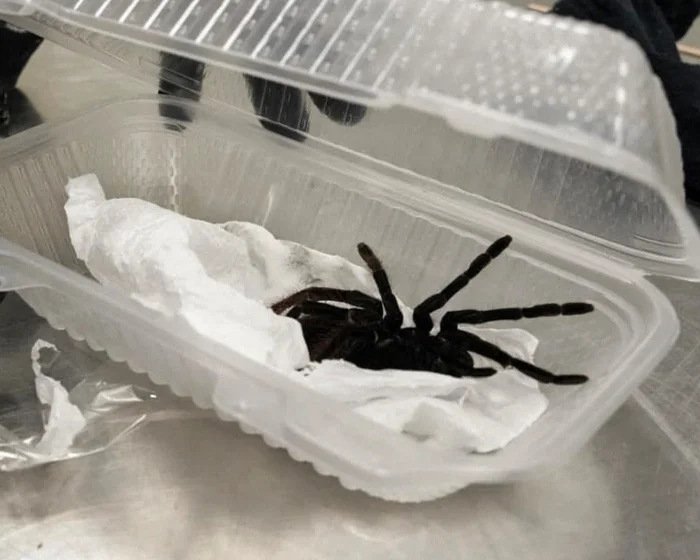
Peruvian authorities seized more than 3,000 tarantulas at an airport in Lima after the spiders were found packed inside dirty socks in luggage bound for Germany, the National Forestry and Wildlife Service said.
SERFOR told Agence France-Presse on Thursday that the animals were concealed in three suitcases. The bags were carried by two German citizens and one Polish citizen, the agency said. Officials estimated the spiders could fetch about €1.5 million in Germany.
The discovery adds a striking case to the trade in live exotic animals, in which small species are sometimes moved through ordinary passenger luggage rather than freight. Dirty clothing can mask both the sight and the smell of live cargo during routine checks, though authorities did not describe the screening method that led to this seizure.
Tarantulas are widely kept by hobbyists and sold through specialty dealers. Demand in parts of Europe has long supported a commercial market for captive-bred spiders as well as animals taken from the wild. SERFOR did not say which species were in the suitcases, whether the spiders were alive when found, or how they were being transported beyond the socks and luggage.
Peru is a major source country for wildlife that leaves the Andes and Amazon for overseas buyers. Its forestry and wildlife service is the civilian agency charged with regulating the use of wild flora and fauna and with intervening when animals are moved without authorization. In comments relayed by AFP, the service identified the travelers by nationality but did not name them.
Cross-border movement of tarantulas can fall under national wildlife rules and, for some species, under the Convention on International Trade in Endangered Species. The Lima case, as described so far, does not specify whether any of the seized spiders are listed under that treaty or whether export papers were presented. Those details would determine how prosecutors frame any charges.
Wildlife groups and enforcement agencies have warned for years that passenger routes remain a weak point in the live-animal trade. Insects, reptiles, and arachnids are compact, can survive for days with little care, and are easier to conceal than larger mammals. A haul of more than 3,000 spiders in three bags shows how much volume can move in ordinary checked luggage if it is not detected.
The estimated €1.5 million value underscores why smugglers accept the risk. Retail prices for uncommon tarantulas can run far above the cost of capture and a plane ticket, especially when buyers want species that are scarce in legal captive breeding. SERFOR’s figure is an estimate of what the animals could bring in Germany, not a record of completed sales.
Authorities have not publicly said whether the three travelers were detained, charged, or released, or what will happen to the spiders. Standard practice in such seizures is for wildlife officers to hold the animals while investigators establish origin, health, and legal status, but that process was not detailed in the account given to AFP.
What is clear from the official account is the scale and the method: thousands of tarantulas, three suitcases, dirty socks, and a route from Lima toward Germany. Further information on species, charges, and the fate of the animals would have to come from Peruvian authorities as the case proceeds.
Primary source: The Guardian World. Newzly rewrites and structures source reporting for clarity; verify critical details at the original.