world·Maharashtra·Gadchiroli District
PM Modi Marks Janjatiya Gaurav Diwas in Gadchiroli, Unveils ₹3,000 Crore Tribal Projects
Prime Minister Narendra Modi joined national Janjatiya Gaurav Diwas celebrations in Maharashtra's Gadchiroli district, launching tribal development projects valued at approximately ₹3,000 crore to enhance regional education, infrastructure, and welfare.
In this piece
Prime Minister Narendra Modi marked Janjatiya Gaurav Diwas by virtually addressing a national programme held in Gadchiroli, Maharashtra. Honoring tribal icon…
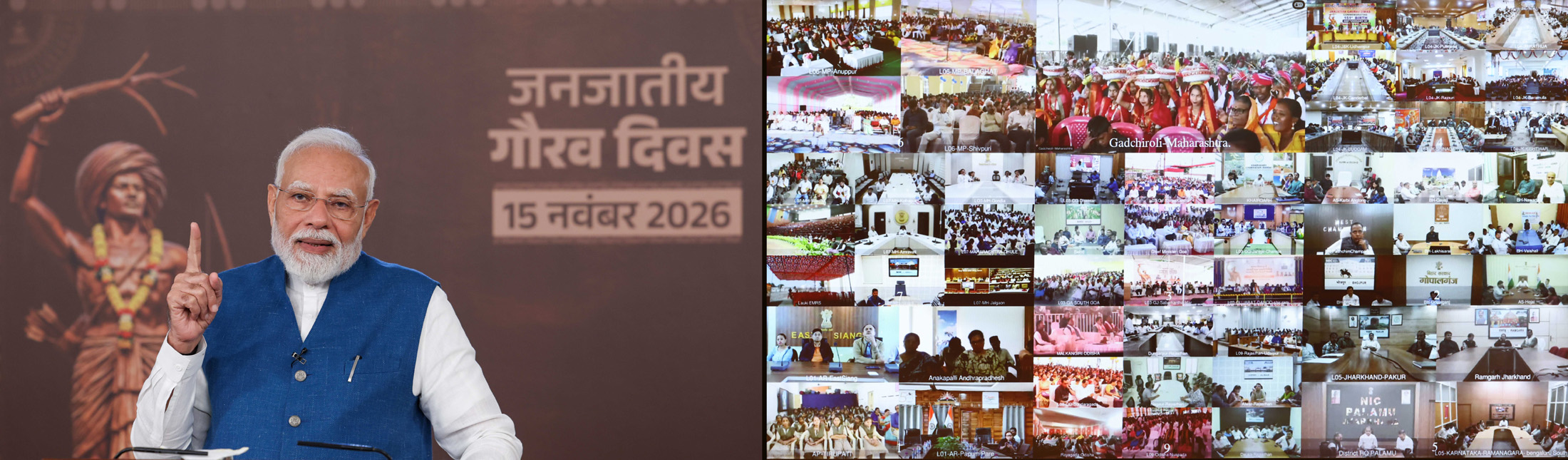
Prime Minister Narendra Modi participated in the national-level Janjatiya Gaurav Diwas celebrations hosted in Maharashtra's Gadchiroli district, marking the occasion via video conference. During the event, the Prime Minister inaugurated and laid the foundation stone for 246 development projects valued at approximately ₹3,000 crore aimed at uplifting tribal communities.
The annual observance commemorated the 151st birth anniversary of legendary tribal leader and freedom fighter Dharti Aaba Bhagwan Birsa Munda. The ceremony also marked the formal culmination of the nationwide Janjatiya Gaurav Pakhwada, a fortnight-long series of cultural and outreach initiatives. Modi greeted citizens across the country with the traditional tribal greeting "Johar," underscoring the enduring legacy of indigenous leaders in India's independence movement.
A significant portion of the newly announced initiatives focuses on expanding educational access in remote and tribal-dominated regions. Modi inaugurated 38 Eklavya Model Residential Schools and laid the foundation stones for 19 additional school campuses across the country. These institutions are designed to provide quality, modern education to tribal students while preserving their linguistic and cultural roots.
The package also featured the rollout of 100 Multi-Purpose Centres sanctioned under the Pradhan Mantri Janjati Adivasi Nyaya Maha Abhiyan, known as PM-JANMAN. These centres are structured to function as localized service hubs, facilitating essential citizen services, health support, and livelihood training. The scheme specifically targets Particularly Vulnerable Tribal Groups residing in historically underserved forest and rural tracts.
In addition to educational and basic infrastructure, the Prime Minister virtually opened institutions dedicated to indigenous heritage and history. The inaugurations included the Tribal Research Institute located in Itanagar, Arunachal Pradesh, and the Ropuiliani Tribal Freedom Fighter Museum in Aizawl, Mizoram. The projects aim to document and display the historical struggles and cultural traditions of tribal communities across the northeastern states.
Addressing the gathering, the Prime Minister noted that Janjatiya Gaurav Diwas has grown into a widespread national festival since its official establishment in 2021. He observed that the observance has helped instill collective pride in tribal identity and restored national recognition to indigenous freedom struggles. Modi emphasized that sustained administrative attention is reversing decades of neglect in tribal belts.
Modi highlighted broader national achievements, citing the upliftment of millions of citizens from extreme poverty over the past decade. He pointed specifically to regions like Gadchiroli, which previously struggled with the heavy burden of Left-Wing Extremism and administrative isolation. The Prime Minister noted that reducing Maoist violence has paved the way for peaceful governance, new roads, and economic investments in eastern Maharashtra.
The programme in Gadchiroli brought together senior political leaders and administrative officials on the ground. Maharashtra Chief Minister Devendra Fadnavis and Union Minister for Tribal Affairs Jual Oram addressed the gathering, reaffirming central and state coordination on tribal welfare schemes. Representatives emphasized that accelerated funding is reaching remote hamlets through direct infrastructure upgrades.
Looking ahead, authorities plan to expedite the construction and operationalization of the newly sanctioned residential schools and community centres. Government agencies will monitor the implementation of the PM-JANMAN framework to guarantee basic utilities and livelihood opportunities in tribal villages. The ongoing policy emphasis reflects an expanding institutional drive to integrate remote tribal regions into the national economic mainstream without compromising indigenous heritage.
Primary source: Google News Maharashtra. Newzly rewrites and structures source reporting for clarity; verify critical details at the original.