Polygon Highlights 6 Funniest 'The Far Side' Comics Starring the Devil
A new retrospective from Polygon highlights six of the funniest installments of Gary Larson’s 'The Far Side' starring the Devil, examining the cartoonist’s penchant for turning eternal damnation into everyday comedic absurdity.
In this piece
Polygon has spotlighted six standout panels from Gary Larson’s 'The Far Side' featuring the Devil and the underworld. The retrospective examines Larson’s…
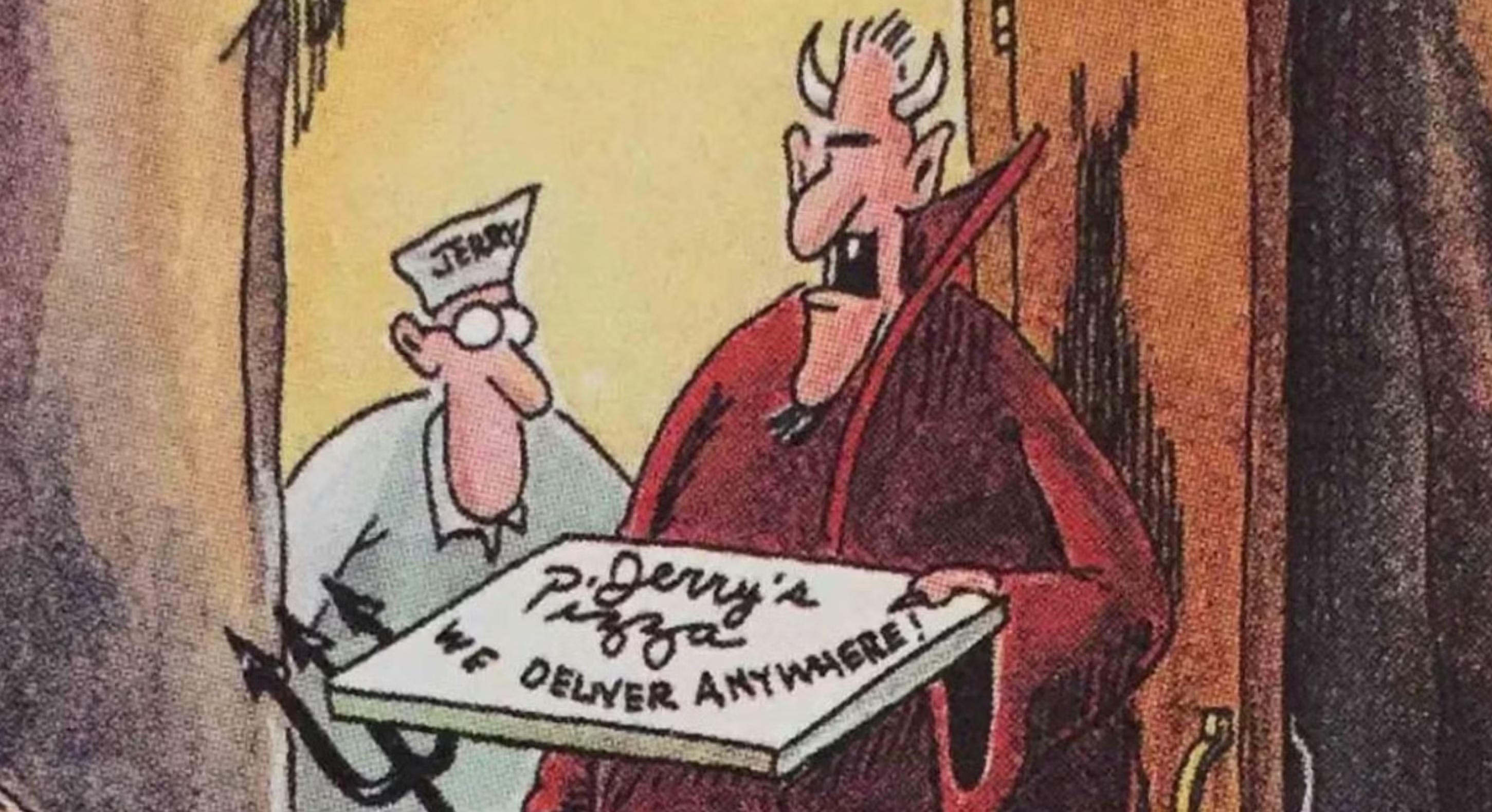
Polygon has published a retrospective highlighting six of the most memorable installments of Gary Larson’s "The Far Side" featuring the Devil, revisiting the cartoonist's recurring fascination with the underworld. The curation examines how Larson consistently mined comedic gold from eternal damnation across his iconic single-panel comic strip. By spotlighting these Hell-themed cartoons, the feature revisits a signature thematic obsession that defined much of the strip's classic run.
Created by Larson and nationally syndicated from 1980 through 1995, "The Far Side" established itself as one of the most influential comic properties in modern American print media. Rather than following recurring protagonists or ongoing narrative storylines, the strip relied entirely on standalone panels filled with talking cows, eccentric scientists, and bewildered suburbanites. Larson’s surreal perspective distinguished the feature from traditional family-friendly funnies, garnering a devoted readership worldwide.
Depictions of Hell and encounters with Satan emerged as one of Larson’s most frequent and recognizable motifs throughout the syndicated series. In Larson’s imagination, the afterlife was rarely an exercise in gothic terror or grave theological judgment. Instead, the cartoonist routinely transformed eternal punishment into an elaborate satire of mundane bureaucracy, awkward social situations, and mild domestic frustrations.
Polygon’s retrospective highlights how Larson inverted classical expectations of damnation by contrasting demonic figures with completely ordinary, petty tribulations. Whether depicting bored demons managing tedious paperwork or damned souls subjected to bizarrely specific acoustic torture, the panels derived their punchlines from absurdity rather than genuine malice. This juxtaposition allowed Larson to touch on dark themes while maintaining an accessible, deadpan tone that appealed to diverse newspaper audiences.
Humor historians and comic theorists frequently point to Larson’s underworld entries as textbook examples of single-panel comedic construction. Because the single-frame format requires setting up context, visual cues, and a punchline simultaneously, every visual element in Larson's artwork served a precise purpose. The understated captions worked in concert with the bizarre imagery, allowing readers to instantly grasp the comedic irony of life after death.
During its peak in the 1980s and 1990s, "The Far Side" helped redefine the boundaries of syndicated humor alongside contemporaries such as Bill Watterson's "Calvin and Hobbes." Larson proved that newspaper readers possessed an appetite for non sequiturs, dark humor, and existential irony on the funny pages. His distinctive vision inspired a generation of subsequent cartoonists, webcomic creators, and animators to experiment with surrealist storytelling.
Although Larson retired from daily syndication on January 1, 1995, the cultural presence of "The Far Side" has endured uninterrupted for decades. Millions of copies of retrospective anthologies, compilation books, and annual desk calendars have kept the strip active in mainstream consciousness. In late 2019, Larson established an official website and began periodically releasing new digital artwork, sparking renewed interest across multiple generations of readers.
Retrospective roundups such as Polygon’s demonstrate how Larson’s catalog retains its comedic sharpness decades after the final syndicated panel went to print. In an era dominated by rapidly moving internet trends and algorithmic meme formats, Larson’s tightly crafted, timeless gags continue to provide a blueprint for visual satire. The ongoing celebration of his underworld panels highlights how foundational his quirky sensibilities remain to modern comedic culture.
As pop culture outlets and digital platforms continue to revisit Larson’s extensive body of work, "The Far Side" stands as a testament to the enduring power of idiosyncratic cartooning. Larson’s ability to find human absurdity even in the deepest recesses of the inferno guarantees that his work will be analyzed and enjoyed for years to come. Fans and critics alike remain eager to see which corners of his surreal universe will be reevaluated next.
Primary source: Polygon. Newzly rewrites and structures source reporting for clarity; verify critical details at the original.