Pope Delivers Veiled Rebuke of Milei's Austerity Measures in Argentina
Arriving in Argentina on the second leg of his Latin American tour, Pope Leo offered a thinly veiled critique of President Javier Milei's aggressive austerity policies, cautioning against economic measures that overlook the poor.
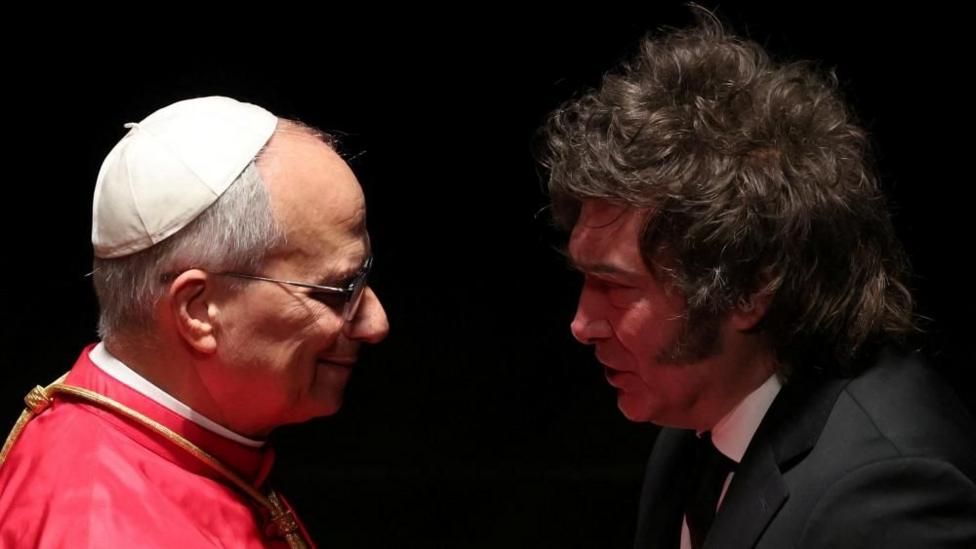
Pope Leo has delivered what observers characterized as a veiled critique of Argentine President Javier Milei's stringent austerity agenda upon arriving in the South American nation. The pontiff made the remarks on the second leg of his ongoing tour across Latin America, focusing early international attention on the sharp social costs of the country's economic restructuring.
The address, delivered before assembled dignitaries and religious leaders, touched directly on the ethical obligations of governance during periods of financial contraction. While the pontiff refrained from mentioning the president by name, his words pointedly questioned policies that prioritize macroeconomic targets at the expense of vulnerable populations.
Milei assumed office on an uncompromising platform of fiscal shock therapy, implementing sweeping budget reductions and eliminating state subsidies to rein in long-standing economic imbalances. His administration has argued that rapid spending cuts are essential to halt chronic fiscal deficits, even as the immediate measures have intensified economic pressure on working-class citizens.
The papal remarks brought into sharp relief the philosophical divide between libertarian economic policies and the Catholic Church's emphasis on social solidarity. Clergy and religious organizations in the region have grown increasingly vocal about worsening poverty levels, warning that severe retrenchment risks unravelling essential community safety nets.
The Argentine stop represents one of the most politically sensitive legs of the pontiff's regional itinerary, given the administration's controversial public posture and contentious history of ideological debates. Political observers noted that the pontiff's presence placed the government under a spotlight, testing its willingness to balance orthodox fiscal goals with pastoral appeals for compassion.
Throughout the country, civic organizations and labor unions have staged recurring demonstrations against the pace and severity of public sector cuts. For many citizens navigating rising costs of living, the pontiff's arrival offered an influential platform that echoed widespread public anxieties over falling living standards and eroded public services.
Economic commentators observe that while financial markets have responded positively to the government's fiscal discipline, sustained popular support remains precarious. The pontiff underscored that sustainable economic recovery cannot be judged strictly by ledger sheets, urging political leaders to ensure that vulnerable citizens are not left behind during times of structural reform.
Beyond Argentina, the papal tour is addressing broader continental themes of economic inequality, institutional governance, and youth migration. The pontiff has consistently framed economic development as a human enterprise, arguing that true national prosperity requires inclusive social pacts rather than exclusive reliance on market mechanisms.
The Argentine leg of the tour will proceed with scheduled liturgical services, pastoral visits, and high-level meetings between Vatican officials and state representatives. International observers and domestic political analysts will be watching closely to see whether the pontiff's veiled warnings prompt any softening in government rhetoric or foster renewed dialogue with affected social sectors.
Primary source: BBC World. Newzly rewrites and structures source reporting for clarity; verify critical details at the original.