Post Pilot Event, Total Chess Open to Player Feedback on Format and Rules
Organizers of the Total Chess tournament are refining its multi-discipline format following player feedback in Budapest, where tactical forfeits by Magnus Carlsen and others highlighted regulatory loopholes ahead of a planned global tour.
In this piece
Following a pilot event in Budapest, Total Chess organizers are adjusting the tournament's format, rules, and scoring system in response to player feedback. The…
Organizers of Total Chess have announced that they are actively reviewing the tournament's format, points system, and competitive rules following the conclusion of its pilot event in Budapest. Tournament creator and Norway Chess chief executive Kjell Madland confirmed that feedback from grandmasters and arbiters will guide significant revisions before the concept expands into an official World Championship tour.
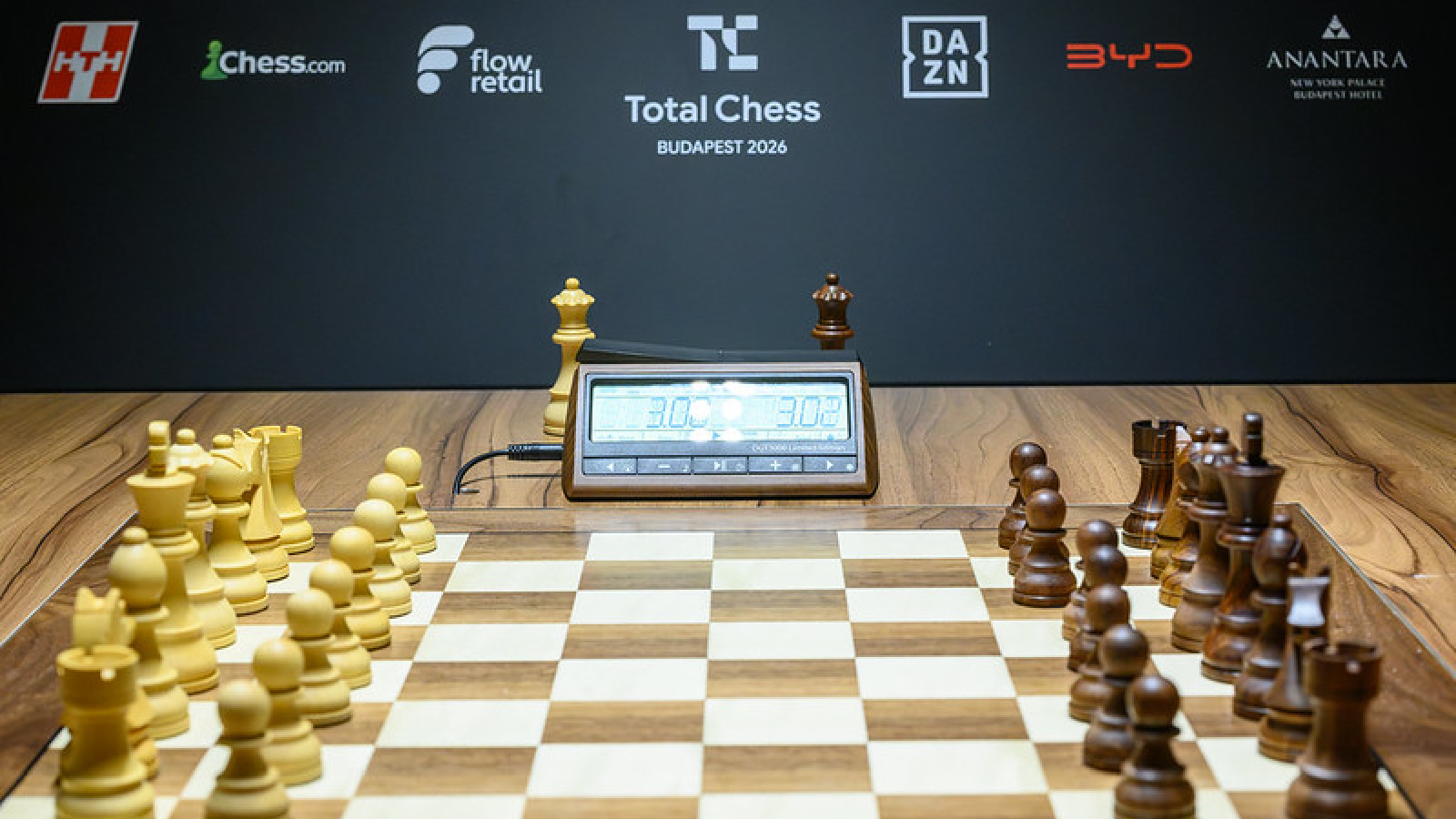
The inaugural test event, held at the Anantara New York Palace Hotel in Budapest, brought together elite grandmasters to trial a multi-format structure combining fast classical, rapid, and blitz time controls. Total Chess was conceived as a FIDE-approved framework to determine a combined world champion across all three speeds of the game.
However, the Budapest trial exposed tactical loopholes that dominated discussions throughout the week, most notably when players opted to forfeit scheduled games. Top competitors discovered that the cumulative scoring matrix allowed them to skip matches once advancement or match victory was already mathematically secured.
World number one Magnus Carlsen drew widespread attention after choosing not to contest fast classical games after building an insurmountable lead through earlier rapid and blitz contests. Other grandmasters, including Hungary's Richard Rapport and American prodigy Abhimanyu Mishra, similarly bypassed games when remaining fixtures had no bearing on match outcomes.
Madland acknowledged that tournament organizers had not anticipated players utilizing forfeits as a deliberate scheduling shortcut or strategic rest opportunity. Speaking to reporters, the organizer stressed that uncovering such structural flaws was the exact objective of staging a standalone pilot before committing to an international circuit.
Leading participants offered specific recommendations to improve competitive integrity and audience engagement. Carlsen suggested adopting a Champions League-style seeding system for draws, while Indian grandmaster R. Praggnanandhaa questioned the purpose of lower-bracket classification matches once players had already been eliminated from semifinal contention.
American grandmaster Wesley So proposed recalibrating the knockout scoring model, recommending that blitz victories carry two points to enhance their tactical weight. Other top contenders, including Fabiano Caruana and Ian Nepomniachtchi, provided candid assessments concerning match incentives and the optics of strategic withdrawals.
The emergence of strategic forfeiting highlights the complex challenge modern chess organizers face when blending multiple disciplines under a unified scoring framework. While fans and broadcasters expect uninterrupted play from marquee talent, professional players will inevitably optimize their energy and risk under whatever incentive structure is put before them.
Madland and his team are now evaluating detailed surveys from participants, match officials, and stakeholders before finalizing the regulatory framework for the multi-city tour planned for 2027. Officials maintain that while core tenets of the combined format will survive, stricter participation clauses and adjusted points weightings are expected to ensure every round remains competitive.
Primary source: The Indian Express. Newzly rewrites and structures source reporting for clarity; verify critical details at the original.