Puducherry’s historic Aayi Kulam reported on the path to revival
The Hindu reports that Aayi Kulam, a storied water body in Puducherry, is moving toward revival, renewing attention to one of the Union Territory’s oldest urban landmarks.
In this piece
The Hindu reports that historic Aayi Kulam in Puducherry is on its way to revival. The tank is tied in local memory to the Aayi legend and the French-era…
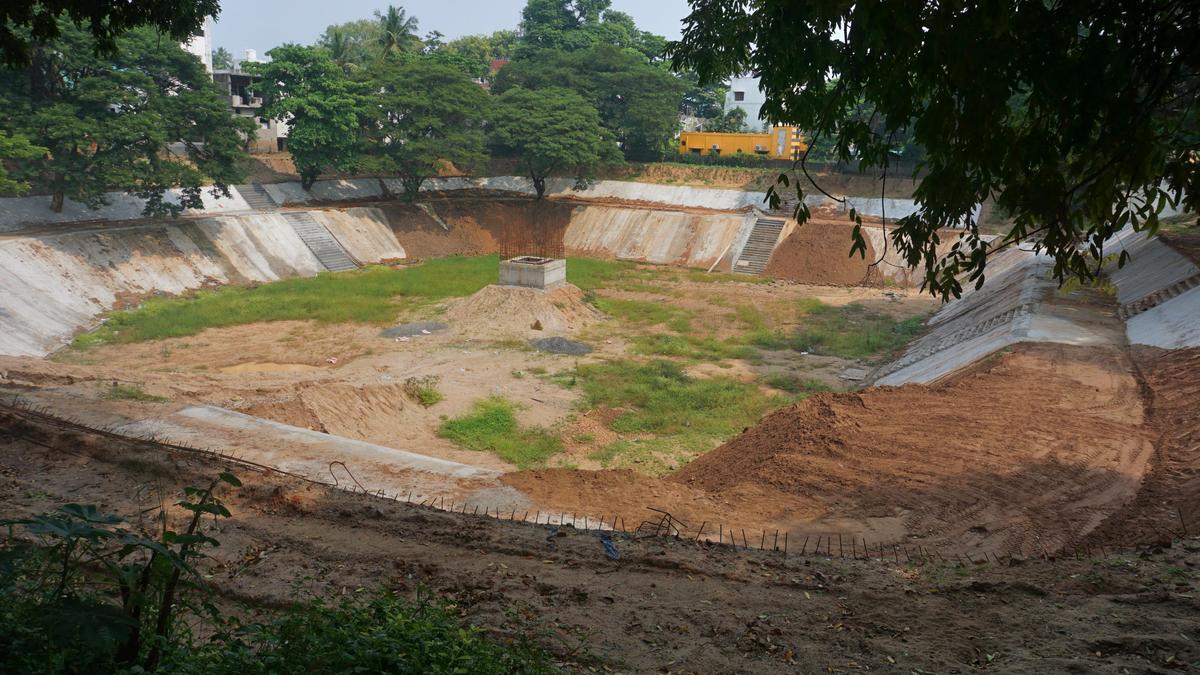
Aayi Kulam, a historic water body in Puducherry, is on its way to revival, The Hindu reported. The development places one of the Union Territory’s best-known heritage sites back in public view as authorities and residents weigh how an old tank can be restored in a dense coastal city.
The report, carried under the headline that the kulam is “on its way to revival,” does not, in the item available to this desk, set out a budget, a completion date, or named officials. What is clear from the published framing is that work or planning toward revival is underway, and that the tank is being treated as a historic asset rather than a forgotten pond.
Aayi Kulam sits in the story Puducherry tells about itself. Local accounts, long repeated in guidebooks and civic memory, link the tank to Aayi, a woman of the pre-colonial town whose name is also attached to the white monument that stands nearby in the old grid. Those tellings vary in detail, and this report does not adjudicate the legend. They do explain why the name still carries weight beyond a single water body.
The kulam belongs to a wider landscape of tanks, canals, and wells that once supplied settlements along the Coromandel coast. In Puducherry, French colonial planning later laid boulevards and public gardens over and around older water features. The survival of the Aayi name, on both a tank and a monument, is a reminder that the city’s famous street plan was built on an earlier Tamil landscape.
Revival of such a site matters because urban tanks do more than hold water. When they silt up or are walled off, neighborhoods lose a cooling surface, a piece of flood storage, and a public place. When they are cleaned and reopened, they can again serve daily life as well as tourism. The Hindu’s report signals that Aayi Kulam is being pulled back toward that public role, even if the precise design of the revival is not spelled out in the brief available here.
Puducherry has spent years promoting its heritage quarters to visitors who come for the seafront, the colonial streets, and the temples and churches of the old town. A restored kulam would sit inside that circuit. It would also speak to residents who use the same streets every day and who have watched historic water bodies shrink under roads, buildings, and neglect.
Heritage revival in Indian cities often stalls between announcement and maintenance. Cleaning a tank is one step. Keeping sewage out, settling who manages the banks, and deciding how much commercial activity the edge can bear are harder. Nothing in the short report confirms how those questions will be handled at Aayi Kulam. They are the practical tests any revival will have to pass.
The cultural stake is local and specific. Aayi’s name is not a generic label for a pond. It is part of how Puducherry explains a monument at the heart of its planned town and a water body older than that plan. Treating the kulam as historic, as the headline does, ties engineering work to that memory. Whether the finished site tells that story in signage, access, or simply in the presence of open water is still unknown.
Environmental context is similarly broad. Coastal Puducherry faces the same pressures as other low-lying towns: heavier bursts of rain, salt in the air, and limited space for water to spread. A functioning tank will not solve those problems by itself. It can, if revival includes the inlets and outlets the original system depended on, add a small piece of storage inside the city rather than only a viewing lawn.
For now, the public record in this wire is the direction of travel. The Hindu says Aayi Kulam is on its way to revival. Readers looking for the scope of work, the agencies involved, and any community consultation will need the fuller report or later official notices. Those details were not part of the item summarized here, and they should not be assumed.
What happens next is straightforward to watch. Further reporting should show whether revival means desilting, edge repairs, water-quality work, or a larger landscape project around the tank and the Aayi monument. Until those facts are published, the news is the commitment implied by the headline: a historic kulam in Puducherry is being brought back, and the city will have to show what that return looks like on the ground.
Primary source: Google News Puducherry. Newzly rewrites and structures source reporting for clarity; verify critical details at the original.