Race to Replant Five Ancient South African Baobabs After Blocked Export to Georgia
South African conservationists are working against the clock to replant five centuries-old baobab trees in a nature reserve after authorities intercepted an unauthorized attempt to export the 20-tonne giants to Georgia.
In this piece
Environmentalists in South Africa have begun replanting five ancient baobab trees that were intercepted during an illegal export attempt to Georgia. The massive…
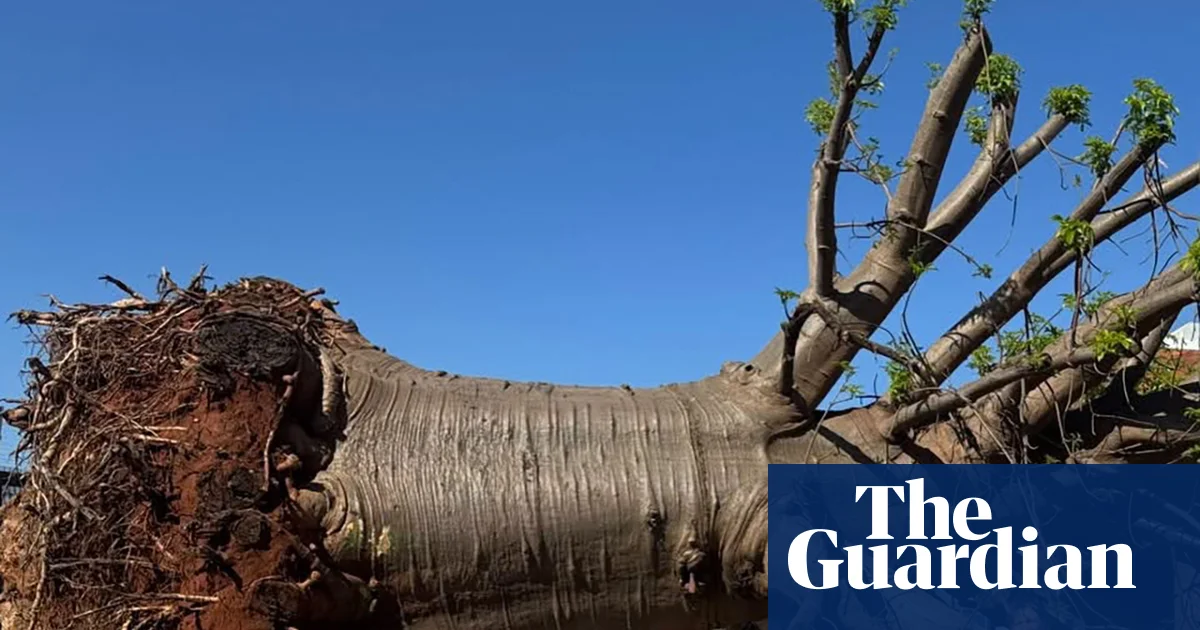
Conservationists in north-eastern South Africa have launched an urgent operation to replant five centuries-old baobab trees after thwarting an illegal attempt to export them overseas. The massive specimens, each weighing around 20 tonnes, were successfully delivered to the Timbavati Private Nature Reserve on Wednesday, where specialist teams immediately began site preparations to anchor them in the ground.
Botanists and wildlife specialists are securing the upright trees with heavy-duty cables and stabilization rigs to prevent them from toppling while roots take hold. Years of root development were sheared away during their excavation, leaving the ancient flora highly vulnerable to dehydration, shock, and structural failure.
The rescue concludes a four-month ordeal that began in July, when South African environmental authorities intercepted the trees at a storage warehouse in the coastal city of Durban. Officials from the Department of Forestry, Fisheries and the Environment discovered that an export venture had uprooted the baobabs without obtaining the mandatory permits required under the country's National Forests Act.
The trees had initially been extracted from the Lephalale area in northern Limpopo province before being hauled on flatbed trucks hundreds of kilometers south toward the port. Investigators identified Pretoria-based Divine Landscapes as the exporter attempting to ship the towering specimens across the ocean to an overseas buyer.
Shipping documentation and subsequent inquiries revealed that the shipment was bound for the country of Georgia in the Caucasus region. The intended destination was linked to a private coastal dendrological park owned by former Georgian prime minister Bidzina Ivanishvili, who has previously faced global scrutiny for importing mature, monumental trees from developing nations.
While the exporter appealed the seizure and legal challenges dragged on, the five baobabs remained stranded on their sides in a Durban holding facility for over three months. Conservationists raised alarms that prolonged exposure to maritime coastal air and inadequate soil moisture could prove fatal to trees accustomed to arid inland savannahs.
Baobab trees, often revered across Africa as the "Tree of Life," can live for well over a millennium and serve as vital keystones in savannah ecosystems. They store vast reservoirs of water within their swollen trunks, providing essential nourishment, shelter, and nesting cavities for birds, insects, and mammals during severe droughts.
The incident highlights growing international concerns regarding the commercial trade of ancient botanical heritage. Similar controversies surfaced in 2022 when mature baobab trees were extracted from coastal Kenya for overseas botanical collections, prompting regional governments to tighten transport inspections and enforce stricter conservation protections.
Once legal appeals by the exporter were formally dismissed, a coalition of environmental groups, forestry officials, and private benefactors organized the complex logistics required to move the giants roughly 900 kilometers back north. Transporting five 20-tonne trees required heavy cranes, reinforced trailers, and coordinated police escorts along South African highways to reach Timbavati safely.
Authorities confirmed that criminal investigations and legal actions against the parties responsible for the unauthorized uprooting remain ongoing in South African courts. For the conservation teams at Timbavati, attention remains squarely focused on intensive hydration, soil enrichment, and monitoring, hoping these ancient survivors will successfully re-establish themselves in protected ground.
Primary source: The Guardian World. Newzly rewrites and structures source reporting for clarity; verify critical details at the original.