world·Delhi·New Delhi District
Rahul Gandhi Targets PM Modi Over India Inc 'Hunger' Jibe at FICCI Gathering
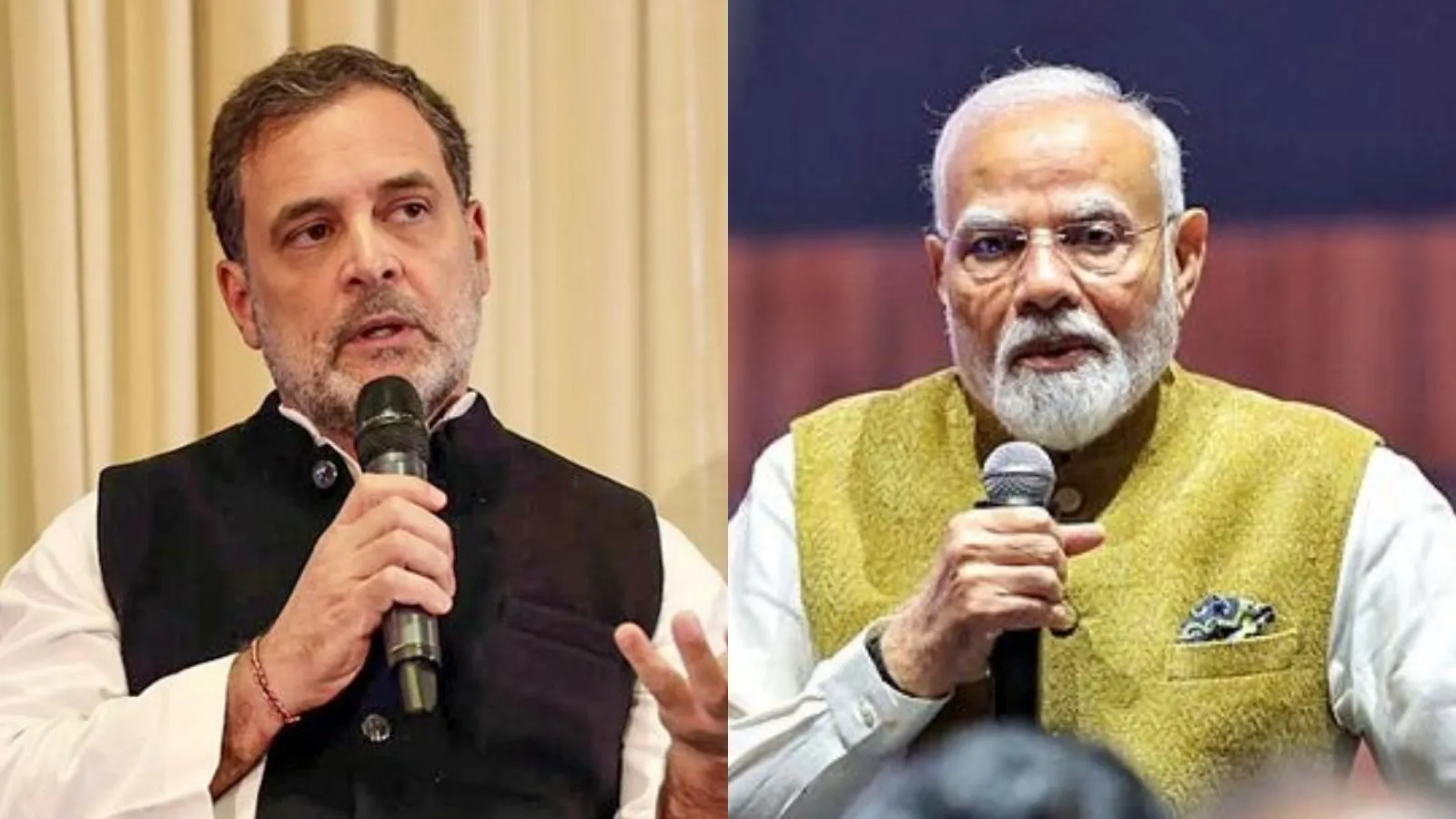
Congress leader Rahul Gandhi hit back at Prime Minister Narendra Modi's critique of corporate India, calling the premier's remarks on industry's hunger for concessions a confession of failed economic management.
In this piece
A war of words erupted after Prime Minister Narendra Modi criticized India Inc. at a FICCI convention for sluggish private investment and persistent demands for…
A sharp political clash erupted between the ruling administration and the opposition after Prime Minister Narendra Modi criticized India's corporate sector for a perceived lack of risk-taking and an insatiable appetite for state concessions. Congress leader Rahul Gandhi swiftly countered the remarks, characterizing the prime minister's critique as a public confession of his government's economic shortcomings and crony capitalist policies.
The confrontation began during Modi's address at the annual general meeting of the Federation of Indian Chambers of Commerce and Industry in New Delhi. In his remarks, the prime minister questioned why private sector capital investment, domestic job generation, and employee wage growth have remained subdued despite significant government measures, including corporate tax rate reductions and deregulation. Modi used the metaphor of an endless hunger, noting that despite substantial policy incentives, industry demands for relief appeared persistent.
Seizing upon the prime minister's phrasing, Gandhi dismissed the characterization and turned the criticism directly against the central leadership. The Leader of the Opposition argued on social media that the administration had concentrated national assets, such as airports, ports, mining operations, highways, and energy grids, in the hands of select conglomerates while failing to spur broad-based employment. Gandhi asserted that the true hunger lay within government-favored monopolies that absorbed national wealth without returning sufficient economic dividends.
Congress President Mallikarjun Kharge and senior party spokespersons amplified the critique, accusing the government of systematically dismantling India's small and medium business backbone. Kharge pointed to structural disruptions, including the 2016 demonetization and the current implementation of the Goods and Services Tax, as root causes of economic stagnation. The opposition maintained that these policies disproportionately harmed micro, small, and medium enterprises, which traditionally serve as the primary engine for domestic job creation.
The public exchange underscores persistent macroeconomic concerns over private capital expenditure in Asia's third-largest economy. While the Indian government has aggressively expanded public infrastructure spending to support gross domestic product growth, corporate private investment has remained uneven. Economists and corporate leaders have often pointed to cautious consumer demand, global macroeconomic headwinds, and uneven rural recovery as key factors holding back aggressive corporate expansion.
Over recent years, the central government has introduced several landmark measures aimed at stimulating corporate enterprise, most notably the 2019 corporate tax cut that slashed base rates to competitive global levels. In addition, production-linked incentive schemes across multiple manufacturing sectors were designed to foster domestic capabilities and boost exports. Modi's frank remarks at the industry gathering highlighted mounting frustration within official circles that these fiscal measures have not translated into a commensurate surge in private sector hiring and industrial capacity expansion.
The confrontation also highlights a deepening political debate over industrial policy ahead of key electoral and legislative milestones. The opposition has increasingly centered its economic narrative on corporate monopolization and rising inequality, arguing that disproportionate support for large industrial groups comes at the expense of ordinary workers and small enterprises. Conversely, the ruling Bharatiya Janata Party maintains that broad economic reforms and infrastructure investments are laying the necessary foundation for sustained national development.
Industry representatives attending the convention acknowledged the prime minister's push for bolder investment while balancing expectations against commercial realities. Business leaders have stressed that sustained capital deployment relies on clear demand signals, global supply chain stability, and policy predictability. While corporate balance sheets in India have strengthened significantly following deleveraging cycles, companies continue to calibrate their exposure against evolving international trade dynamics.
As the political debate continues to unfold, parliamentary discussions and upcoming policy forums are expected to reflect this intensified scrutiny of corporate performance and government oversight. The exchange signals that corporate accountability, private sector job creation, and the distribution of economic gains will remain prominent battlegrounds between the government and the opposition. Policymakers and industry stakeholders now face the dual challenge of reviving private investment while addressing structural hurdles across India's broader labor market.
Primary source: Google News India. Newzly rewrites and structures source reporting for clarity; verify critical details at the original.