business·Tamil Nadu·Chennai District
Rahul Gandhi urges Stalin in Chennai to thwart ‘dirty’ delimitation plan
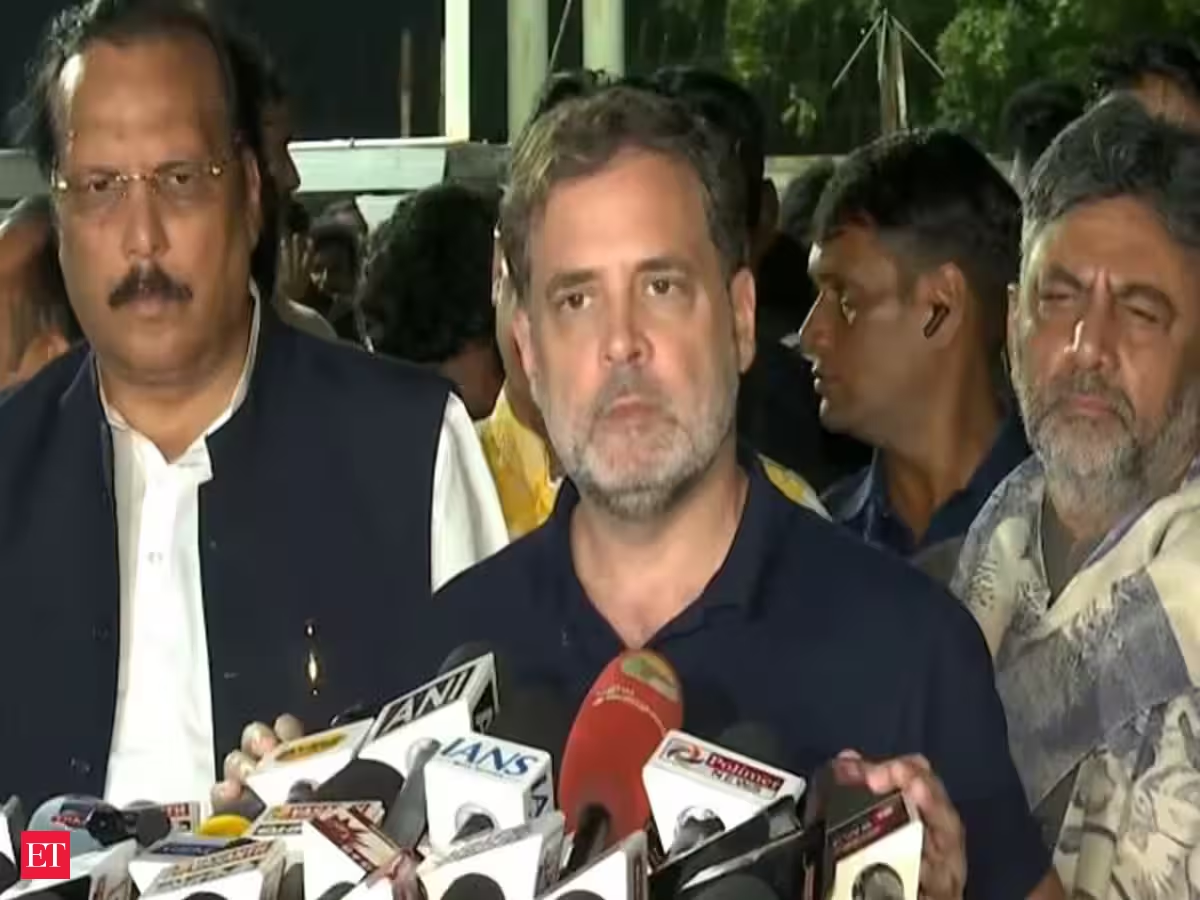
Rahul Gandhi asked Tamil Nadu Chief Minister M.K. Stalin, at a meeting in Chennai, to block what he called the BJP’s “dirty” delimitation design, framing the issue as a defense of the state.
In this piece
Economic Times reported that Rahul Gandhi urged M.K. Stalin in Chennai to thwart a delimitation move he described as the BJP’s “dirty” design. The appeal ties a…
Rahul Gandhi has urged Tamil Nadu Chief Minister M.K. Stalin to thwart what he described as the Bharatiya Janata Party’s “dirty” delimitation design, Economic Times reported from a meeting in Chennai. The report cast the Congress leader as a staunch defender of Tamil Nadu on the question of how parliamentary seats may be redrawn.
The account, headlined around Gandhi’s appeal to Stalin, uses both “delimitation bill” and “delimitation design” for the move he wants blocked. The published report available here does not include a full transcript, a vote count, or a detailed list of remarks beyond that characterization and the Chennai setting.
Delimitation is the constitutional process of fixing the boundaries and allocation of constituencies, including seats in the Lok Sabha. In India it is carried out by a Delimitation Commission under law, using census figures. How those figures are chosen has been politically charged for decades because population growth has not been even across states.
A constitutional freeze has long kept the interstate allocation of Lok Sabha seats tied to the 1971 census, a bargain associated with rewarding states that slowed population growth. That freeze has been extended more than once and is widely understood to run into the period after 2026, which is why a fresh exercise is now a live national argument rather than a distant procedural matter.
Southern states, including Tamil Nadu, have argued in public debate that a purely population-based redistribution could reduce their relative voice in Parliament even as they have posted stronger outcomes on population stabilization and several social indicators. Leaders in the state have treated seat share as a question of federal fairness, not only of local boundaries inside Tamil Nadu.
Stalin, as chief minister and DMK leader, has been a central figure in that southern pushback. Gandhi’s Chennai appeal asks him to take the lead in stopping a plan the Congress leader labeled dirty and attributed to the BJP. The report does not record Stalin’s reply or any joint decision announced at the meeting.
The BJP leads the Union government, which would sit at the center of any nationwide delimitation timetable, commission, and enabling law. Economic Times’ framing presents Gandhi’s charge as a political attack on the ruling party’s intent. The headline material does not quote a government rebuttal or specify the text of a bill.
The stakes are structural. A shift in how seats are apportioned would reshape the weight of states in the Lok Sabha for a generation and feed directly into coalition politics in Tamil Nadu, where the DMK and Congress have been electoral allies against the BJP. Even without new seat numbers, the language of a “dirty” design signals that Congress wants the fight staged as a defense of the state rather than as a technical census update.
What happens next depends on the Union government’s timetable for delimitation after the freeze window, on whether a bill is actually brought, and on how Stalin and other regional leaders answer Gandhi’s call. Economic Times’ report establishes the appeal at the Chennai meeting; it does not, in the material at hand, set a date for the next step or claim that the proposal has already been stopped.
Primary source: Economic Times. Newzly rewrites and structures source reporting for clarity; verify critical details at the original.