Rajasthan Panchayat Election Results 2026: Ward-Wise Winners Declared for Zila Parishad and Samiti Seats
Election authorities in Rajasthan have published ward-wise results for Zila Parishad and Panchayat Samiti contests, setting off high-stakes negotiations to elect district and block council leaders across rural regions.
In this piece
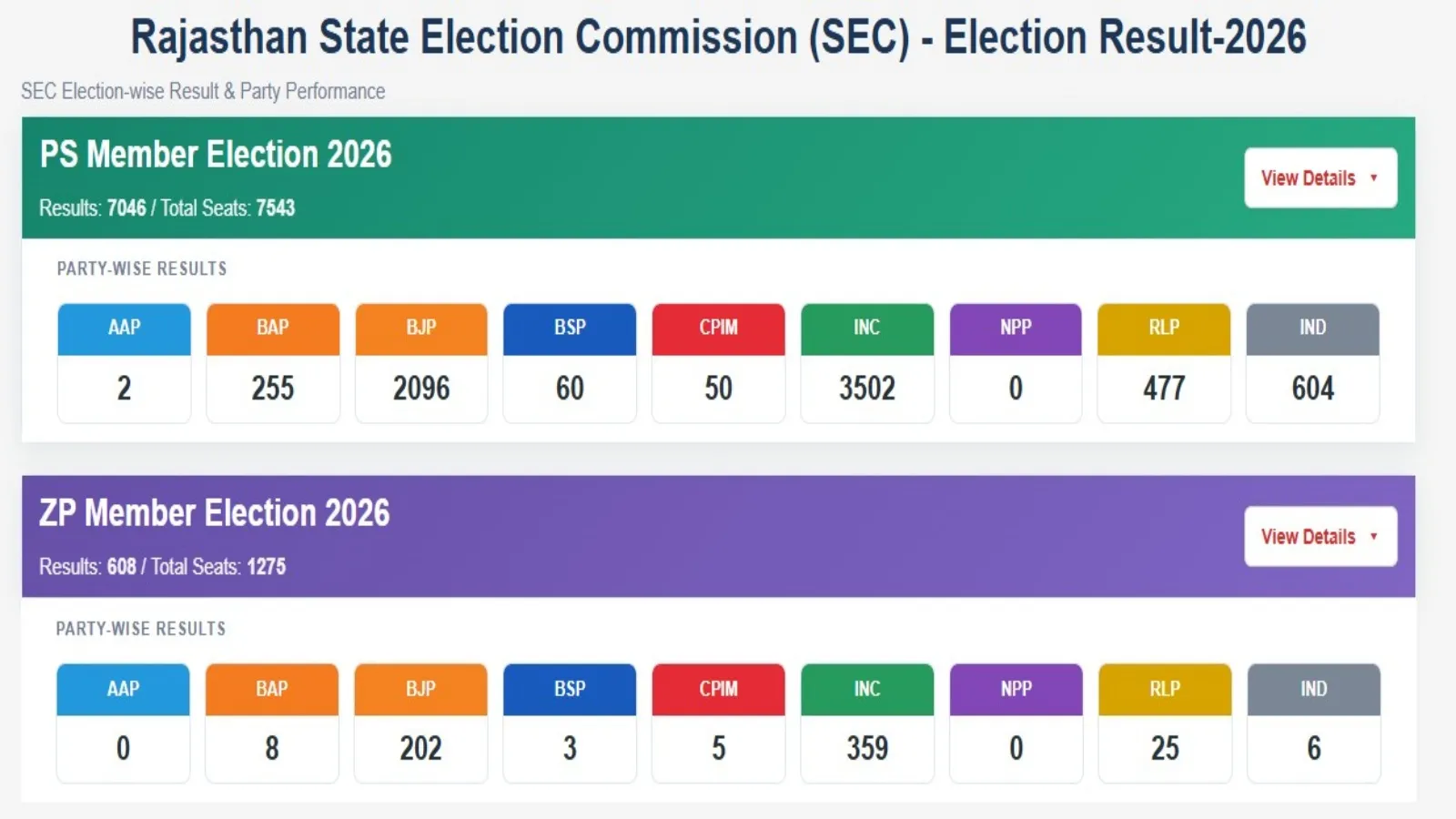
The State Election Commission has finalized ward-wise election results across Rajasthan for Zila Parishads and Panchayat Samitis. The outcomes show competitive…
Vote counting concluded across Rajasthan for local rural bodies, with official results announced for ward-wise contests in Zila Parishads and Panchayat Samitis. The State Election Commission released detailed tallies across the state's districts, highlighting significant grassroots democratic participation in rural areas.
The election covered thousands of rural constituencies, encompassing 1,275 Zila Parishad wards and 7,543 Panchayat Samiti wards across 37 administrative districts. Voters turned out in large numbers across multiple voting phases to determine local representation across the three tiers of Panchayati Raj administration.
Major political organizations, including the Indian National Congress and the Bharatiya Janata Party, mounted high-stakes campaigns across the wards. Early declarations showed competitive margins across rural belts, with regional outfits such as the Rashtriya Loktantrik Party and independent candidates securing critical footholds in several pockets.
In Nagaur, the Rashtriya Loktantrik Party made substantial inroads by securing 19 of the 37 Zila Parishad wards, leaving Congress with 11 seats and the BJP with 7. Meanwhile, in Ajmer, the Bharatiya Janata Party established a decisive majority by winning 19 of the 33 total Zila Parishad wards, while Congress claimed 12 seats.
In Jaipur, initial returns reflected competitive races across peri-urban and agrarian belts, with Congress capturing several early wards while the BJP and independent contenders secured key rural segments. These localized verdicts reflect fluctuating regional loyalties across eastern and central Rajasthan.
Panchayati Raj institutions serve as the backbone of rural governance in India, holding statutory responsibility for village-level development, water management, agricultural support, and infrastructure spending. Securing majorities in Panchayat Samitis and Zila Parishads allows parties to oversee district planning committees and wield significant executive influence at the grassroots level.
The outcome of these local body elections is widely viewed by political analysts as an essential barometer of rural public sentiment. Because local elections turn heavily on doorstep delivery, agrarian concerns, and civic services, both ruling and opposition parties treat these ward-level results as a test of their organizational depth ahead of wider legislative contests.
Apart from mainstream party banners, independent candidates played a prominent role in several close contests. In many Samitis, local community representatives and independent contenders emerged victorious, complicating efforts by major parties to achieve clean majorities without post-poll alliances.
The State Election Commission administered the vote counting process under tight security arrangements, publishing ward-by-ward data to official portals to maintain public transparency. District election officers supervised counting centers equipped with surveillance to ensure swift dispute resolution and orderly verification of ballots.
With ward-level winners officially notified, attention now shifts toward the election of Zila Pramukhs and Pradhans across the newly formed local councils. Newly elected members will convene in scheduled sessions to elect their presiding officers, formalizing leadership across Rajasthan's rural governance network for the coming administrative term.
Primary source: Google News Rajasthan. Newzly rewrites and structures source reporting for clarity; verify critical details at the original.