Ram-Krishna Dispute Puts Religious Leaders and BJP’s Mathura Politics in Focus
Divya Bhaskar frames a dispute involving Hindu religious figures as a challenge to the BJP’s Mathura strategy, but the supplied material does not establish what was said or its political consequences.
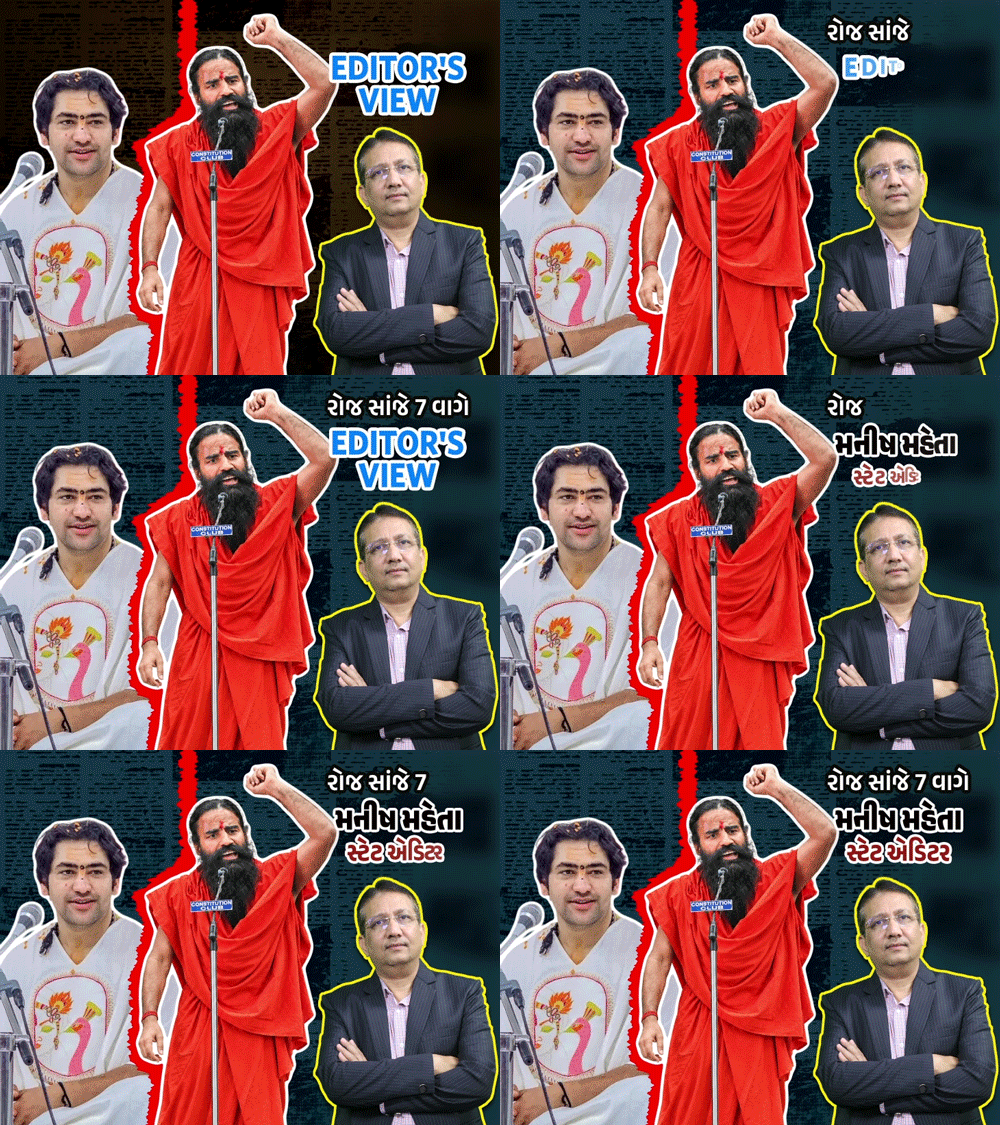
In this piece
A Divya Bhaskar headline describes a confrontation among religious leaders over Ram and Krishna and questions its implications for the BJP in Mathura. The…
A dispute over Ram and Krishna involving Hindu religious figures has become the subject of a Divya Bhaskar report questioning its implications for the Bharatiya Janata Party’s politics in Mathura. The supplied headline presents the disagreement as a confrontation among religious leaders, although the underlying article was not included in the available material.
The report’s URL identifies Baba Ramdev and Dhirendra Shastri as figures connected to the controversy. However, neither their statements nor an account of their respective positions appears in the supplied text, making it impossible to establish the precise nature of their disagreement or whether either has responded to the other.
The Gujarati headline uses strongly critical language, referring to hypocrisy, pretence and eccentricity in religious life. Those expressions belong to the publication’s framing; the available material does not establish who used them, whom they targeted or whether they reproduce remarks made during the dispute. They therefore cannot reliably be attributed to either named figure.
The political element centres on Mathura, in Uttar Pradesh, with the headline asking how the controversy disrupted the BJP’s plans there. That is the source’s interpretation rather than an independently established outcome. No party statement, campaign decision or other evidence demonstrating a setback was included with the submission.
The URL also places the story in the context of Uttar Pradesh politics in 2027. This suggests that the publication is examining the dispute through an electoral lens, but it does not establish a connection between the religious disagreement and any specific election strategy. The available headline offers no details of the plan it says was affected.
The distinction matters because a disagreement between religious personalities and a measurable political consequence are separate claims. Establishing the first would require the original remarks and their context; establishing the second would require evidence of a party response or a change in political activity. Neither can be assessed from the headline alone.
The supplied material also leaves the chronology unresolved. It provides no publication date, location for the remarks, description of the setting or indication of whether the controversy arose from a speech, interview or online exchange. Without those details, the dispute cannot responsibly be presented as a fully reconstructed sequence of events.
For now, the report can be described as an examination of religious friction and its possible implications for the BJP in Mathura, rather than proof of a political reversal. The full article and the original statements would be needed to determine what prompted the confrontation, how those involved have responded and whether the publication’s electoral interpretation is supported.
Primary source: Divya Bhaskar Original. Newzly rewrites and structures source reporting for clarity; verify critical details at the original.