world·Himachal Pradesh·Kinnaur District
Rare Eurasian Siskin Spotted in Kinnaur Sanctuary, Marking Third Record for Himachal Pradesh
A rare Eurasian Siskin has been spotted in Himachal Pradesh's Kinnaur district, marking the first record for the region and only the third confirmed sighting in the Himalayan state's history.
In this piece
Birdwatchers have documented the rare Eurasian Siskin in the Rakchham-Chitkul Wildlife Sanctuary in Kinnaur, marking only the third confirmed record for…
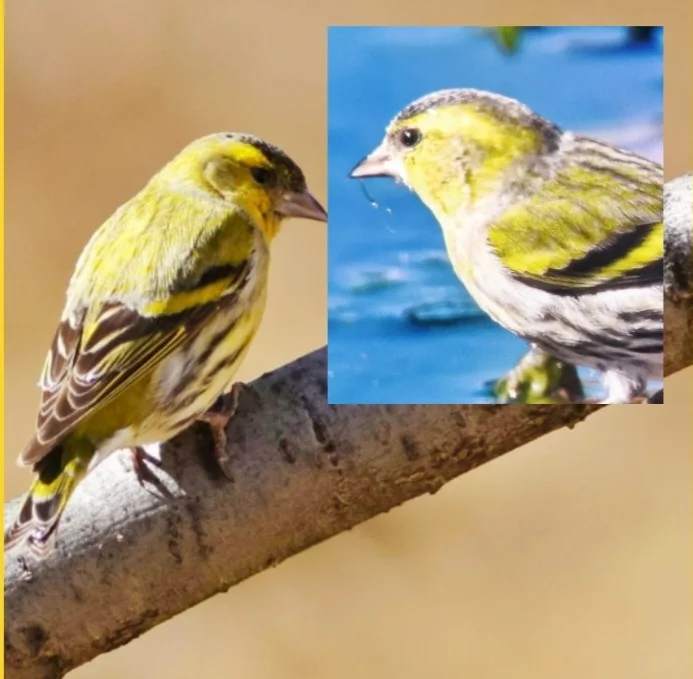
A flock of rare Eurasian Siskins has been sighted in Himachal Pradesh's Kinnaur district, marking only the third confirmed record of the migratory songbird in the northern Himalayan state. Birdwatchers documented the species within the high-altitude Rakchham-Chitkul Wildlife Sanctuary, generating excitement across India's ornithological and conservation communities.
The sighting represents the first time the Eurasian Siskin has ever been officially documented in the rugged border district of Kinnaur. Wildlife officials noted that the discovery underscores the ecological importance of the remote Baspa Valley landscape, which serves as a critical refuge and foraging corridor for high-elevation avian species during the onset of winter.
Visiting birdwatcher Srikantha R.G. from Mysuru, Karnataka, alongside Himachal Pradesh-based birder Ankush Thakur, first observed and photographed the lively finches on November 25. The observers monitored the small flock actively feeding in the subalpine canopy before submitting comprehensive photographic evidence and field notes for formal ornithological verification.
Field personnel from the Sarahan Wildlife Division under the Himachal Pradesh Forest Department subsequently tracked and corroborated the sighting on the ground. Departmental teams verified the distinct diagnostic features of the birds, confirming that the flock had settled into suitable feeding pockets within the sanctuary boundaries.
Prior to this encounter, documented records of the Eurasian Siskin, scientifically known as Spinus spinus, were exceptionally sparse across Himachal Pradesh and spanned more than four decades. The state's first confirmed record occurred in 1980 in the Solang Valley near Manali, followed by a second verified sighting in 2021 at Gushaini in Kullu district.
The Eurasian Siskin is a compact, acrobatic finch recognizable by its distinctive yellowish-green plumage, dark crown, and streaked flanks. Breeding across extensive boreal and temperate forests in northern Europe and northern Asia, small numbers migrate south during late autumn and winter, occasionally entering the northwestern Himalayas as uncommon winter visitors or passage migrants.
The Rakchham-Chitkul Wildlife Sanctuary, situated at elevations ranging from roughly 3,200 meters to over 5,500 meters, protects diverse montane habitats including dense conifer woods, birch stands, and alpine meadows. Naturalists emphasize that the sanctuary's mature pine, alder, and birch trees provide rich supplies of seeds, creating an ideal winter haven for nomadic granivorous birds seeking shelter from harsher alpine weather.
Ornithologists note that increased field surveys and the expanding participation of citizen scientists are helping map rare migratory birds that traverse the remote high-altitude valleys of the western Himalayas. While the Eurasian Siskin is classified globally as a species of least concern, its rare presence in India offers vital insights into regional flyways and shifting dispersal habits.
Forest department authorities and local wildlife enthusiasts plan to maintain systematic observation across the Baspa Valley as winter conditions intensify in Kinnaur. Field monitors hope to determine whether the flock will remain in the sanctuary through the deep winter or gradually descend to lower elevations, contributing valuable ecological data on Himalayan wintering patterns.
Primary source: Google News Himachal Pradesh. Newzly rewrites and structures source reporting for clarity; verify critical details at the original.