Rare Short-Necked Oil Beetle Found in Wales After 60-Year Absence
The short-necked oil beetle has been rediscovered in Wales after sixty years, bringing relief to conservationists who feared recent survey gaps signaled the rare insect had gone extinct.
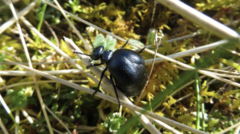
A rare insect feared to have vanished from Wales has been rediscovered after six decades, marking a major wildlife milestone for British conservationists. The short-necked oil beetle was recorded during recent monitoring work, defying concerns that the elusive species had disappeared permanently from the region.
The rediscovery comes after consecutive field surveys had failed to document the insect across Welsh habitats, leading specialists to worry that local populations had died out entirely. Its unexpected reappearance after sixty years has surprised entomologists and nature advocates who closely monitor threatened native fauna.
Oil beetles are widely recognized by environmental scientists as critical ecological indicators because their presence reflects the broader vitality of grasslands and wildflower habitats. Their survival is intricately tied to healthy ecosystems and the presence of solitary ground-nesting bees, upon which oil beetle larvae rely for transportation and food during their lifecycle.
Across the United Kingdom, populations of several oil beetle species have experienced severe historical contractions. Decades of agricultural intensification, urban expansion, and the degradation of semi-natural grasslands have fragmented suitable nesting and foraging grounds for many ground-dwelling invertebrates. Without diverse vegetation and undisturbed soils, specialized insects face acute pressures that can drive localized populations toward steep declines.
Because field surveys conducted in Wales over recent years yielded no sightings, experts had grown increasingly pessimistic regarding the short-necked oil beetle's persistence. The prolonged absence created substantial difficulty in determining whether isolated colonies remained undetected or if localized extinction had officially taken place. Such gaps in observational records often prompt formal reviews into whether a species should be categorized as locally extinct.
Ecologists emphasize that finding an organism after a sixty-year gap highlights the sheer complexity of invertebrate monitoring. Many ground beetles are active for only narrow windows throughout the year, making comprehensive detection dependent on highly specific seasonal conditions and dedicated observer attention. Tiny or localized populations can easily elude standard ecological surveys unless conditions align perfectly for their emergence.
The confirmed sighting provides renewed impetus for habitat management programs aimed at safeguarding delicate Welsh ecosystems. Researchers note that preserving wildflower-rich pastures, cliff slopes, and uncultivated grassland corridors remains essential if fragile insect colonies are to maintain viable populations over the coming decades. Targeted land management practices often help ensure that host pollinator species also thrive alongside these specialized beetles.
Moving forward, conservation organizations and field surveyors are anticipated to step up targeted assessments to evaluate the exact footprint and stability of the species in the area. While broader data remains limited, the rediscovery offers rare encouraging news for regional biodiversity and reinforces the vital need for continued long-term ecological surveillance. Ongoing research will seek to clarify whether this encounter represents an isolated remnant or an established, breeding population capable of enduring.
Primary source: BBC Science. Newzly rewrites and structures source reporting for clarity; verify critical details at the original.