Retiree Replaces Bond Funds With DIVO and GPIX to Secure $6,700 Monthly Cash Flow
A 68-year-old retiree swapped safe bond funds for option-income ETFs to boost a $1.1 million portfolio toward a $6,700 monthly paycheck, trading away vital downside protection.
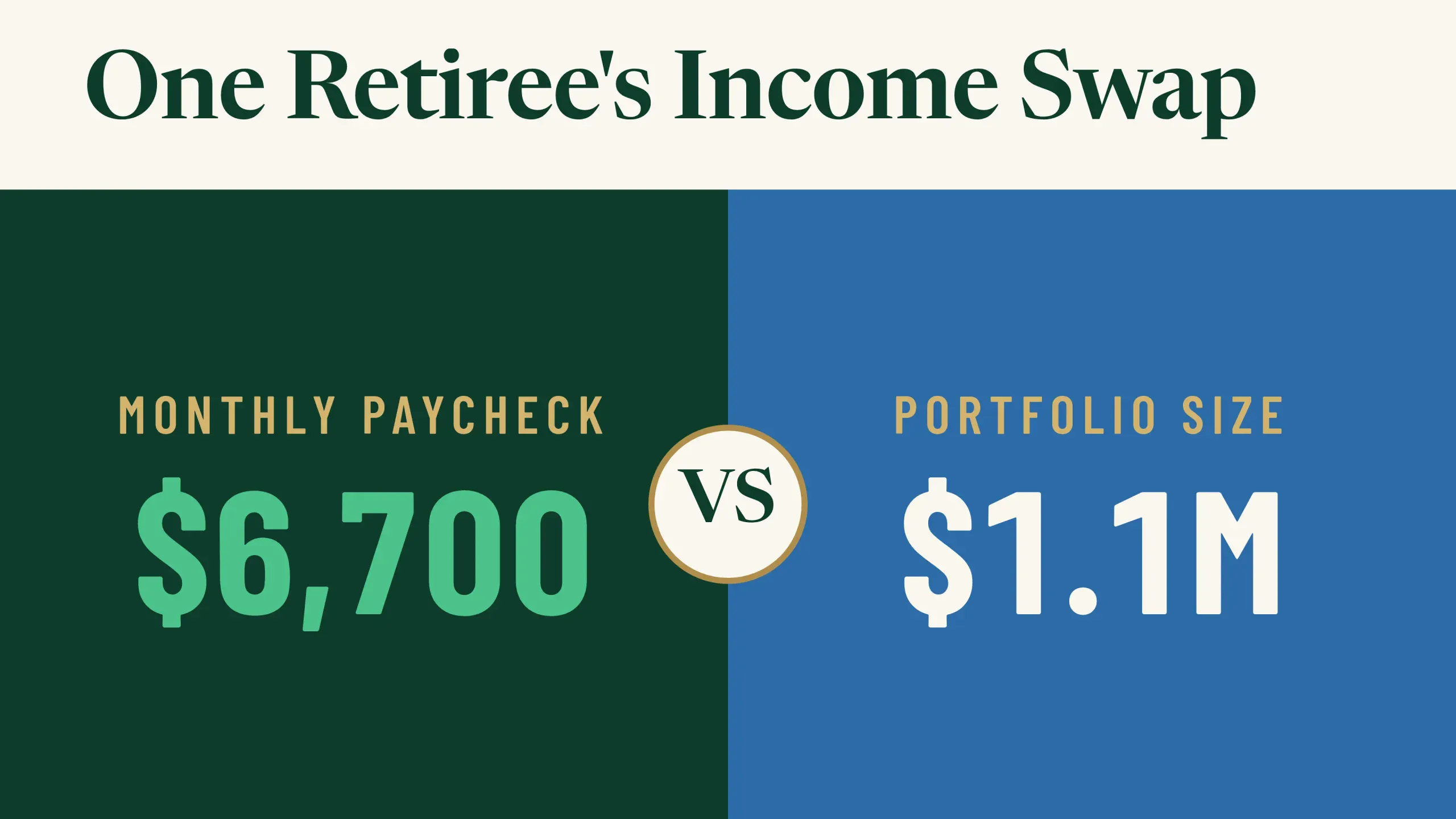
A 68-year-old retiree managing a $1.1 million investment portfolio recently executed a major allocation shift by replacing traditional bond funds with high-yield equity vehicles. The reallocation was designed to close a persistent income gap and support a target monthly cash withdrawal of $6,700. While the strategy initially succeeded in driving monthly distributions higher, financial planners caution that the maneuver introduces substantial risks that may compromise long-term portfolio stability.
Under the revised allocation, capital previously held in conservative fixed-income instruments was redirected into funds including DIVO and GPIX. Both exchange-traded funds rely on equity portfolios augmented by options-writing strategies to generate cash distributions that substantially exceed standard debt yields. The immediate result met the retiree's objective by lifting baseline cash flow and satisfying near-term household spending requirements.
Bond holdings have traditionally served as the shock absorber in retirement portfolios, offering steady coupon payments and buffering equities during periods of acute financial stress. By liquidating these defensive assets, the investor eliminated the counterbalancing cushion that typically shelters principal during stock market selloffs. The maneuver effectively transformed what was once a balanced retirement nest egg into an asset base heavily tied to equity performance.
The allure of higher payouts has become increasingly common among older Americans wrestling with elevated living costs and rigid retirement timelines. When fixed-income payouts appear insufficient to cover recurring lifestyle needs, rotating into equity derivatives often looks like an attractive, self-funding solution. However, financial analysts note that treating derivative yield as an outright replacement for debt fundamentally miscalculates how risk is distributed across the portfolio.
Option-income exchange-traded funds typically generate excess yields by selling call options against underlying stock holdings or equity indices. While this approach produces regular premium income during flat or moderately rising markets, it caps upside capital appreciation while providing minimal protection against deep downturns. If the equity market suffers a prolonged contraction, the principal value of the underlying shares declines with little offset from option premiums.
Compounding the structural vulnerability is the variable nature of options-generated cash distributions. Unlike fixed bond coupons backed by contractual interest obligations, payouts from option-income funds fluctuate depending on implied volatility, market momentum, and fund management execution. In this retiree's situation, an impending distribution reduction is already approaching, demonstrating how quickly an income surplus can narrow under shifting market dynamics.
A diminished distribution forces retirees into a difficult operational dilemma when their fixed spending targets remain unchanged. If fund payouts fall short of the required $6,700 monthly paycheck, the investor may be forced to sell shares at depressed prices to bridge the deficit. That dynamic can accelerate portfolio depletion, permanently shrinking the capital base required to support future payouts.
Wealth advisors emphasize that yield should never be evaluated in isolation from capital preservation, especially for individuals well into retirement. While funds like DIVO and GPIX can perform useful roles as secondary income diversifiers, relying on them as primary bond substitutes removes the very asset class designed to maintain liquidity during market shocks. A severe equity slump could therefore leave the portfolio with reduced cash flow and degraded capital at the same time.
As market conditions evolve, advisers recommend that retirees approaching or navigating distribution phases maintain a clear separation between growth assets and liquidity buffers. While the temptation to swap lower-yielding bonds for higher immediate distributions remains strong, doing so trades long-term durability for temporary relief. Preserving a dedicated fixed-income allocation remains one of the few proven methods to defend monthly paychecks when volatile market cycles arrive.
Primary source: Yahoo Finance Markets. Newzly rewrites and structures source reporting for clarity; verify critical details at the original.