markets·Massachusetts·Suffolk County
Rising Put Buying Could Offer a Bullish Signal for Stocks
Increased put buying in S&P 500 and Nasdaq-100 stocks could signal defensive positioning rather than an inevitable decline, creating a potential contrarian case for equities.
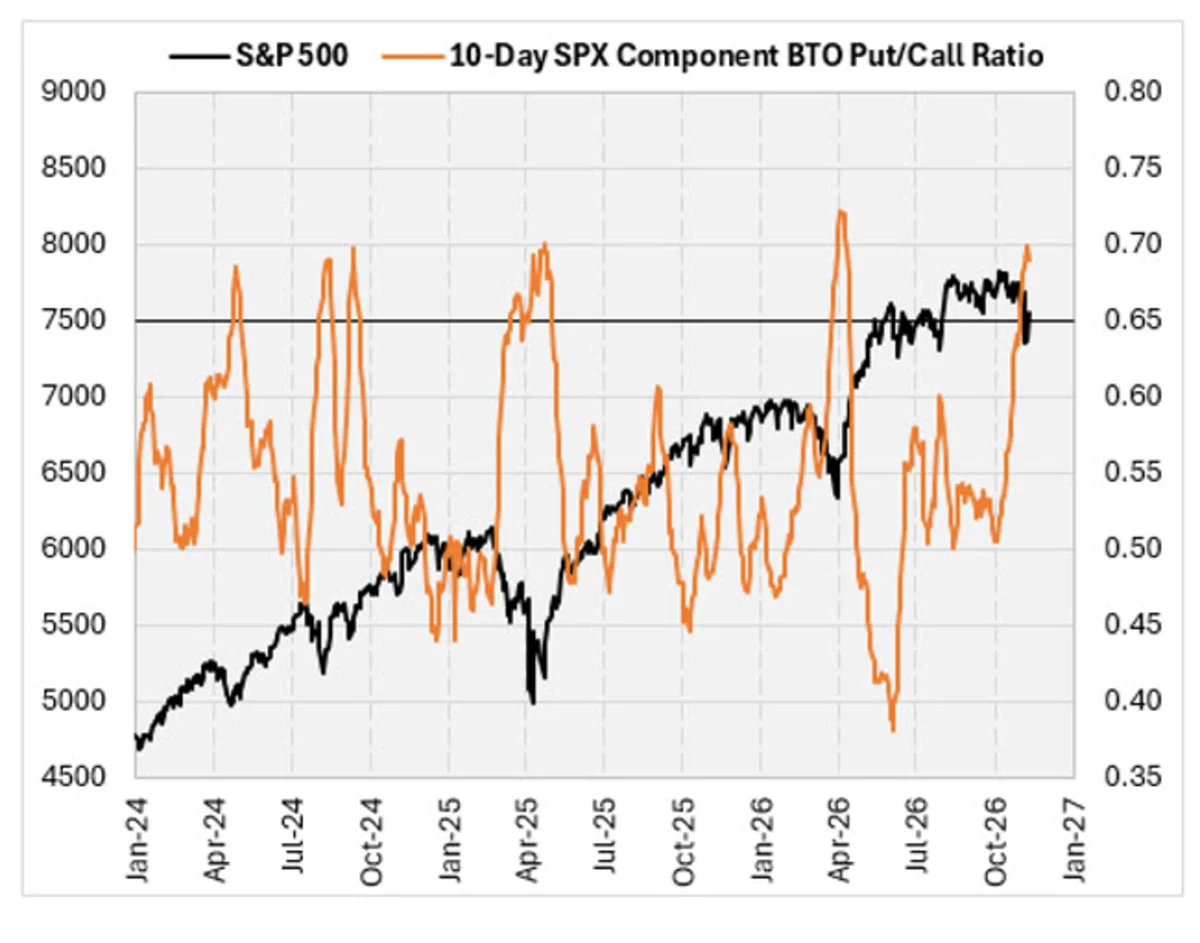
Increased put buying in S&P 500 and Nasdaq-100 stocks could offer a bullish signal, according to a Yahoo Finance Markets report. The argument takes a contrarian view of defensive trading: greater demand for downside protection may indicate that investors have already positioned for weakness, rather than that further losses are inevitable.
That distinction matters because options activity can reveal expectations without reliably predicting what prices will do next. A bearish position describes how a trader is managing exposure, but it does not establish whether the anticipated decline will happen or how much concern stock prices already reflect.
Put options generally give their holders the right to sell an underlying asset at a specified price within the contract’s terms. They can be purchased to express a negative view or to protect an existing investment, making the same type of transaction compatible with different portfolio objectives.
The contrarian interpretation is that widespread caution can leave room for a positive surprise. If investors have prepared for a worse outcome than ultimately occurs, a reduction in uncertainty could support equities. This is a possible explanation for why bearish positioning can sometimes be read as constructive, not evidence that put buying itself guarantees gains.
There is also a difference between buying protection and abandoning stocks. An investor can retain an equity position while purchasing puts to limit downside exposure. The Federal Reserve Bank of Boston’s educational material on market indicators describes this distinction, noting that index puts can accompany ownership of the underlying market rather than represent an outright wager against it.
Interpreting the activity requires care about what is being measured. The Yahoo Finance synopsis refers to stocks belonging to the S&P 500 and Nasdaq-100; that should not automatically be treated as a statement about options on the indexes themselves. Single-stock and index options can serve different purposes and attract different trading patterns.
Cboe, the options exchange operator, cautions that put-to-call ratios depend on assumptions about what trades mean. Its explanation of the indicator notes that high readings are commonly associated with uncertainty, but also that technical trading activity can distort the apparent sentiment signal. Volume is therefore not a clean count of investors expecting losses.
The supplied Yahoo Finance synopsis does not specify the scale of the increase, its measurement period or a historical comparison. Without those details, it is not possible to establish how unusual the reported buying is, whether it represents an extreme, or what subsequent returns comparable episodes produced.
For the bullish interpretation to become more persuasive, the positioning signal would need supporting evidence from subsequent trading rather than simply more put demand. Continued stock-market weakness would remain compatible with investors having correctly sought protection. Defensive activity can precede either relief or further deterioration.
The report’s central proposition is consequently conditional: increased put buying could be constructive if it reflects excessive pessimism rather than an accurate warning of worsening conditions. What follows in stock prices, and fuller detail on the underlying options data, will determine whether that contrarian reading proves useful.
Primary source: Yahoo Finance Markets. Newzly rewrites and structures source reporting for clarity; verify critical details at the original.