Rubio says US is not under systemic attack after tech outages
Secretary of State Marco Rubio said there is “zero evidence” that recent disruptions hitting Microsoft, banks and flights are connected, rejecting claims of a systemic attack.
In this piece
Marco Rubio said the United States is not “under systemic attack” after a run of technology outages. He said there is “zero evidence” that problems affecting…
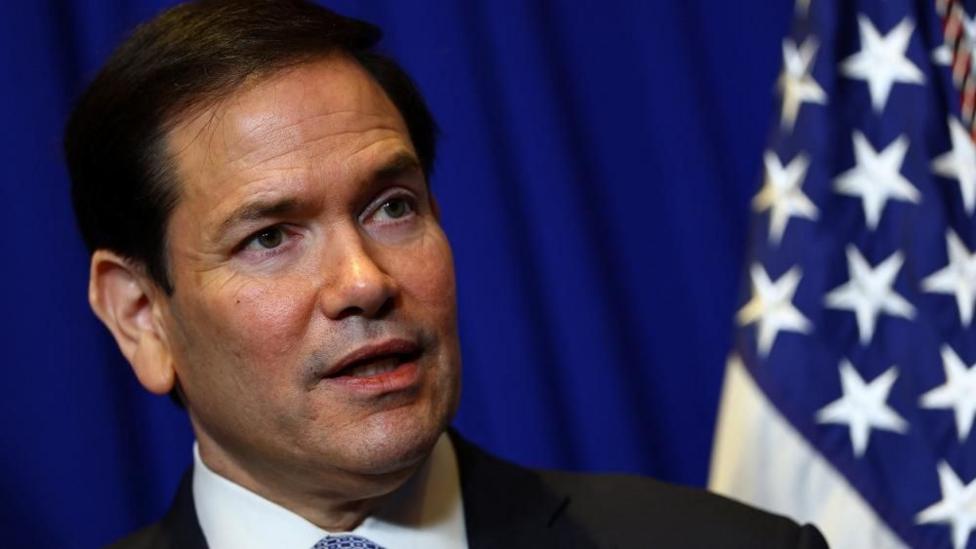
Secretary of State Marco Rubio said the United States is not “under systemic attack” after a series of technology outages, rejecting online theories that recent disruptions are connected. He said there was “zero evidence” that problems affecting Microsoft, banks and flights form a single episode.
The remarks, reported by BBC US & Canada, address speculation that separate service failures might share a common cause. Rubio’s assessment draws a distinction between scattered operational trouble and a coordinated assault on U.S. systems.
The disruptions cited in that public discussion span a major technology company, financial institutions and air travel. The account does not name particular banks or carriers, give dates, or describe the technical nature of each failure, so the incidents are known only in those broad terms.
Theories circulating online have treated the timing of the problems as a sign they are linked. Rubio’s “zero evidence” formulation is a direct rebuttal of that inference. In the statement as reported, proximity in the news is not treated as proof of a shared attacker.
The phrase “systemic attack” matters because it suggests an effort aimed at the functioning of several critical services rather than isolated faults. A conclusion of that kind would raise questions of national security, emergency response and how officials speak to the public. Rubio said the information now being cited does not meet that standard.
As the nation’s top diplomat, the secretary of state does not run domestic networks, banks or aviation systems day to day. His comments still carry weight when the question is whether outages amount to a hostile campaign, a judgment that sits between foreign policy, security and the resilience of everyday services.
For households and businesses, clustered outages can look like one event even when the causes differ. Software platforms, payment systems and flight operations are tightly bound into daily life, so trouble in one place is often felt in another. That interdependence can spread rumor faster than institutions can say what is actually known.
Operators and authorities usually separate three questions: whether a service failed, why it failed, and whether any outside actor was responsible. The BBC report of Rubio’s remarks speaks to the way he framed the third question — no evidence, he said, that the incidents are connected as an attack. It does not, on the material available here, set out technical findings from Microsoft, banks or airlines.
Posts that assign blame, name victims beyond the categories already reported, or claim a confirmed breach go beyond what Rubio’s statement establishes. Those details are not in the account of his remarks, and they should not be treated as fact on the strength of online theory alone.
What comes next depends on whether the companies and agencies involved publish clearer timelines and causes for each disruption. If later reviews point to unrelated faults, Rubio’s dismissal of a systemic attack is likely to remain the public line. If evidence of a link emerges, that assessment would have to change. The statement as reported offers no such evidence and no timetable for further comment.
Primary source: BBC US & Canada. Newzly rewrites and structures source reporting for clarity; verify critical details at the original.