Russia-Ukraine Abu Dhabi Talks Turn to Post-War Security Without Peace Breakthrough
US-mediated talks between Russia and Ukraine in Abu Dhabi concluded without a breakthrough on ending the war, shifting focus toward post-war European security while yielding a tentative agreement on a major prisoner swap.
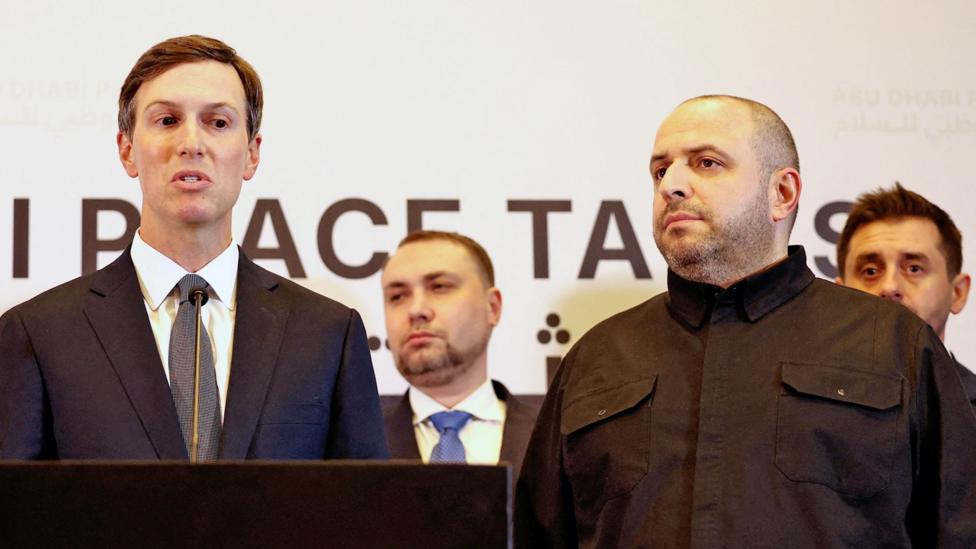
Trilateral negotiations between Russian and Ukrainian representatives in Abu Dhabi have concluded without a political breakthrough on ending the conflict, though negotiators reached a preliminary agreement on a substantial prisoner-of-war exchange. The talks, facilitated by United States envoys, turned primarily toward post-war security architectures rather than immediate battlefield resolutions.
The discussions in the United Arab Emirates were mediated by senior American emissaries, including peace envoy Steve Witkoff and Jared Kushner. Delegations spent multiple sessions examining the conditions necessary to halt hostilities, balancing diplomatic proposals against firmly held red lines on both sides.
While comprehensive peace terms proved elusive, the agreement in principle to conduct a major exchange of captured soldiers represented the most concrete outcome of the summit. Humanitarian measures have frequently served as the sole viable area of consensus throughout recent rounds of indirect and direct diplomacy.
The substantive core of the meetings focused heavily on Europe's wider security framework and the long-term guarantees required once fighting stops. Ukrainian negotiators emphasized the necessity of enforceable, multilateral security commitments from Western allies to ensure that Kyiv can effectively deter future aggression.
Moscow's representatives approached the security dialogue from an opposing vantage point, demanding systemic changes to the continent's military footprint. Russian officials reiterated longstanding demands for restrictions on NATO presence and infrastructure across Eastern Europe as a core precondition for any permanent settlement.
Neither delegation demonstrated flexibility on fundamental questions of sovereignty and territorial control, leaving core political disputes unresolved. With front lines largely locked in grinding warfare, neither side appeared willing to make concessions that could be perceived domestically as capitulation.
The Abu Dhabi talks also coincided with broader diplomatic outreach involving European partners, who remain deeply invested in continental defense arrangements and post-war reconstruction planning. Aligning any potential agreement with European security policy and sanction regimes remains an essential yet intricate challenge for American mediators.
The shift toward discussing long-term security architecture reflects a growing acknowledgment among international mediators that an enduring ceasefire cannot be divorced from broader regional stability. Without definitive guarantees that satisfy minimum defense requirements, temporary cessations of hostilities remain vulnerable to rapid collapse.
Diplomatic efforts are scheduled to accelerate immediately following the conclusion of the Gulf discussions. The American negotiating team is slated to conduct separate, high-stakes consultations with the primary leadership of both belligerents on Thursday.
Envoys are scheduled to travel to Moscow to meet with Russian President Vladimir Putin, while concurrent talks are arranged with Ukrainian President Volodymyr Zelensky in Dublin. These forthcoming bilateral sessions will test whether the security concepts explored in Abu Dhabi can translate into workable frameworks or if talks remain confined to limited humanitarian accords.
Primary source: BBC World. Newzly rewrites and structures source reporting for clarity; verify critical details at the original.