SAD-BJP Reunion Signals Tactical Retreat from Party's Solo Ambitions in Punjab
The revival of the Shiromani Akali Dal-BJP alliance ahead of the 2027 Punjab assembly elections marks a pragmatic course correction, shelving the ruling national party's ambitions to independently dominate the agrarian border state.
In this piece
The Shiromani Akali Dal and the Bharatiya Janata Party have officially reunited ahead of Punjab's 2027 assembly elections, ending a six-year estrangement…
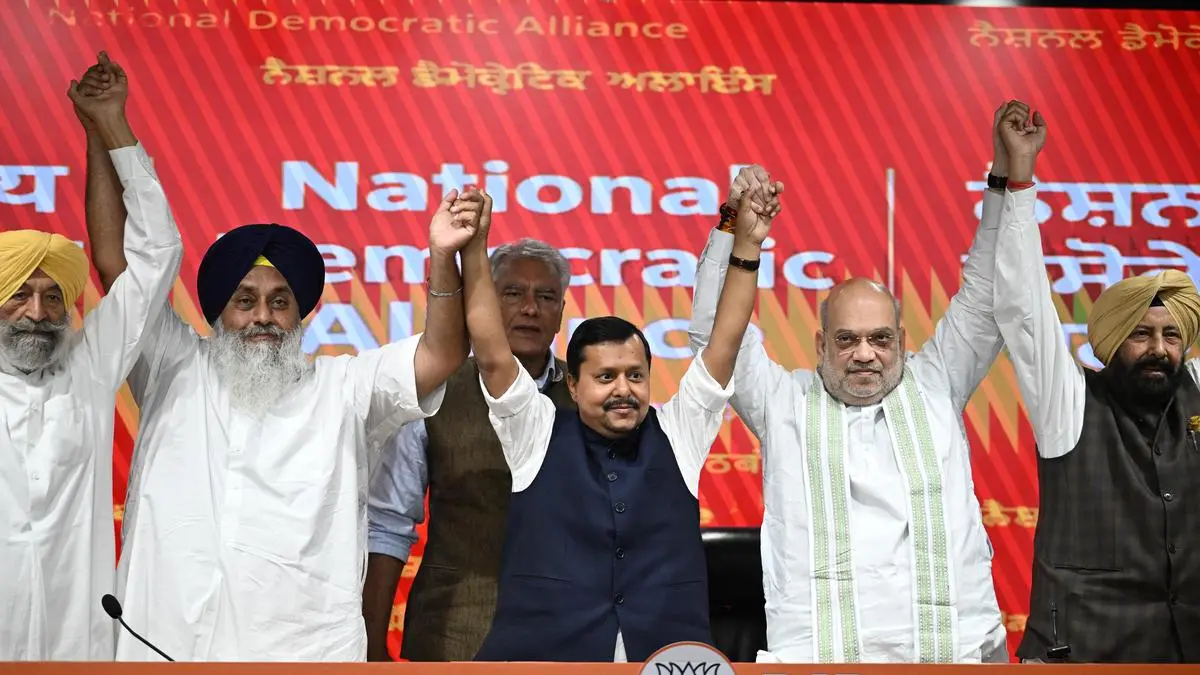
The Bharatiya Janata Party and the Shiromani Akali Dal have formally resurrected their historic alliance ahead of the 2027 Punjab Assembly elections, ending a six-year rift that fundamentally reshaped regional politics. The reconciliation, announced in New Delhi by senior party leadership, restores one of India's oldest political partnerships under the National Democratic Alliance banner. Under the renewed pact, the BJP has publicly conceded the senior partner role to the Akali Dal, guaranteeing that the alliance's chief ministerial candidate will come from the regional party.
The two parties had parted ways in September 2020 amid intense grassroots protests across Punjab against three controversial central agricultural reform laws that were subsequently repealed. The acrimonious split forced the Akali Dal to exit the Union Cabinet and severed ties that had anchored Punjab's coalition politics since the late 1990s. Following the breakup, both organizations found themselves navigating an increasingly unfamiliar and volatile electoral terrain.
In the aftermath of the separation, the BJP launched an aggressive campaign to establish an independent footprint across all 117 assembly constituencies in Punjab. The party sought to break out of its traditional status as a junior partner confined largely to urban Hindu-majority pockets. By inducting prominent regional figures, including veteran Congress defectors, the national leadership sought to build direct credibility with rural voters and the agrarian Sikh electorate.
However, the push to build a standalone electoral apparatus encountered persistent structural friction and a hard ceiling on the ground. Punjab's political landscape, heavily defined by rural agrarian concerns and distinctive regional identity, proved resistant to the BJP's solo ideological overtures. Without a deeply rooted rural organizational cadre, the party's voter outreach struggled to translate scattered vote shares into decisive constituency victories under India's first-past-the-post electoral system.
Simultaneously, the Shiromani Akali Dal confronted its own existential challenges while operating without its traditional coalition partner. The regional outfit suffered severe setbacks in recent state and parliamentary contests, facing erosion among its core Panthic base alongside sharp competition from rival factions. Operating in isolation left the Akali Dal vulnerable to aggressive challenges from both the ruling Aam Aadmi Party and a resilient Congress apparatus.
Political analysts view the renewed partnership as an explicit acknowledgement by the BJP that its unilateral expansion model cannot succeed in Punjab in the near term. By yielding the elder brother status and the chief ministerial mantle back to Sukhbir Singh Badal's party, the national leadership has prioritized tactical stability over territorial overreach. The decision underscores a pragmatic recognition that regional allies remain essential in states where regional and religious fault lines resist centralized national narratives.
The revived coalition alters the arithmetic of Punjab's political theater, transforming what had been a fragmented, four-cornered battlefield into a more polarized contest. The alliance seeks to reconstruct the historic social coalition between urban Hindu voters and rural Sikh landholders that once delivered stable governance to the border state. Coalition strategists believe this demographic synthesis offers the most viable mechanism to mount a coordinated challenge against the incumbent Aam Aadmi Party administration.
Despite the public reconciliation, significant operational and ideological hurdles remain for both coalition partners on the ground. Having expanded its organization during the years spent apart, the BJP is unlikely to settle quietly for the traditional twenty-three assembly seats it previously contested under older arrangements. Negotiating a revised seat-sharing formula will require balancing the ambitions of newly inducted BJP leaders against entrenched Akali district incumbents.
As Punjab heads toward the 2027 electoral cycle, both parties face the delicate task of convincing skeptical voters that their reunion represents genuine common ground rather than pure political opportunism. Grassroots farmer unions continue to harbor deep misgivings regarding central agricultural policies, presenting an ongoing test for campaign workers in rural hamlets. The success of the revived front will ultimately depend on whether two battered partners can overcome lingering resentments to present a unified alternative to the electorate.
Primary source: Google News Punjab. Newzly rewrites and structures source reporting for clarity; verify critical details at the original.