world·Delhi·New Delhi District
Shenzhen Trilateral Talks Stir 'Yalta 2.0' Fears and Strategic Questions for India
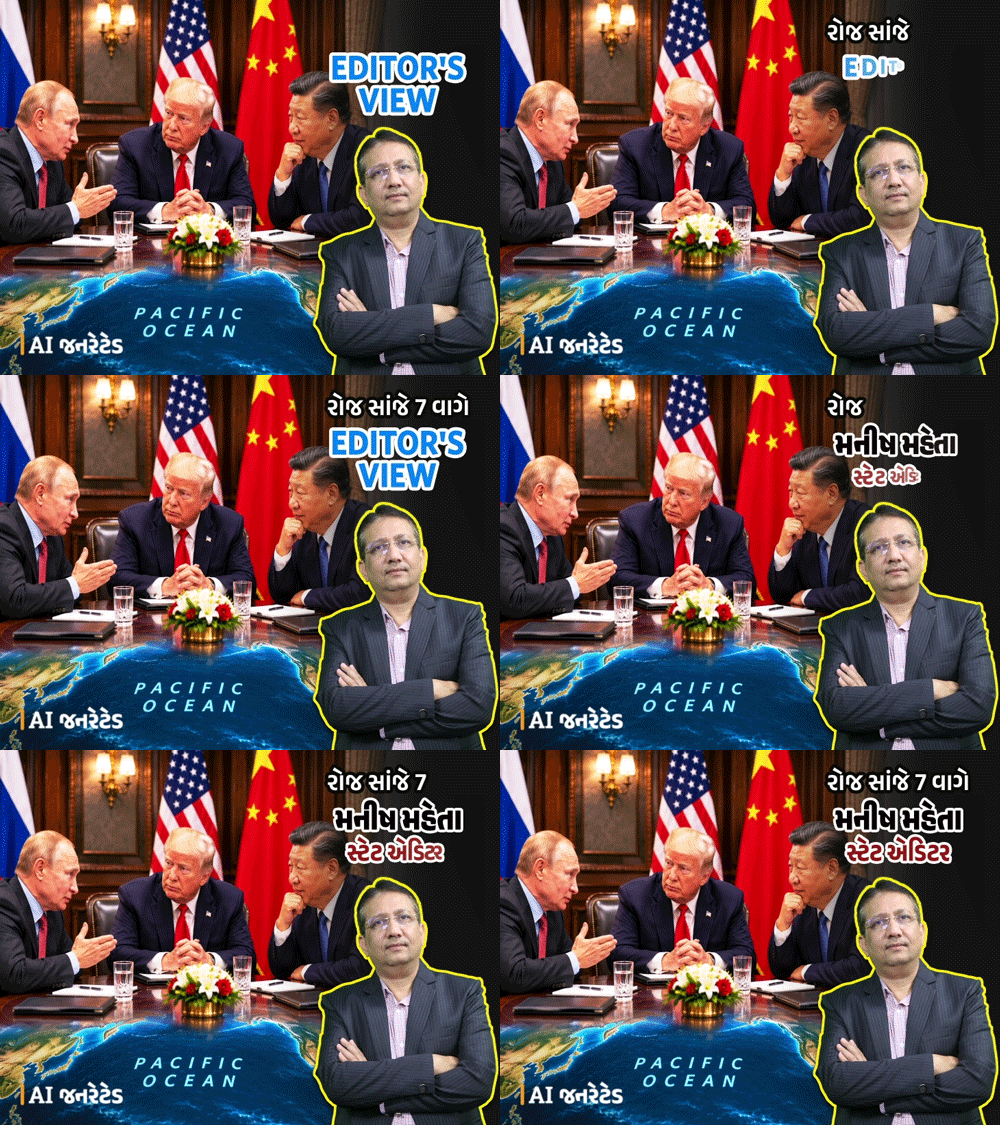
Reports of a prospective trilateral meeting between Donald Trump, Vladimir Putin, and Xi Jinping in Shenzhen have drawn comparisons to the 1945 Yalta Conference, raising strategic questions for India and global middle powers.
In this piece
Diplomatic circles are closely watching discussions surrounding a potential trilateral meeting between the leaders of the United States, Russia, and China at…
Talks of an unprecedented trilateral meeting between U.S. President Donald Trump, Russian President Vladimir Putin, and Chinese President Xi Jinping on the sidelines of the APEC Summit in Shenzhen have rattled international diplomatic circles. The prospective high-level encounter, already being dubbed a modern-day "Yalta 2.0" by global analysts, signals potential seismic shifts in global power dynamics.
The comparison draws directly from the historic February 1945 Yalta Conference, where Allied leaders Franklin D. Roosevelt, Winston Churchill, and Joseph Stalin met to redraw postwar spheres of influence across Europe. Roughly eight decades later, concerns are mounting that a three-way summit between Washington, Moscow, and Beijing could seek to establish an exclusive directorate over critical international flashpoints without the consent of other sovereign states.
The proposed meeting brings together divergent geopolitical motivations among the three powers, spanning conflict resolution, strategic stability, and economic competition. While Washington under Trump has signaled interest in exploring direct diplomatic channels and nuclear non-proliferation frameworks, Moscow has sought diplomatic off-ramps to ease its international isolation. Beijing, acting as the host in its southern tech powerhouse of Shenzhen, aims to cement its stature as a decisive global powerbroker.
The prospect of such a summit has sparked intense scrutiny in New Delhi regarding why Indian Prime Minister Narendra Modi is absent from the equation. Because India is not an official member of the Asia-Pacific Economic Cooperation forum, Modi was never scheduled to attend the Shenzhen proceedings. Moreover, Indian foreign policy has deliberately avoided closed-door superpower cabals that seek to impose bilateral or trilateral arrangements onto a complex, multipolar international order.
Strategic experts caution that any emerging consensus among the trio could complicate India’s long-standing doctrine of strategic autonomy and multi-alignment. New Delhi has maintained vital, historic defense and energy ties with Russia while simultaneously cultivating deep strategic and technological partnerships with the United States. A scenario where Moscow and Washington independently negotiate terms with Beijing threatens to narrow New Delhi's room for diplomatic maneuver.
For India, the most pressing concern centers on its unresolved territorial standoff with China along the Line of Actual Control. If Beijing succeeds in projecting cooperative stability with Washington and Moscow, Indian strategic planners worry it could reinforce China's regional dominance across Asia. Regional middle powers, from South Asia to the Indo-Pacific, fear that major-power accommodations could weaken the rules-based international order that protects smaller nations against unilateral coercion.
The choice of Shenzhen as the backdrop further underscores the technological and economic dimensions at stake. As the United States and China navigate complex trade rivalries, artificial intelligence governance, and semiconductor supply chains, India has actively positioned itself as a reliable alternative manufacturing and tech hub. Any potential bilateral or trilateral understandings reached in Shenzhen could reshape global supply networks and trade policies outside broader multilateral frameworks.
Despite the dramatic historical parallels being invoked, diplomats and foreign affairs analysts emphasize that a literal 1945-style carve-up of the world remains improbable. Deep structural mistrust between Washington and Beijing, persistent friction over Taiwan, and competing strategic visions between the superpowers impose formidable barriers to any comprehensive pact. Furthermore, modern middle powers possess far greater diplomatic leverage and agency than nations did in the immediate aftermath of World War II.
Moving forward, New Delhi is expected to respond by reinforcing its engagements across diverse international coalitions, including the Quad, BRICS, and European partnerships. Rather than seeking entry into exclusive tripartite arrangements, Indian diplomacy will likely focus on strengthening regional deterrence, safeguarding maritime security, and upholding an open, rules-based international system. As global eyes turn to Shenzhen, the unfolding dynamics will test whether the global architecture moves toward renewed great-power condominiums or remains resolutely multipolar.
Primary source: Divya Bhaskar Original. Newzly rewrites and structures source reporting for clarity; verify critical details at the original.