Shiromani Akali Dal and BJP Revive Alliance Ahead of Punjab Assembly Elections
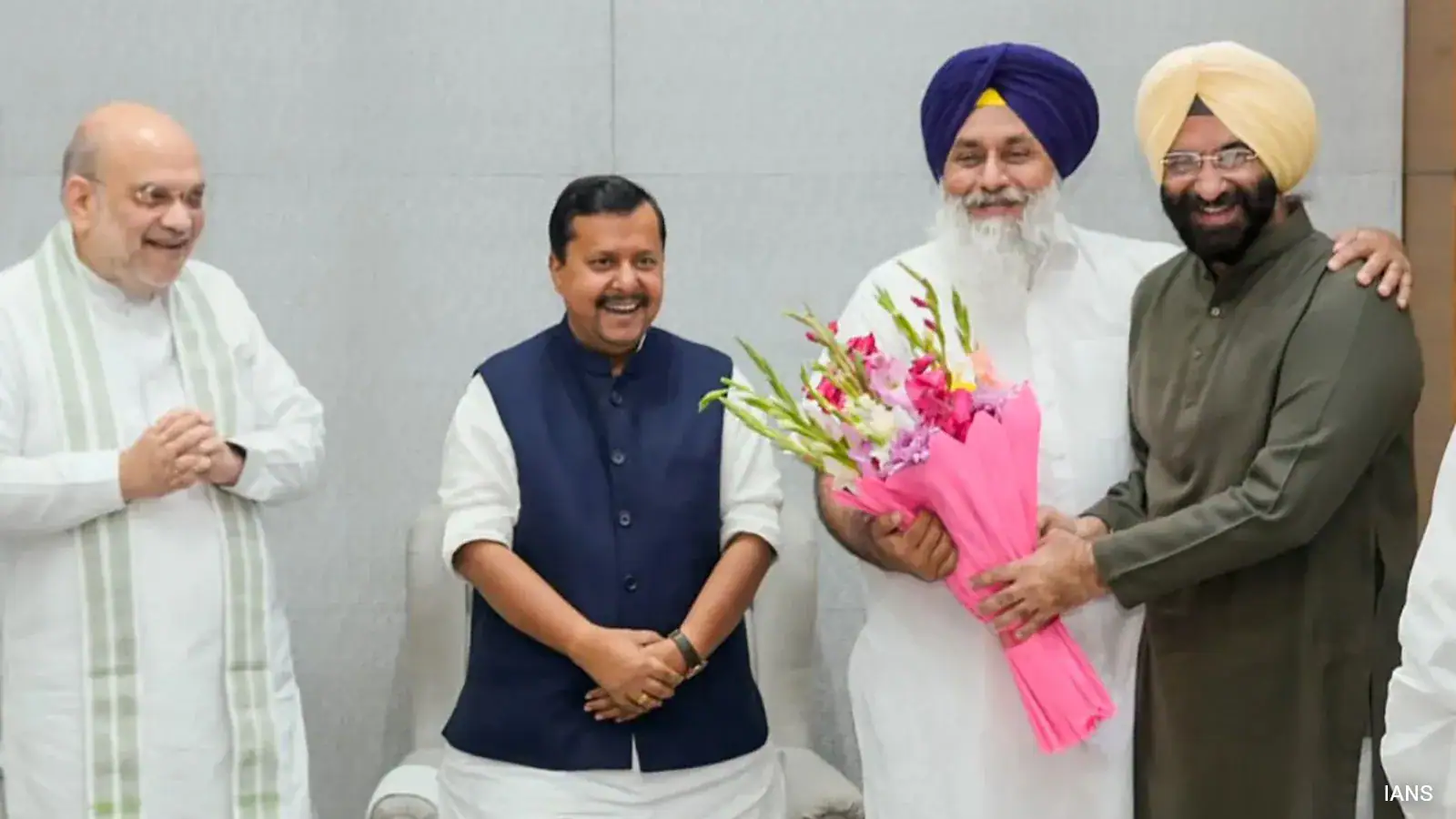
The Shiromani Akali Dal has rejoined the BJP-led National Democratic Alliance ahead of Punjab's state elections, renewing their partnership six years after splitting over agricultural reforms.
In this piece
The Shiromani Akali Dal and the Bharatiya Janata Party have officially revived their alliance for the upcoming Punjab Assembly elections. The move reunites the…
According to reports from Indian news outlets including NDTV and News On AIR, the Shiromani Akali Dal and the Bharatiya Janata Party have officially revived their political alliance ahead of the Punjab Assembly elections. The development marks the formal return of the Akali Dal to the BJP-led National Democratic Alliance several years after the two parties parted ways. Party strategists from both sides finalized the reconciliation after weeks of bilateral discussions.
Welcoming the renewed partnership, Prime Minister Narendra Modi stated that the coalition would focus on ensuring people-centric governance and sustainable economic progress across Punjab. Leaders within the National Democratic Alliance have presented the joint front as an essential platform to deliver administrative stability and administrative renewal. The leadership maintains that joint governance will better connect state administration with national development initiatives.
As reported by Telegraph India, Union Home Minister Amit Shah signaled strong respect for the regional party's historical standing during deliberations over the tie-up. Shah greeted the Akali leadership with gestures acknowledging their traditional "big brother" role in the state and addressed expectations surrounding the chief ministerial leadership. The diplomatic overture was widely viewed as an effort to rebuild mutual trust following years of estrangement.
Framing the coalition's policy priorities, BJP leader Tarun Chugh outlined a vision centered on law enforcement, economic rejuvenation, and social reform, according to The Times of India. Chugh pitched a transition from what has been described as "Udta Punjab" to an "Ubharta Punjab," promising decisive measures to build a state free of narcotics and organized gang activity. The campaign messaging is designed to appeal directly to voters concerned about public safety and economic stagnation.
The rapprochement comes roughly six years after the two longtime partners ended their decades-old alliance amid fierce disagreements over agricultural legislation. The Shiromani Akali Dal had walked out of the central government during large-scale farmer agitations that gripped Punjab and northern India. Following the rupture, both parties contested subsequent parliamentary and assembly contests separately, altering historical electoral equations across the state.
The reunion significantly shifts the political dynamic in Punjab, which has experienced fragmented, multi-cornered contests in recent electoral cycles. Historically, the coalition relied on a complementary voter base combining the Akali Dal's deep rural Sikh footprint with the BJP's traditional support among urban communities. Both parties now hope that re-establishing their joint ticket will provide the collective strength required to challenge rival political forces effectively.
Despite the optimism from party leadership, the announcement has met resistance from key interest groups across the state. According to reporting by ThePrint, several Punjab farmer union leaders sharply criticized the reconciliation, alleging that the two parties rejoined hands purely to pursue their own political interests. Agrarian representatives cautioned that lingering grievances from past farm policy disputes remain unresolved among rural communities.
Managing farmer sentiment will be one of the steepest hurdles for the coalition as it prepares for active campaigning. Because agricultural livelihoods form the backbone of Punjab's economy, party cadres will face close scrutiny from rural voters over support prices, rural debt, and crop procurement. Coalition organizers will need to formulate dedicated policy assurances to bridge the lingering trust deficit left by the earlier split.
In the coming weeks, the Shiromani Akali Dal and the BJP are slated to begin seat-sharing negotiations and establish joint coordination committees across Punjab's assembly constituencies. Political analysts note that the ultimate electoral viability of the reunion will depend on how effectively both parties can harmonize their grassroots workers and present a unified vision to an electorate seeking economic revival and stable administration.
Primary source: Google News India. Newzly rewrites and structures source reporting for clarity; verify critical details at the original.