Shitter Emerges on Codeberg to Revive Nitter Front-End
Open-source developers have launched Shitter, a community fork of Nitter hosted on Codeberg designed to restore privacy-friendly, lightweight viewing of public posts on X amid ongoing platform restrictions.
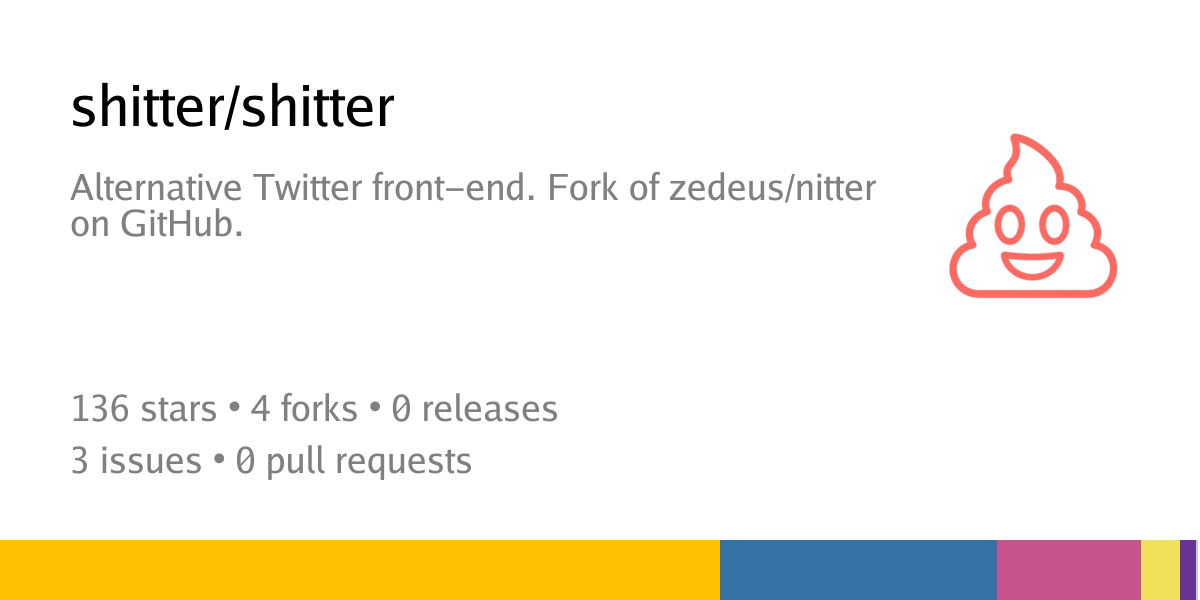
Open-source developers have introduced Shitter, a community-driven fork of the privacy-focused Nitter software hosted on the independent code-hosting platform Codeberg. The new repository aims to restore and maintain lightweight, account-free browsing for content on X, formerly known as Twitter. The project quickly garnered attention within developer communities, sparking renewed discussion on Hacker News regarding alternative front-ends.
The software builds upon the foundation established by Nitter, a long-running open-source project originally built to deliver an ad-free, tracker-free reading experience. For years, public Nitter instances provided a dependable way to view social media threads without running proprietary JavaScript or logging into an account. However, recent infrastructure shifts across mainstream social platforms severely disrupted these decentralized access tools.
The original Nitter repository entered a largely inactive state following sweeping technical and policy changes introduced by X. The platform systematically eliminated public guest token systems, closed legacy application programming interfaces, and intensified anti-scraping protections. These persistent restrictions broke public instances worldwide, leaving self-hosters and independent relay operators with few working options.
Shitter represents a direct community attempt to circumvent those operational dead ends by pooling maintenance efforts into a fresh repository. By hosting the fork on Codeberg, contributors are collaborating outside mainstream corporate developer hubs to patch scrapers and maintain instance reliability. The initiative seeks to give system administrators the updated codebase needed to deploy functioning mirrors.
Keeping front-end scrapers operational has evolved into an ongoing technical challenge against automated bot-detection filters. Independent maintainers must routinely adjust session handling, reverse-engineer web client endpoints, and distribute traffic across varying IP pools to evade sudden rate limits. As centralized networks tighten data boundaries, maintaining reliable third-party gateways requires near-constant code revisions.
For many privacy advocates, digital rights researchers, and accessibility specialists, lightweight front-ends represent a critical public resource. These interfaces allow users on constrained network connections or older devices to read important public interest announcements without heavy browser overhead. They also prevent platforms from harvesting behavioral tracking data across the open web.
Discussions among software engineers highlight both enthusiasm for independent tooling and pragmatic skepticism about durability. Community members on Hacker News noted that while community forks demonstrate grassroots resilience, scraper-based architectures face structural vulnerabilities. Developers frequently debated whether such workarounds can remain sustainable without official, documented access tiers.
The emergence of the Shitter project mirrors a broader movement across the open-source ecosystem to safeguard access to public discourse. Similar independent interfaces have emerged for services like YouTube, Reddit, and TikTok as major commercial networks erect high digital walls. These efforts illustrate how developer communities continue resisting walled-garden models that restrict public visibility.
Moving forward, the viability of the Shitter fork will depend on continuous volunteer contributions and the evolving defense mechanisms deployed by host platforms. Contributors will need to stay vigilant against server-side updates that could render scrapers ineffective overnight. For now, the project offers another lifeline for users seeking privacy-respecting access to public social feeds.
Primary source: Hacker News. Newzly rewrites and structures source reporting for clarity; verify critical details at the original.