Shops Looted as German Cost of Living Protests Turn Violent
Violent riots broke out in central Frankfurt and unrest spread to Berlin, Hamburg, and Cologne as demonstrations over the cost of living escalated into looting across major German commercial districts.
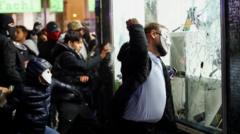
Demonstrations over the rising cost of living have turned violent across several major German cities, leading to street clashes and the widespread looting of retail shops. Police and emergency services were deployed across multiple urban centres as public frustration regarding economic pressures escalated into unrest overnight.
In Frankfurt, law enforcement officials confirmed that violent riots broke out directly in the city centre. Authorities reported that commercial districts saw significant disturbances as crowds clashed with security forces, resulting in damaged storefronts and looted premises throughout downtown shopping corridors.
The turmoil quickly extended beyond Frankfurt, with unrest and street disturbances also reported in Berlin, Hamburg, and Cologne. Police across these key metropolitan areas monitored fast-moving developments as demonstrations over living standards and economic hardship grew increasingly turbulent.
The transition from cost-of-living rallies to outright property destruction marks an alarming escalation for German authorities. While demonstrations over surging household expenses and financial strain have emerged in several European nations, the overnight incidents represent some of the most intense urban friction linked to economic grievances in recent memory.
The targeting and looting of retail businesses in major downtown districts have raised acute alarm among commercial operators and local residents. Storefronts in central pedestrian zones bore the brunt of the chaos as groups took advantage of street disruptions to break into retail outlets and seize merchandise.
Germany's major metropolitan hubs, including Frankfurt, Berlin, Cologne, and Hamburg, have frequently served as key gathering points for political rallies and social protests. However, the coordinated emergence of violence across several major regional centres has placed substantial operational pressure on regional police forces and municipal safety teams.
Across the affected cities, cleanup operations and damage assessments began as business owners surveyed shattered windows and stripped retail shelves. Municipal leaders and business associations are now examining the full scope of property damage left behind in the wake of the nocturnal disturbances.
The unrest highlights the broader social volatility surrounding persistent economic pressures, inflation, and living costs confronting urban populations. Observers note that while peaceful demonstrations are a regular component of public debate, the emergence of rioting poses distinct governance challenges for civic leaders seeking to maintain civil stability.
Police departments in Frankfurt and the other impacted cities have initiated investigations into the looting and street violence to hold perpetrators accountable. Law enforcement officials have indicated that patrols and security protocols will be reviewed to safeguard public spaces and commercial sectors against further potential disorder.
As municipal authorities take stock of the aftermath, attention turns toward preventing subsequent flare-ups in the days ahead. Security agencies in Berlin, Hamburg, Frankfurt, and Cologne remain on alert, with regional officials expected to issue further determinations regarding security deployments and official incident assessments.
Primary source: BBC World. Newzly rewrites and structures source reporting for clarity; verify critical details at the original.