Sliding Into Silence: Study Finds People Speak 338 Fewer Words Per Day Each Year
A comprehensive psychological study reveals that people are speaking roughly 338 fewer words per day each year, driven by the steady rise of text messaging, automated interfaces, and digital communication.
In this piece
Research spanning 15 years shows a steady 28 percent decline in daily spoken words as digital messaging replaces vocal conversation. The drop is steepest among…
People are speaking significantly less in their daily lives than they did two decades ago, shedding an estimated 338 spoken words per day with each passing year. According to findings published in the academic journal Perspectives on Psychological Science, modern adults have steadily reduced verbal conversations as digital communications replace spoken discourse.
The research, conducted by psychologists Valeria A. Pfeifer and Matthias R. Mehl, examined natural speech patterns by evaluating passively recorded audio from 2,197 participants across 22 distinct studies between 2005 and 2019. Over the 15-year period analyzed, the researchers observed a persistent, linear decline in daily spoken language rather than isolated short-term fluctuations.
The cumulative shift represents an approximate 28 percent drop in total daily spoken words across the surveyed timeline. Average daily vocal output dropped from roughly 15,900 words per day in the mid-2000s to approximately 12,700 words by the late 2010s, reflecting a profound transformation in everyday social interactions.
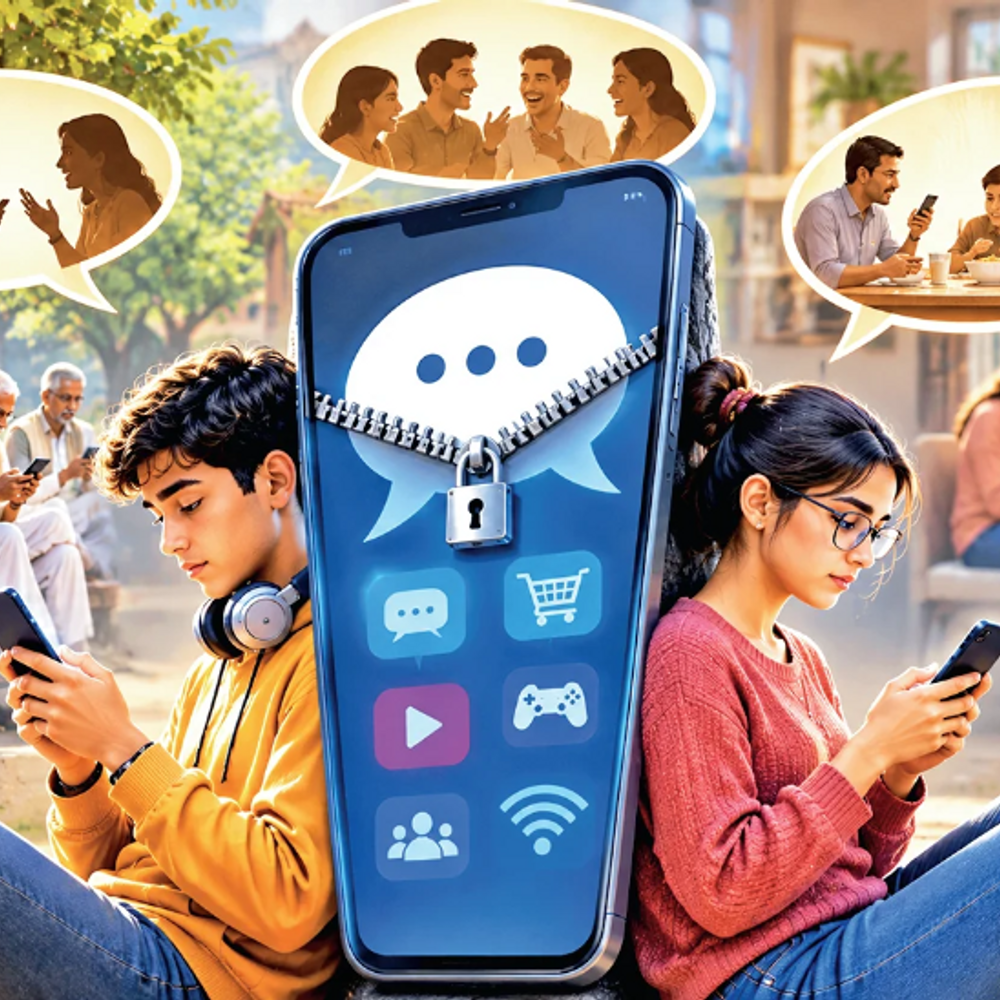
The downward trend proved particularly pronounced among younger generations who came of age alongside consumer smartphones and instant messaging platforms. For participants aged 25 and younger, the decrease accelerated to roughly 451 fewer spoken words per day each year, a decline roughly 44 percent steeper than that seen in older age brackets.
While the archival audio data does not establish direct physiological causation, the timeline tracks the rapid global adoption of mobile internet devices, social media networks, and text-based messaging. Automated commercial interactions, including self-service supermarket checkouts and automated digital kiosks, have also systematically phased out routine spoken exchanges in public life.
Sociologists and psychologists point out that shifting interpersonal dialogue from spoken voice to digital text strips communication of crucial paralinguistic elements. While text messages, group chats, and emojis convey basic information, they lack conversational timing, vocal inflection, acoustic resonance, and the spontaneous emotional warmth carried by the human voice.
The broader implications of this creeping silence extend to human connection, community cohesion, and emotional health. Researchers emphasize that habitual voice-based conversations play a vital role in building empathy and mitigating loneliness, functions that asynchronous text messaging cannot always replicate.
Modern work environments and educational spaces have similarly mirrored this conversational contraction, relying increasingly on collaboration software, email threads, and direct-messaging channels over face-to-face dialogue. Even when individuals share physical offices or classrooms, silent screen-based coordination frequently supplants verbal problem-solving and spontaneous brainstorming.
As digital assistants, artificial intelligence interfaces, and non-verbal conveniences become further entrenched in daily routines, scientists suggest speech patterns may evolve even further. Future investigations aim to determine whether this ongoing reduction in spoken words carries lasting psychological consequences or simply represents a permanent realignment of human communication habits.
Primary source: Divya Bhaskar Magazine. Newzly rewrites and structures source reporting for clarity; verify critical details at the original.