Smithsonian names its ten best history books of 2026
Smithsonian History’s year-end list highlights titles that recover overlooked pasts and trace how the United States arrived at the present. The short description does not name the books.
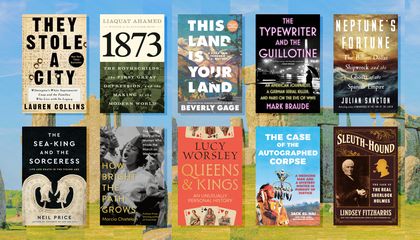
In this piece
Smithsonian Magazine’s history section has published its ten favorite history books of 2026. The magazine says the titles resurrect overlooked histories and…
Smithsonian Magazine’s history section has released a year-end selection it calls “The Ten Best History Books of 2026.” In the magazine’s own framing, the favorites resurrect overlooked histories and examine how the United States ended up where it is today.
The piece runs on Smithsonian’s history vertical, which regularly treats books as part of a broader public conversation about the past. The headline promises a list of ten titles. The accompanying description stays thematic rather than bibliographic: recovery of neglected history, and a reading of the American present through those books.
Year-end lists are a standard publishing ritual, and history lists sit inside that tradition. Smithsonian’s version, as described, is narrower than a general best-of survey of all nonfiction. It is confined to history, and the stated concern is explicitly tied to the United States and to stories the magazine presents as overlooked.
“Overlooked histories” is the editors’ phrase, not a catalog of subjects. It suggests an interest in episodes, communities, or arguments that standard surveys have treated lightly. The short public description does not identify which periods, regions, or communities the ten books cover, and those specifics should not be inferred from the headline alone.
The second part of the description — how the United States ended up where it is today — gives the list a civic as well as a scholarly cast. History writing in that vein uses the past to interpret institutions, conflicts, and identities that still shape public life. Smithsonian’s blurb does not name particular political events, court cases, or policy debates the books take up.
A ten-title list is a compact editorial judgment. It signals what Smithsonian’s history editors want readers to spend time with as the year closes, rather than a census of everything published in the field. The magazine does not, in the summary available with the list, explain its selection method, name a panel of judges, or say whether the books were already widely reviewed.
Readers looking for authors, publishers, or page counts will not find them in that short description. Those details belong to the full feature. Until a reader opens it, the reliable public claim is thematic: neglected pasts brought forward, and an American through-line running across the set.
For authors and publishers, a late mention from a magazine with a long association with museums, archives, and popular history can extend a book’s life past its first reviews. The source material does not report sales figures, print runs, or any claim that inclusion will move copies. Any commercial effect remains outside what Smithsonian states.
Lists of this kind often shape holiday reading and the titles that stay in conversation into the next year. Whether these ten were already prominent or are being lifted from smaller conversations is not said. The magazine simply presents them as its favorites of 2026.
What comes next is in the feature itself. Readers can turn to Smithsonian History for the ten titles and for whatever reasons, excerpts, or context the editors chose to include. The magazine’s own sentence remains the clearest guide to intent: overlooked histories, and an examination of how the United States reached the present.
Primary source: Smithsonian History. Newzly rewrites and structures source reporting for clarity; verify critical details at the original.