Smithsonian Names the Ten Best History Books of 2026
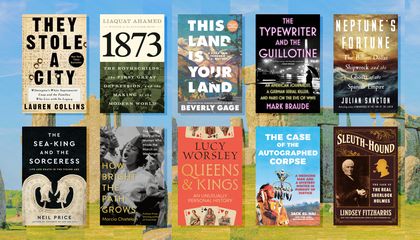
Smithsonian magazine has released its selection of the ten best history books of 2026, showcasing non-fiction titles that uncover overlooked narratives and examine how the United States arrived at its present-day reality.
In this piece
Smithsonian magazine has unveiled its annual list of the ten best history books of 2026. The curated selection honors works that recover forgotten historical…
Smithsonian magazine has released its curated selection of the ten best history books of 2026, shining a spotlight on non-fiction works that challenge conventional understandings of the past. According to the publication's history editorial team, the standout titles of the year resurrect overlooked narratives and closely examine how the United States arrived at its present position. The announcement highlights a diverse collection of historical inquiries designed to provide clarity on modern American life.
The editorial team emphasized that this year's featured volumes distinguish themselves by bringing neglected figures, communities, and events into mainstream historical discourse. Rather than focusing exclusively on familiar milestones or prominent leaders, the chosen works aim to reconstruct historical accounts that had previously been sidelined in traditional retellings. This approach reflects a sustained movement across contemporary non-fiction toward more inclusive and thorough archival research.
A central theme running through the 2026 list is the direct connection between historical developments and the contemporary challenges facing the United States. The selections investigate the structural, cultural, and political foundations that have shaped American institutions over time. By tracing these evolutionary pathways, the authors of the selected books seek to explain the origins of complex issues that continue to animate the nation today.
Annual roundups from prestigious cultural organizations such as the Smithsonian often function as an important barometer for trends in historical scholarship. In recent years, historians and publishing analysts have observed a growing public appetite for books that combine rigorous scholarly investigation with accessible, narrative storytelling. The 2026 list underscores this trend, demonstrating that deep archival exploration can resonate widely beyond specialized academic circles.
The emphasis on resurrected histories also speaks to a broader intellectual effort to address persistent blind spots in historical literature. Scholars have increasingly focused on re-examining institutional records and personal testimonies to illuminate how ordinary citizens and marginalized groups influenced national milestones. The works recognized in this year's compilation reflect the vital role that newly recovered historical evidence plays in enriching the American story.
Curation of this caliber carries significant practical importance within the publishing industry and the cultural sector at large. With thousands of non-fiction volumes published each year, institutional recommendations provide critical guidance for librarians, educators, and general readers seeking authoritative perspectives. Inclusion on prominent national lists often revitalizes interest in mid-list authors and independent presses that publish specialized historical investigations.
Furthermore, the societal relevance of these historical works extends directly into ongoing public discussions regarding national heritage and civic education. At a moment when historical memory and the interpretation of foundational events remain subjects of spirited debate across the country, grounded literature offers an anchor for substantive conversation. Educational advocates argue that engaging with diverse historical viewpoints helps readers develop a more nuanced understanding of democratic development.
Cultural commentators also observe that by highlighting overlooked stories, these publications encourage critical thinking among modern audiences. Readers are invited to question settled historical assumptions and explore how multiple competing perspectives have consistently defined the American experiment. This critical engagement fosters a deeper appreciation for the complexities inherent in tracking historical progress over generations.
Looking ahead to the coming publishing cycle, the ideas explored in the 2026 selections are expected to shape upcoming scholarly symposia and reading group discussions. As cultural institutions continue to assess the year in non-fiction, these ten recommendations stand as a benchmark for excellence in historical writing. The complete list and detailed editorial reviews remain available through Smithsonian magazine's ongoing history coverage.
Primary source: Smithsonian History. Newzly rewrites and structures source reporting for clarity; verify critical details at the original.