Smithsonian Unveils the Ten Best History Books of 2026
Smithsonian magazine has revealed its top history books of 2026, highlighting selections that uncover overlooked narratives and explore how the United States arrived at its modern realities.
In this piece
Smithsonian magazine has published its selection of the ten best history books of 2026. The annual curated list emphasizes forgotten historical events, archival…
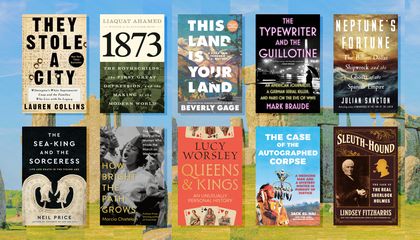
Smithsonian magazine has released its annual curated selection of the ten best history books of 2026, spotlighting works that offer critical reappraisals of national and global heritage. The newly unveiled list highlights narrative works and scholarly investigations that resurrect overlooked historical events while examining how contemporary societies arrived at their present juncture. Editorial curators focused on literary contributions that challenge established historical assumptions and bring marginalized archival records to light.
According to Smithsonian History, the chosen publications emphasize deep archival research designed to broaden public understanding of American and international developments. A central thread running through this year's recommendations is the deliberate recovery of forgotten figures whose contributions were omitted from traditional historical accounts. The compilation reflects an ongoing intellectual shift toward reinterpreting formative eras through nuanced, multiperspective documentation.
A significant portion of the editorial focus centers on tracing the intricate pathways that shaped the modern United States. The selected works scrutinize pivotal political transitions, social transformations, and economic milestones that continue to influence American civic life today. By establishing direct lines between foundational history and ongoing cultural debates, the selections seek to contextualize persistent domestic questions.
Year-end literary roundups from major cultural institutions like the Smithsonian Institution carry substantial authority among educators, academic scholars, and general readers. These annual rosters frequently dictate reading group curricula, library acquisitions, and university seminar reading lists for the following calendar year. As non-fiction publishing faces economic pressures and evolving audience habits, institutional endorsements remain crucial for boosting serious historical literature.
The release comes during an era where public interest in factual, evidence-based history remains exceptionally high amid broader national conversations on identity and heritage. Readers increasingly look to rigorously researched volumes to decipher complex socio-political fractures and historical precedents. Cultural commentators note that non-fiction readers are gravitating toward balanced narratives that unpack institutional origins with methodical scrutiny.
While detailed individual reviews and specific title descriptions remain housed within Smithsonian's comprehensive digital package, the overarching criteria center on rigorous investigative sourcing. Recovering overlooked histories demands exhaustive primary-source excavation, ranging from forgotten personal letters to newly declassified government files. Works earning recognition on such authoritative rosters typically excel at transforming dense archival findings into compelling, accessible public prose.
The preservation and dissemination of historical memory continues to provoke intense civic discourse across educational and political spheres. Curations that highlight lesser-known narratives offer counterbalances to simplified collective mythologies and encourage critical civic engagement. Literary historians emphasize that revisiting historical inflection points provides indispensable clarity for evaluating democratic resilience and institutional longevity.
Publishers of historical trade non-fiction monitor Smithsonian's selections closely as benchmarks for narrative excellence and thematic resonance. In an era dominated by rapid digital commentary, extensive long-form historical writing provides readers with necessary depth and longitudinal context. The success of these highlighted volumes underscores an enduring market demand for thorough, immersive non-fiction accounts.
As the year draws to a close, Smithsonian's annual compendium is expected to drive national literary discussions and guide holiday reading recommendations across the United States. Cultural organizations and reading circles are expected to incorporate these ten volumes into upcoming public seminars and community forums throughout the coming months. Observers anticipate that the themes elevated by the Smithsonian's retrospective will continue to inform broader historical scholarship well into the subsequent year.
Primary source: Smithsonian History. Newzly rewrites and structures source reporting for clarity; verify critical details at the original.