South Korea Catches 111 Students With Prohibited Devices in High-Stakes Suneung Exam
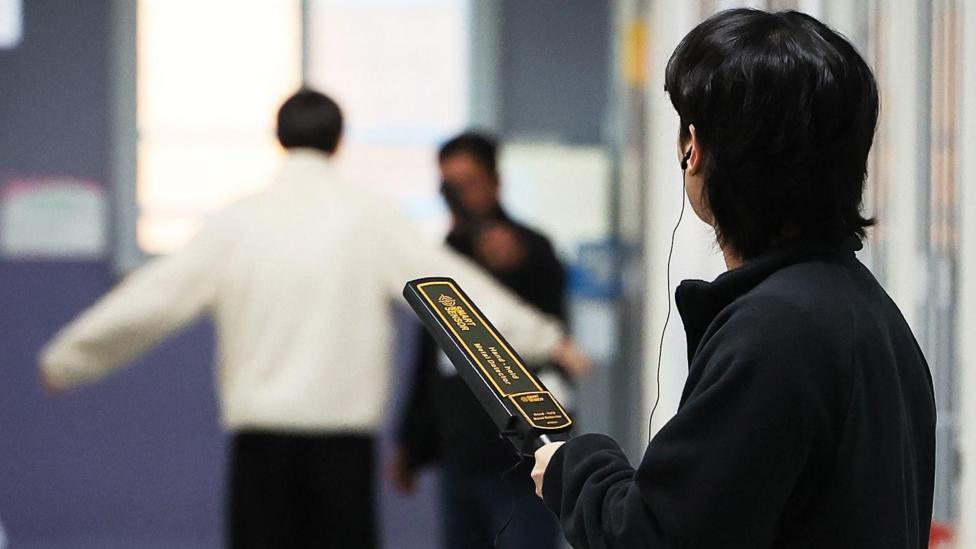
South Korean education authorities caught 111 students carrying prohibited smart devices during the annual Suneung college entrance exam, following enhanced anti-cheating measures designed to stop high-tech violations.
In this piece
South Korea caught 111 candidates with banned smart devices during the annual Suneung university entrance exam. The violations were detected under strengthened…
South Korean education authorities caught 111 students carrying prohibited electronic devices during this year's nationwide university entrance examination. Officials detected the unauthorized gadgets following the rollout of stricter supervision measures across test centers nationwide. The findings underscore the government's rigorous enforcement stance during what is widely considered the country's most consequential academic milestone.
The violations occurred during the College Scholastic Ability Test, commonly known as the Suneung, an intensive day-long examination that largely determines university admissions. Testing monitors uncovered the banned smart devices during room inspections and monitoring operations conducted throughout the day. Officials confirmed that candidates were found in possession of unauthorized electronics despite repeated warnings issued before testing began.
South Korea maintains an exhaustive list of prohibited items to preserve absolute fairness in the standardized testing process. Candidates are barred from bringing any communication-capable hardware or digital screens into the examination halls, including smartphones, smartwatches, digital earphones, and electronic calculators. Proctors collect all authorized electronic items before the first session begins, and any retained device is classified as a testing irregularity.
Education authorities heightened screening measures this year to combat the emergence of increasingly compact, discreet technology and potential artificial intelligence-assisted cheating methods. Proctoring guidelines were updated to include enhanced inspections and heightened vigilance during breaks between testing periods. Supervisors were instructed to watch for concealed electronic accessories that might evade standard visual checks at test center entrances.
The Suneung carries monumental significance in South Korean society, exerting profound influence over university placement, employment prospects, and social mobility. High school seniors and repeat test-takers spend years in intensive study programs, often attending late-night cram schools known as hagwons to maximize their scores. Because percentile differences can alter a student's educational trajectory, the exam environment is subject to extraordinary public scrutiny.
The national obsession with the exam prompts widespread societal adjustments across the country on testing day. Commercial flights are grounded and military drills paused during the afternoon English listening comprehension segment to eliminate stray noise near exam halls. Furthermore, government offices and financial markets delay opening by an hour to reduce road congestion and ensure all students arrive on time.
Given the life-altering nature of the assessment, education officials treat any deviation from test protocol as a severe compromise of institutional fairness. The detection of 111 students with unauthorized devices demonstrates both the vigilance of proctors and the persistent temptation among test-takers to bring digital tools into exam venues. Even when devices are not actively used for cheating, their mere presence violates the strict code of conduct governing national examinations.
Penalties for candidates caught with unauthorized electronics are swift and uncompromising under national testing guidelines. Students facing confirmed violations typically have their exam results for the entire testing year completely annulled. In instances where premeditated cheating or active communication during the test is established, authorities may bar candidates from sitting for the college entrance exam in subsequent years.
South Korea's education ministry and provincial education offices are expected to review each of the 111 cases individually to formalize disciplinary measures. Officials will assess the circumstances surrounding each discovery to determine whether the incidents stemmed from deliberate deception or procedural negligence. The findings will inform future security updates as testing authorities seek to stay ahead of rapidly evolving consumer technology.
Primary source: BBC Asia. Newzly rewrites and structures source reporting for clarity; verify critical details at the original.