Southwest Airlines Cuts 2026 Profit Guidance as Jet Fuel Costs Surge
Southwest Airlines lowered its full-year 2026 profit guidance on Wednesday as surging jet fuel expenses blunted the benefit of record passenger revenues and higher ticket prices, making it the third major U.S. carrier to trim targets this month.
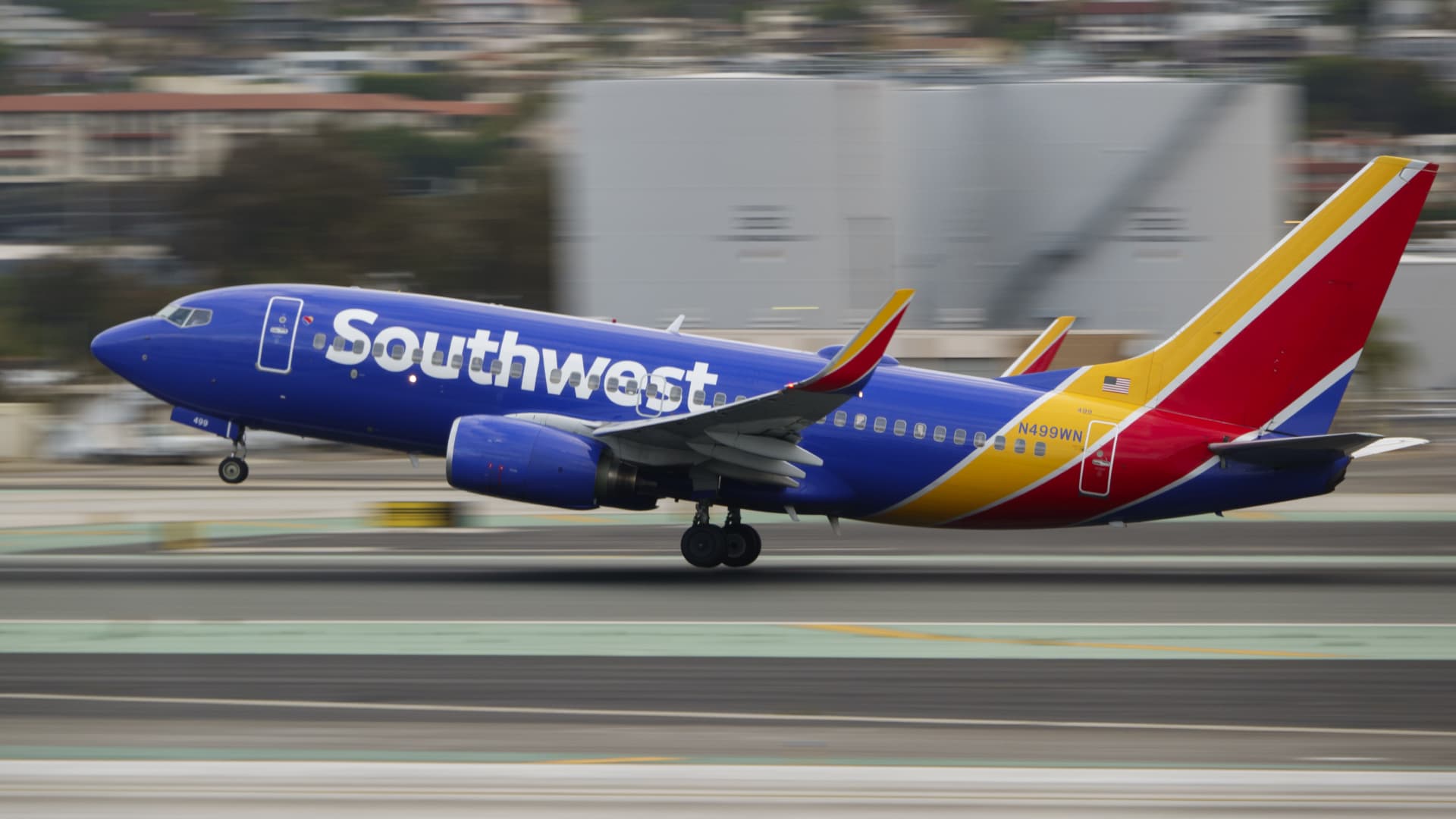
Southwest Airlines has lowered its full-year 2026 earnings outlook as surging jet fuel prices offset financial gains from record travel demand and rising ticket prices. The Dallas-based carrier became the third major U.S. airline this month to revise its profit expectations downward amid escalating operational costs across the aviation sector.
The company reduced its projected adjusted earnings for 2026 to a range of $2.60 to $2.85 per share, retreating from an earlier forecast of $3.25 to $4.25 per share. The midpoint of the newly revised guidance fell short of consensus estimates on Wall Street, prompting fresh scrutiny from industry analysts.
Management attributed the reduced guidance primarily to a sharp and sustained increase in fuel expenses. Southwest stated that projected jet fuel costs are expected to average approximately $4.55 per gallon heading into the final months of the year, adding hundreds of millions of dollars to its operating bill.
The profit downgrade emerged alongside an otherwise robust operational quarter for the carrier. Southwest posted a record third-quarter revenue of $8.4 billion, supported by an average passenger fare increase of nearly 27 percent compared with the previous period.
The fare increases reflect broader commercial adjustments implemented by Southwest to modernize its revenue generation and passenger experience. The airline has recently begun rolling out sweeping modifications to its traditional operating model, including the move away from its historic open-seating policy toward assigned seats and premium cabin offerings designed to capture higher-spending travelers.
Yet escalating fuel bills have largely absorbed the top-line revenue momentum generated by those commercial transformations. While passenger willingness to pay elevated fares remains resilient across domestic networks, aviation fuel represents one of the largest and most volatile overhead components for commercial carriers.
Southwest is not alone in confronting severe commodity pressures that have disrupted financial expectations for the current fiscal year. Peers including American Airlines have similarly recalibrated their full-year forecasts in recent weeks as fuel price inflation continues to erode operational margins throughout the industry.
Industry observers note that while travel demand remains solid entering the busy holiday season, high fuel volatility continues to pose significant planning challenges for route networks and fleet scheduling. Carriers face persistent difficulties translating strong passenger volume directly into sustained bottom-line profitability when energy markets fluctuate unpredictably.
Looking ahead, Southwest executives indicated that the carrier will continue monitoring fuel market trajectories while pursuing disciplined capacity controls and cost containment across all operations. The airline plans to maintain its ongoing product rollout in the coming quarters, seeking to bolster margins as market conditions evolve.
Primary source: CNBC Markets. Newzly rewrites and structures source reporting for clarity; verify critical details at the original.