SpaceX Aborts Booster Catch Attempt in Starship Test Flight
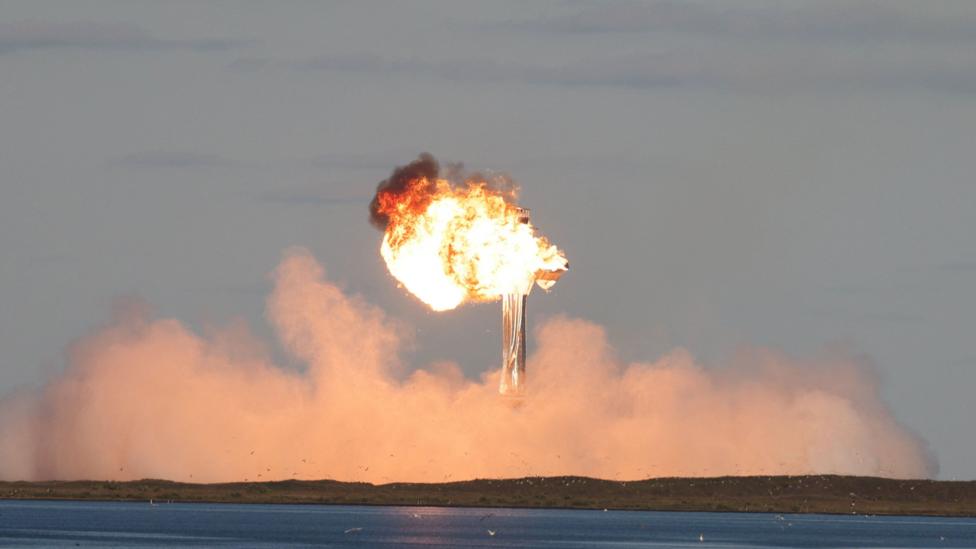
SpaceX was forced to abort a planned booster catch during its latest Starship test flight, redirecting the massive vehicle into the ocean instead of completing a landmark recovery attempt.
In this piece
SpaceX aborted an ambitious attempt to catch its Starship rocket booster during a major test flight, sending the vehicle into the ocean instead. The decision…
SpaceX faced an operational setback during its latest Starship rocket test after engineers aborted an attempt to catch the vehicle's massive booster. The heavy booster was redirected away from the recovery infrastructure and instead came down in open ocean waters, according to reports from BBC Science. The outcome disrupted plans to achieve a complex recovery milestone for the world's most powerful launch vehicle.
Flight controllers made the decision to call off the mid-air capture attempt during the booster's descent phase. Rather than returning directly to the designated recovery zone, automated safety protocols or manual commands diverted the stage toward a water landing. The vehicle splashed down into the sea, concluding the flight profile without the intended mechanical capture.
The aborted maneuver was part of an ambitious double-catch test designed to retrieve rocket hardware directly out of the sky as it returns toward Earth. Developing the capability to capture descending boosters is central to SpaceX's strategy to streamline post-flight processing. Under ideal operating conditions, ground infrastructure is intended to cradle the vehicle seconds before it reaches the surface.
Recovery operations of this scale require thousands of precise telemetry checks and strict safety criteria before a capture attempt is authorized. If automated sensors detect discrepancies in velocity, trajectory, hardware health, or local conditions, flight rules mandate an immediate redirect. Diverting the booster toward an ocean splashdown ensures that ground installations and personnel remain protected in the event of an anomaly.
Reusability remains the core foundation of Elon Musk's long-term vision for the Starship program. While traditional spaceflight architectures discard booster stages after a single launch, SpaceX aims to reuse vehicles rapidly to lower overall mission costs. Catching boosters directly allows the company to eliminate landing legs, reduce vehicle weight, and speed up turnaround times between missions.
The aerospace company has historically relied on a rapid iterative development model that embraces flight anomalies as routine engineering milestones. Under this philosophy, test flights are designed to push technical systems to their operational limits rather than avoid all risk. Data gathered from aborted recovery profiles often yields critical insights into propulsion dynamics, guidance algorithms, and structural loads.
A successful capture test represents an essential technological hurdle for future orbital operations and deep-space missions. Space agencies and commercial partners are closely monitoring the platform's progress as future human spaceflight and cargo initiatives depend on its eventual reliability. Any delay in mastering recovery and rapid turnaround extends the timeline required to achieve operational readiness for routine flights.
Engineering teams will focus on analyzing telemetry from the ocean diversion to pinpoint why the capture attempt was abandoned. Identifying the specific threshold or technical signal that triggered the abort will guide necessary software adjustments and ground modifications. SpaceX will continue refining its vehicle guidance and capture mechanisms as it prepares for subsequent demonstration flights.
Primary source: BBC Science. Newzly rewrites and structures source reporting for clarity; verify critical details at the original.