SpaceX Catches Starship Spacecraft Mid-Air in Historic First
SpaceX achieved an aerospace breakthrough by catching its returning Starship spacecraft mid-air with giant launch tower arms in Texas, demonstrating a pivotal capability for fully reusable orbital spaceflight.
In this piece
SpaceX made spaceflight history by catching its Starship upper-stage spacecraft mid-air using mechanical tower arms at its Starbase facility in Texas. The…
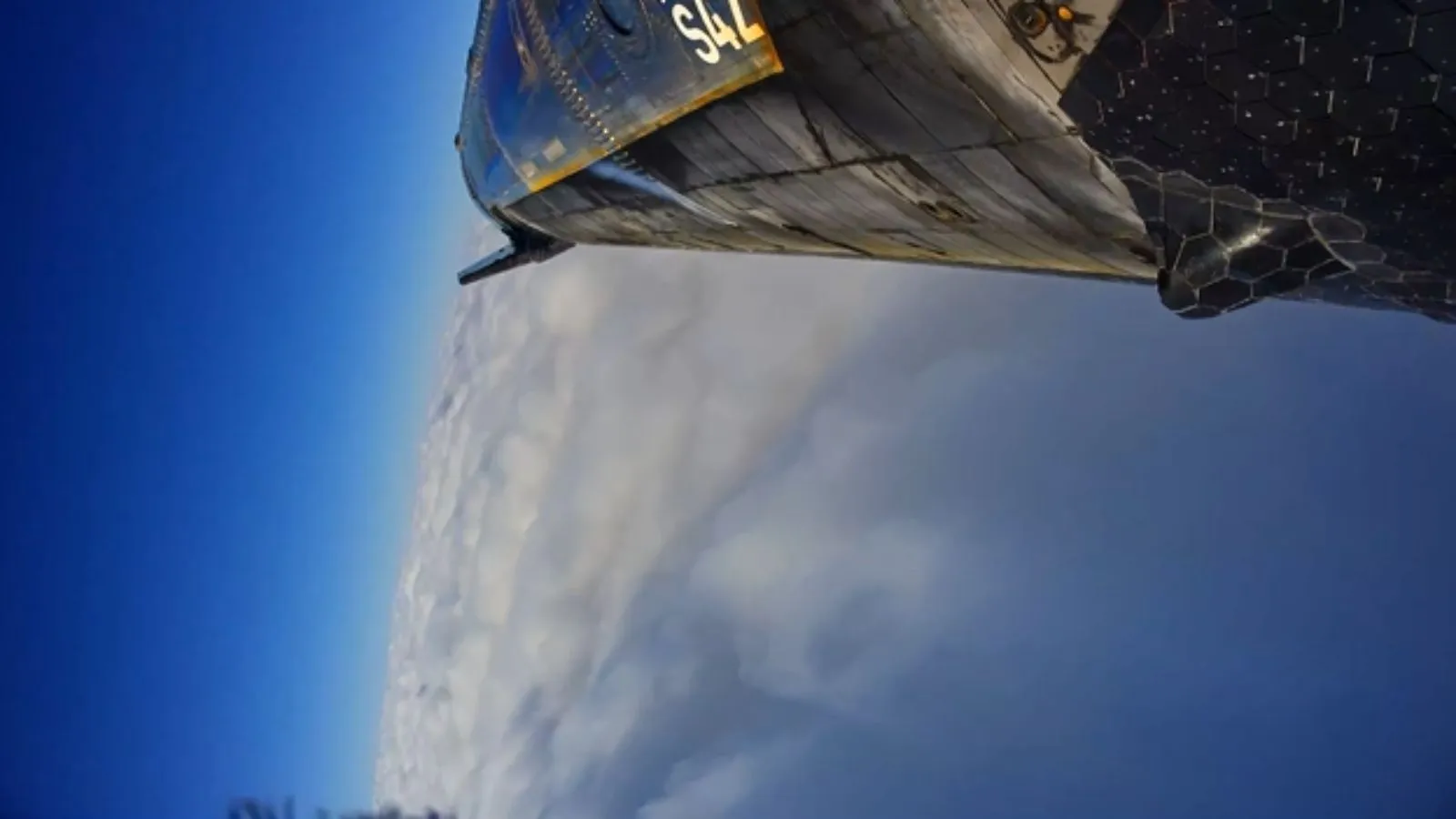
SpaceX achieved an unprecedented aerospace milestone after successfully catching its Starship spacecraft mid-air at its Starbase facility in Texas. The capture marks the first time an orbital-class spacecraft has been snared during descent by mechanical launch tower arms, following earlier booster-catching achievements. Ground teams erupted in cheers as the bullet-shaped upper stage executed its final deceleration maneuver and settled into place.
The complex recovery was accomplished using the towering launch structure's massive mechanical arms, commonly referred to as "chopsticks." Operating on the launch tower nicknamed "Mechazilla," the system carefully closed in on the vehicle as it hovered above the pad. The maneuver eliminated the need for heavy onboard landing legs, directly maximizing the vehicle's payload capacity for future missions.
Before making its historic descent, the spacecraft completed a comprehensive 22-hour orbital flight test that encircled Earth 14 times. During its time in orbit, the vehicle successfully deployed 26 Starlink broadband satellites to prove its operational deployment capabilities. Following the completion of its orbital objectives, the ship executed a guided re-entry through the atmosphere, steering directly toward the South Texas coast.
The technical triumph drew immediate celebration within the aerospace sector, with SpaceX commentator Dan Huot describing the mid-air capture as the "Holy Grail of spaceflight." Safely catching an orbital upper stage returning from orbital speeds represents an extreme engineering hurdle due to high thermal loads and razor-thin margins for error. The successful capture proves that massive spacecraft can return directly to launch structures without sustaining catastrophic structural damage.
The flight test was not entirely without setbacks, as SpaceX missed out on a coordinated double catch of both flight components. The Super Heavy first-stage booster encountered a mechanical anomaly shortly after propelling the spacecraft into space. Flight controllers were forced to divert the booster toward the waters of the Gulf of Mexico, where it exploded following a hard splashdown.
Rapid and complete reusability forms the foundation of Elon Musk's long-term vision for the Starship development program. Standard expendable rocketry traditionally discards both upper stages and boosters into the ocean or burns them up during atmospheric re-entry, severely driving up the financial cost of space missions. By recovering both stages intact at the launch site, SpaceX seeks to enable aircraft-like turnarounds between consecutive launches.
The successful mid-air snare provides invaluable engineering verification for NASA, which depends heavily on Starship for the Artemis program. The agency has contracted SpaceX to supply a specialized Starship variant to serve as the human landing system for astronauts returning to the lunar surface. Demonstrating rapid recovery and thermal shield integrity is crucial for certifying the vehicle to transport crews and heavy infrastructure beyond Earth orbit.
Beyond lunar exploration, the breakthrough advances Musk's stated ambition of establishing a self-sustaining human presence on Mars. Transporting the vast cargo and passenger volumes required for interplanetary colonization relies entirely on slashing launch expenses to unprecedented lows. SpaceX leadership views the ability to repeatedly catch and refuel Starship vessels as the single most critical capability for deep-space transport.
Technical personnel at Starbase have begun detailed physical inspections of the captured spacecraft to evaluate structural stress and thermal protection tiles. Meanwhile, investigative teams are reviewing flight telemetry to determine what caused the first-stage Super Heavy booster to malfunction. Data gathered from both the successful upper-stage recovery and the booster failure will guide design refinements for upcoming Starship test flights.
Primary source: The Indian Express. Newzly rewrites and structures source reporting for clarity; verify critical details at the original.