Spaniards vote in contentious election watched for far-right gains
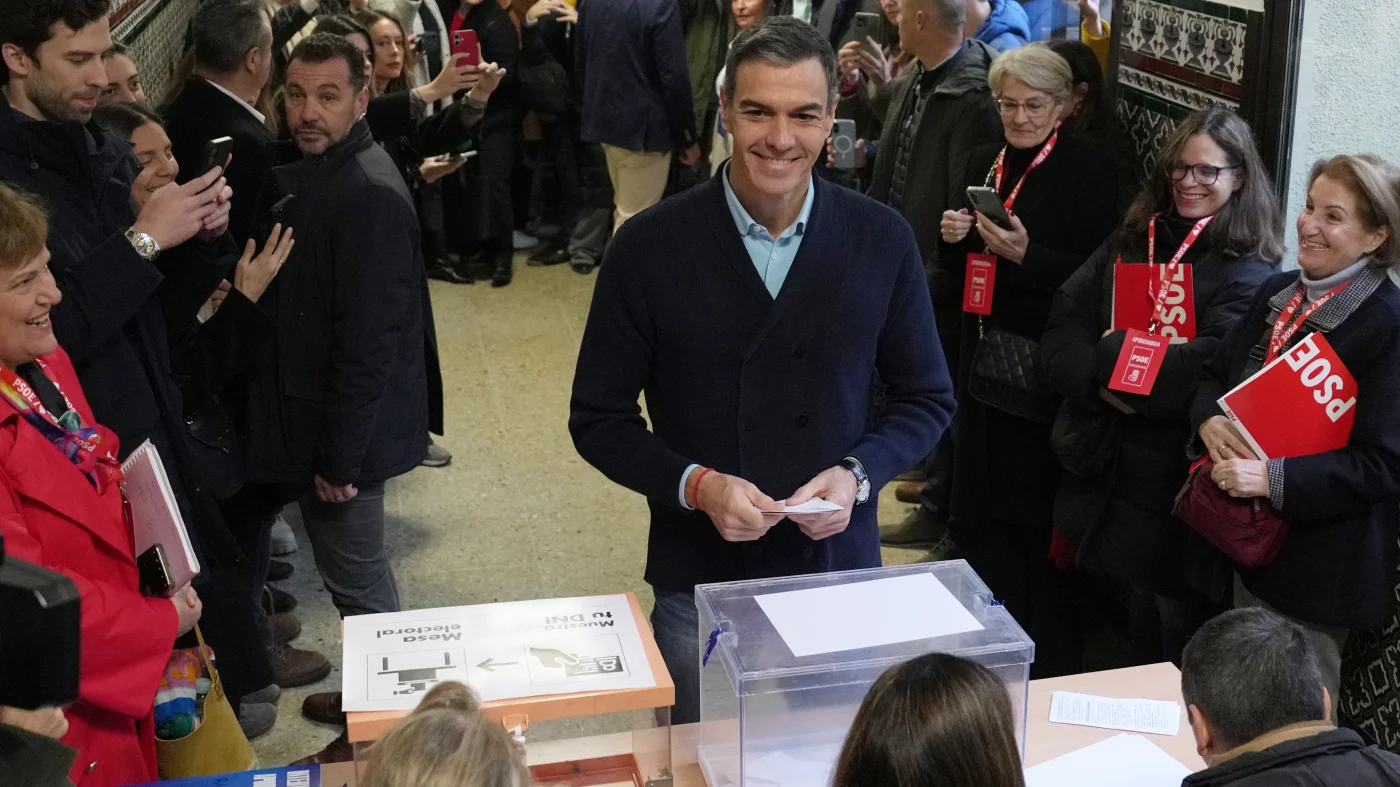
Spaniards are casting ballots in a general election that major news outlets describe as contentious, raising the prospect of far-right gains and political repercussions for Europe and the world.
In this piece
Voters in Spain are taking part in a general election framed by NPR, the BBC, The Guardian, CNN and The New York Times as contentious and internationally…
Spaniards are voting in a general election that major outlets describe as contentious and potentially consequential well beyond Spain. The BBC reported that polls had opened, while NPR, The Guardian, CNN and The New York Times framed the ballot as a high-stakes political test. No winner is established in the headlines gathered here.
NPR’s account centers the possibility of far-right gains. The Guardian calls the vote a bellwether with big repercussions for Europe and the world. Read together, the coverage presents an election still in progress: voters are casting ballots, and the result remains ahead of the reporting.
CNN’s framing focuses on the incumbent. It says Prime Minister Pedro Sánchez stood up against Donald Trump and that his own voters may be about to bring him down. That is a political judgment offered by the outlet, not a tally of votes. It places foreign posture and domestic discontent side by side in the explanation of the race.
The New York Times, in a separate headline, asks who Alberto Núñez Feijóo is and identifies him as Spain’s conservative opposition leader. The headline does not set out his platform or forecast a victory. It does mark him as the principal conservative figure international readers are being asked to follow as voting proceeds.
The far-right dimension is stated only in outline. NPR says the election could see far-right gains, without saying whether any advance would amount to a governing mandate, bargaining power in a divided parliament, or a smaller shift. The cluster supplies no seat projections, turnout figures or the name of a far-right party.
The Guardian’s bellwether language is the clearest statement of why the vote is being treated as more than a change of leadership in Madrid. In that telling, other capitals have reason to watch because the outcome may carry repercussions for Europe and the world. The headlines do not detail the policy files—migration, the economy, or relations with allies—behind that claim.
Sánchez’s reported stance toward Trump sits inside that wider frame. CNN links the prime minister’s political risk at home to a record of standing up to the U.S. president. Readers should treat the connection as the outlet’s interpretation until returns show whether voters weighed that record, set it aside, or punished it.
Feijóo’s place in the Times coverage suggests the choice before voters includes a conservative alternative if Sánchez cannot assemble the support he needs. Whether the next government can be formed quickly will depend on the balance of seats, which these headlines do not provide. Any description of coalition arithmetic at this stage would go beyond the source material.
What comes next is procedural and still unknown in outcome. Authorities will count the votes, parties will look for a path to govern, and governments elsewhere will watch whether Spain’s political balance shifts. Until official figures replace campaign scenarios, the established facts are that polls opened in a race outlets already call contentious, open to far-right gains, and significant for Europe and the world.
Primary source: Google News U.S.. Newzly rewrites and structures source reporting for clarity; verify critical details at the original.