Spix’s Macaw Recovery Effort Engulfed in Controversy
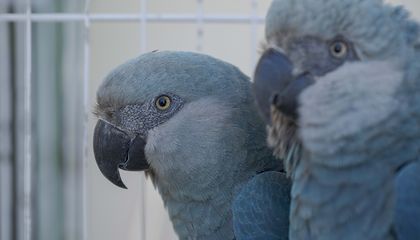
The blue parrot made famous by the animated film Rio became the focus of a real-world conservation effort that Smithsonian Magazine describes as collapsing amid controversy and confusion.
In this piece
The Spix’s macaw disappeared from South American skies more than 30 years ago, according to Smithsonian Magazine. An effort to bring the species back became…
An effort to bring back the Spix’s macaw, the blue Brazilian bird associated with the animated hit Rio, collapsed amid controversy and confusion, according to Smithsonian Magazine. The account describes a troubled conservation undertaking centered on a species that disappeared from South American skies more than 30 years ago.
The bird’s story links a widely recognized screen character with a much less straightforward real-world struggle. While Rio brought the species into popular culture, the recovery effort described by Smithsonian shows that public recognition and a successful return to the wild are very different outcomes. The supplied account presents the project as a cautionary conservation story rather than a simple comeback.
The distinction between a species disappearing from the wild and vanishing altogether is central to understanding such efforts. Bringing a bird back to its former environment is a different challenge from keeping individual birds alive under human care. The material provided describes an attempt to reverse the macaw’s absence, but does not establish the species’ current population or distribution.
For a recovery project, the intended achievement is broader than the presence of birds at a release site. A lasting return would mean a population able to persist in the environment to which it has been restored. That is the conservation ambition behind bringing a species back, although the supplied account does not document how far this particular effort progressed toward it.
Smithsonian’s description places controversy at the center of the project’s unraveling. However, the excerpt does not identify the participants, explain their disagreements or specify which decisions caused the effort to collapse. It therefore provides no basis for assigning responsibility to any person or organization, or for determining whether the problems were primarily scientific, administrative or otherwise.
The uncertainty also matters when interpreting the word “collapsed.” A failed or disrupted recovery initiative does not, by itself, establish that every conservation effort for a species has ended. The supplied material supports a conclusion about a troubled undertaking, not a definitive judgment that the Spix’s macaw can no longer return to the wild.
The story’s wider significance lies in the distance between the appeal of saving a recognizable animal and the difficulty of achieving a durable recovery. A celebrated species can draw attention to conservation, but attention alone cannot demonstrate that a project has succeeded. Assessing the outcome requires evidence about the birds as well as the program intended to restore them.
What happens next remains unresolved in the material provided. Smithsonian frames the episode as an effort overtaken by controversy and confusion, without a next-step timetable in the supplied excerpt. The immediate question is what that breakdown means for the broader goal of returning the Spix’s macaw to the skies from which it disappeared.
Primary source: Smithsonian Magazine. Newzly rewrites and structures source reporting for clarity; verify critical details at the original.