Stocks Chase Rare Zweig Breadth Thrust Buy Signal as Fed Rate Concerns Loom
A rare technical buy signal is emerging across the New York Stock Exchange even as investors brace for potential interest rate hikes from the Federal Reserve, setting up a clash between market momentum and monetary policy.
In this piece
Stocks are approaching a rare technical buy signal through the Zweig Breadth Thrust indicator on the New York Stock Exchange. The potential signal emerges as…
Major equity benchmarks are pursuing a rare technical buy signal known as the Zweig Breadth Thrust, even as investors navigate renewed anxiety over Federal Reserve monetary policy. The technical indicator captures rapid shifts in market participation across the New York Stock Exchange, providing traders with an early snapshot of underlying buying pressure. According to market data highlighted in the Chart of the Day, the momentum gauge is drawing heightened attention during a critical juncture for domestic equities.
The Zweig Breadth Thrust is triggered under specific, historically infrequent trading conditions. Specifically, the indicator fires when the proportion of advancing NYSE stocks, calculated as a 10-day moving average, surges from below 40 percent to above 61.5 percent within a narrow window of 10 trading sessions. Such a rapid transition reflects a dramatic shift from widespread selling to sudden, broad-based accumulation across the exchange floor.
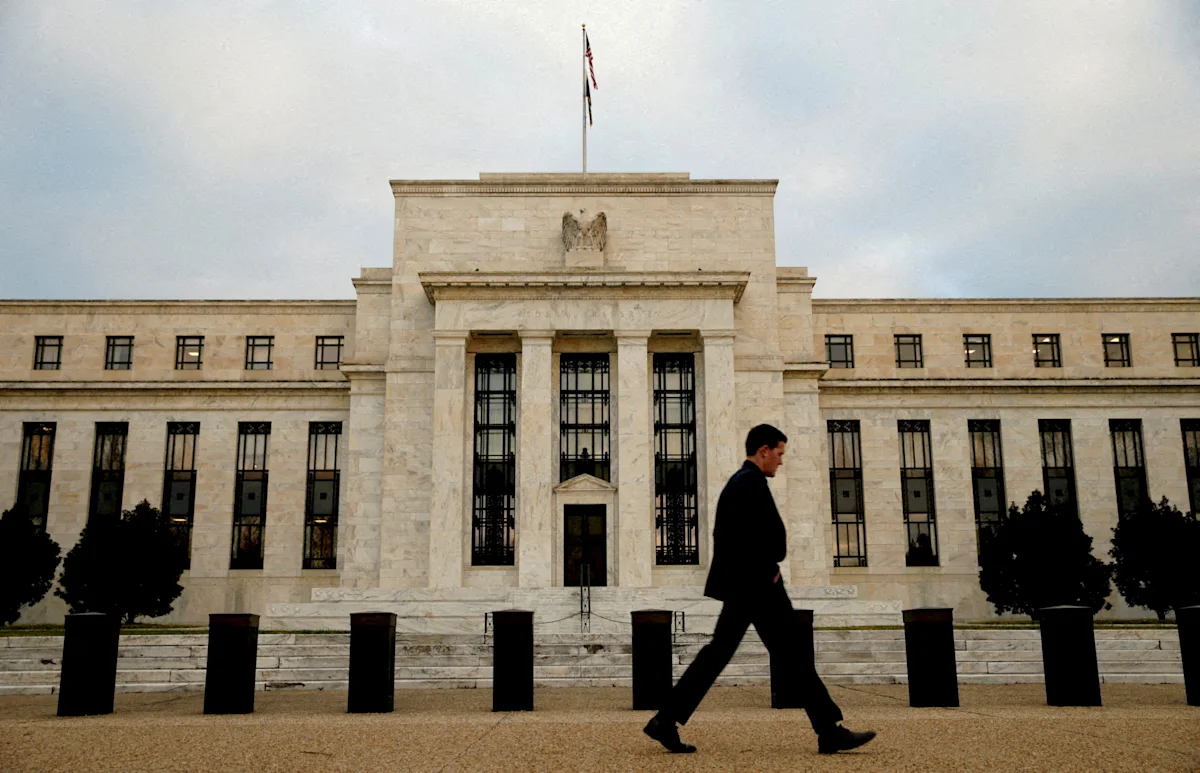
The emergence of this potential buy signal arrives as market participants brace for the prospect of an interest rate hike from the Federal Reserve. Typically, tightening monetary conditions present headwind risks for equity valuations by lifting borrowing costs and dampening corporate earnings projections. The juxtaposition of a rare bullish technical setup alongside central bank policy uncertainty highlights the prevailing division among market observers.
Market breadth metrics are widely watched because they reveal whether index gains are driven by a broad cohort of equities or concentrated among a handful of heavily weighted constituents. When breadth thrusts occur, they signal that an overwhelming majority of listed issues are participating in a rebound rather than a selective few. For technical analysts, this broad-based participation has historically been viewed as a hallmark of durable, institutional-grade buying power.
The stringent criteria required for the indicator to register—rebounding from an oversold condition under 40 percent to an aggressive threshold above 61.5 percent—are intended to filter out routine market noise. Because the calculation demands an abrupt velocity of advancing shares over just ten trading days, false positives have historically been uncommon. Market participants often track the threshold to assess whether sudden rallies represent short-covering bursts or sustained repositioning.
At the same time, technical signals do not operate in a vacuum, and macroeconomic policy remains a dominant factor steering broader investor sentiment. Expectations surrounding potential Federal Reserve tightening continue to influence bond yields and capital allocation across equity sectors. If policymakers maintain or heighten borrowing costs, equity valuations may face sustained scrutiny regardless of short-term technical improvements.
While a confirmed breadth thrust is conventionally interpreted as a constructive long-term signal, market analysts maintain that no single indicator guarantees future performance. Uncertainty persists over whether current market momentum can overcome the headwind of restrictive monetary policy and shifting economic data. Observers note that past breadth signals have occasionally encountered volatile pullbacks when macroeconomic conditions deteriorated sharply.
For now, trading desks and institutional investors are closely monitoring daily advance-decline ratios across the NYSE to see if the Zweig indicator completes its requisite threshold. As market participants await further guidance on monetary policy and interest rate trajectories, the behavior of broad market breadth is likely to serve as a key barometer of investor conviction in the weeks ahead.
Primary source: Yahoo Finance Markets. Newzly rewrites and structures source reporting for clarity; verify critical details at the original.