Supreme Court Asked to Rule on Alaska Plane Seizure Over Beer in Dry Village
The U.S. Supreme Court is weighing an appeal by an Alaska bush pilot whose $100,000 airplane was seized by the state after a passenger brought beer aboard a flight into a dry village.
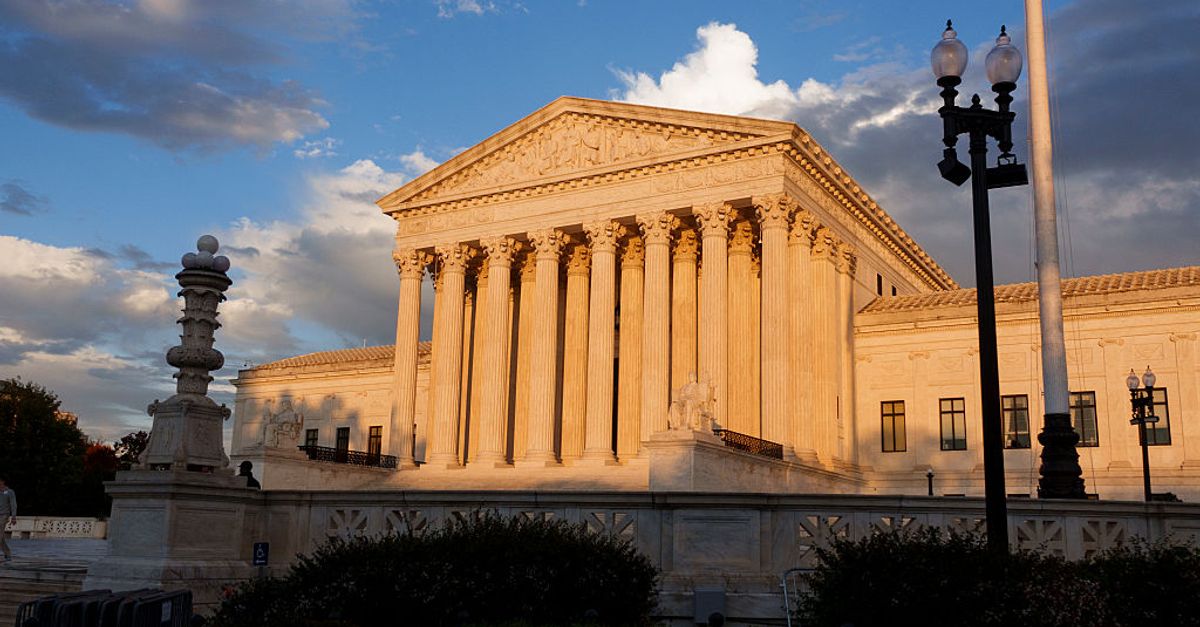
In this piece
An Alaska bush pilot has petitioned the U.S. Supreme Court to challenge the seizure of his airplane under the Eighth Amendment's Excessive Fines Clause. State…
The U.S. Supreme Court is being asked to review whether Alaska officials violated the U.S. Constitution by seizing a bush pilot's airplane after a passenger attempted to transport beer into a dry village. Attorneys for octogenarian aviator Ken Jouppi filed a petition urging the justices to clarify protections under the Eighth Amendment's Excessive Fines Clause. The legal challenge targets state civil forfeiture laws that permit the government to confiscate high-value property over low-level misdemeanor offenses.
The long-running dispute stems from an April 2012 flight scheduled to depart from Fairbanks to the remote community of Beaver, Alaska. State troopers searched Jouppi's 1969 Cessna seaplane before takeoff and discovered alcohol, including a visible six-pack of beer, packed inside a passenger's personal luggage. Beaver had previously voted under Alaska local option laws to ban the importation, possession, and sale of all alcoholic beverages.
Following the discovery, state prosecutors charged Jouppi with a misdemeanor for knowingly transporting alcohol into a designated dry locality. A state jury ultimately convicted the pilot, resulting in a three-day jail sentence, three years of probation, and a $1,500 criminal fine. However, Alaska authorities also initiated civil forfeiture proceedings to permanently confiscate his airplane, which was valued between $95,000 and $150,000.
Represented by the public interest law firm Institute for Justice, Jouppi contested the seizure as unconstitutionally punitive. His defense argued that forfeiting an essential bush plane worth around $100,000 over a minor misdemeanor carrying a modest statutory fine represents an excessive fine prohibited by the Eighth Amendment. The legal team maintained that financial penalties must bear a reasonable relationship to the individual offender's specific culpability.
The Alaska Supreme Court upheld the plane's confiscation, ruling that the forfeiture was not grossly disproportional to the gravity of the underlying crime. In its decision, the state high court focused heavily on the broader societal toll and public health crises caused by illicit alcohol in isolated Native villages. State justices concluded that deterrence justified stripping the pilot of his aircraft regardless of the specific quantity of beer involved.
The petition now before the nation's highest court questions how federal and state judges must evaluate proportionality under the Excessive Fines Clause. Jouppi contends that appellate courts across the country have split over whether to judge a penalty against broad societal problems or the concrete facts of the defendant's individual conduct. If courts can rely on abstract social harms to justify harsh property seizures, his attorneys warn that constitutional limits on government forfeitures will become meaningless.
The case arrives amid escalating national scrutiny over civil asset forfeiture, a mechanism that critics argue incentivizes aggressive property seizures by law enforcement agencies. Legal reform advocates note that rural pilots and transporters in Alaska provide essential transportation links where roads do not exist, making vehicle forfeitures uniquely devastating to personal livelihoods. A definitive ruling from the Supreme Court could establish nationwide benchmarks restricting how states penalize minor regulatory and criminal violations.
The Supreme Court will determine in the coming months whether to add the Alaska dispute to its docket for formal briefing and oral arguments. If the justices decline to hear the appeal, the Alaska Supreme Court ruling will stand, cementing the state's authority to confiscate aircraft used in bootlegging offenses. A grant of review, by contrast, would set the stage for a major constitutional test on property rights and excessive government punishment.
Primary source: Google News Alaska. Newzly rewrites and structures source reporting for clarity; verify critical details at the original.