world·Tamil Nadu·Thanjavur District
Supreme Court Bars Tamil Nadu From Coercive Action Against SASTRA University in Land Dispute
The Supreme Court has barred the Tamil Nadu government from taking coercive steps to evict SASTRA University from 31.37 acres of land in Thanjavur, listing the institution's appeal for a final hearing on its merits.
In this piece
The Supreme Court made absolute an interim order barring the Tamil Nadu government from taking coercive action against SASTRA University over a 31.37-acre land…
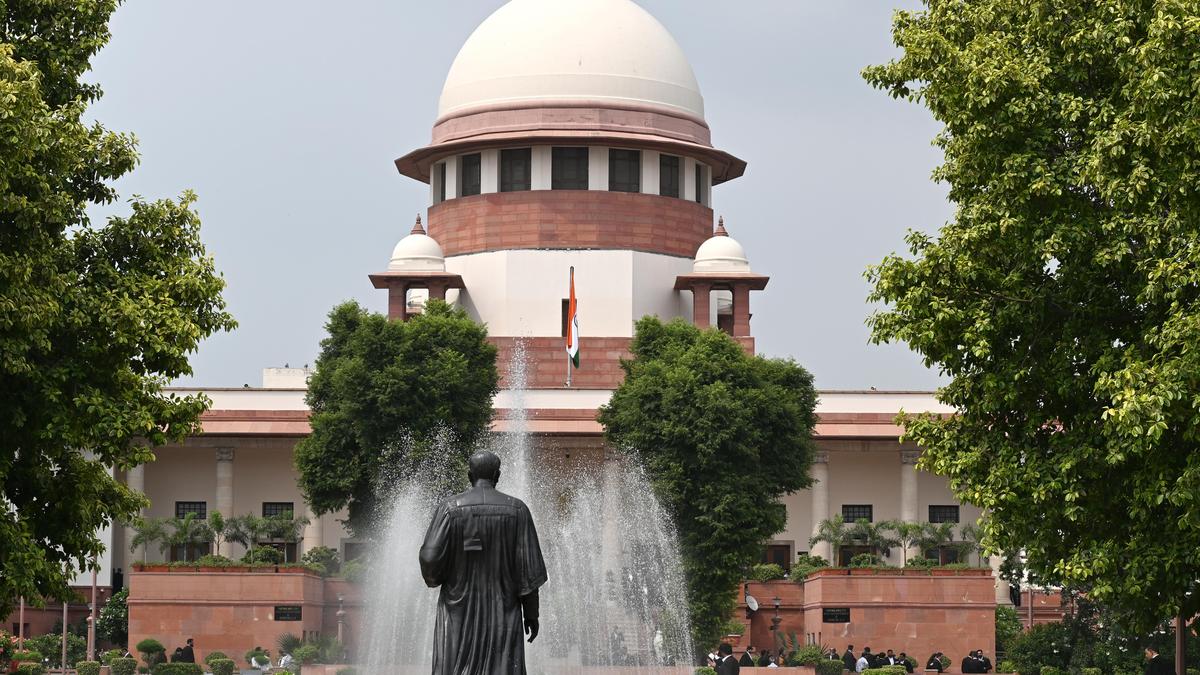
The Supreme Court has barred the Tamil Nadu government from taking any coercive action against SASTRA University over a long-running dispute involving 31.37 acres of government land in Thanjavur. A three-judge bench led by Chief Justice of India Surya Kant, alongside Justices Joymalya Bagchi and V. Mohana, made absolute an earlier interim stay protecting the institution from dispossession. The court simultaneously directed that the university's appeal against a High Court eviction order be listed for final hearing on its merits.
The order followed submissions from the Tamil Nadu government indicating that it was unwilling to pursue an amicable resolution or explore an alternative land exchange. Appearing for the State, senior counsel conveyed to the bench that authorities had reviewed the matter and maintained their position seeking repossession of the property. The government formally declined requests to assign the land or regularize the occupation, leaving the dispute to be resolved through judicial determination.
The legal battle reached the apex court after the Madras High Court ordered the eviction of the deemed university from the contested parcel. The High Court had upheld the state administration's refusal to exchange or assign the land, concluding that public property could not be alienated in such a manner. In response, SASTRA University approached the Supreme Court seeking relief, arguing that the land had formed an integral part of its educational campus for nearly four decades.
During prior proceedings before the apex court, senior advocates representing SASTRA University, including Mukul Rohatgi, Abhishek Singhvi, and C.S. Vaidyanathan, submitted proposals offering alternative land parcels or financial compensation. The institution argued that surrendering the land would dismantle vital academic infrastructure and student facilities established over several decades. Counsel emphasized that an exchange of equal-value land elsewhere would protect public interests without disrupting the ongoing operations of the university.
Earlier in the litigation, the Supreme Court had urged both sides to avoid turning the dispute into a matter of prestige. The bench observed that the land was occupied by an educational institution serving a broader public purpose rather than a private commercial venture. The judges questioned the rigidity of the administration's stance and encouraged officials to examine whether a practical compromise could be reached that safeguarded student welfare while addressing revenue concerns.
The controversy traces back to the initial establishment and expansion of the Shanmugha Arts, Science, Technology and Research Academy campus in Thanjavur. The university has occupied the 31.37 acres for roughly 40 years, constructing facilities and integrating the land into its educational complex. Over the years, multiple rounds of administrative reviews, writ petitions, and government notices have failed to resolve whether the land could be formally regularized or traded for equivalent parcels.
The Supreme Court's intervention provides immediate stability to thousands of students, faculty members, and researchers who rely on the facilities situated across the disputed grounds. A sudden eviction or demolition drive would have created acute logistical disruptions and jeopardized ongoing academic sessions. Legal analysts note that the case underscores the delicate balance courts must strike between enforcing state land laws and preserving established public educational infrastructure.
The dispute also highlights wider administrative questions concerning how municipal and state authorities manage long-term land encroachments involving non-profit and academic entities. While state governments are custodians of public land, courts have occasionally favored pragmatic solutions such as compensatory land grants or lease arrangements when substantial public investments have taken root. The apex court's refusal to permit coercive action ensures that administrative finality does not precede comprehensive judicial review.
With the interim stay now made absolute, the Tamil Nadu government is barred from initiating eviction notices, demolition proceedings, or property seizures pending the conclusion of the litigation. The Supreme Court has directed the State to place its full counter-affidavit on record ahead of the final hearing. The apex court will ultimately determine whether the High Court's eviction mandate should stand or if the university can retain the land through compensation or an alternative statutory remedy.
Primary source: Google News Tamil Nadu. Newzly rewrites and structures source reporting for clarity; verify critical details at the original.