Supreme Court issues notice on Umar Khalid and Sharjeel Imam’s fresh bail pleas
The Supreme Court has issued notice on fresh bail applications by Umar Khalid and Sharjeel Imam in the Delhi riots conspiracy case, according to Supreme Court Observer.
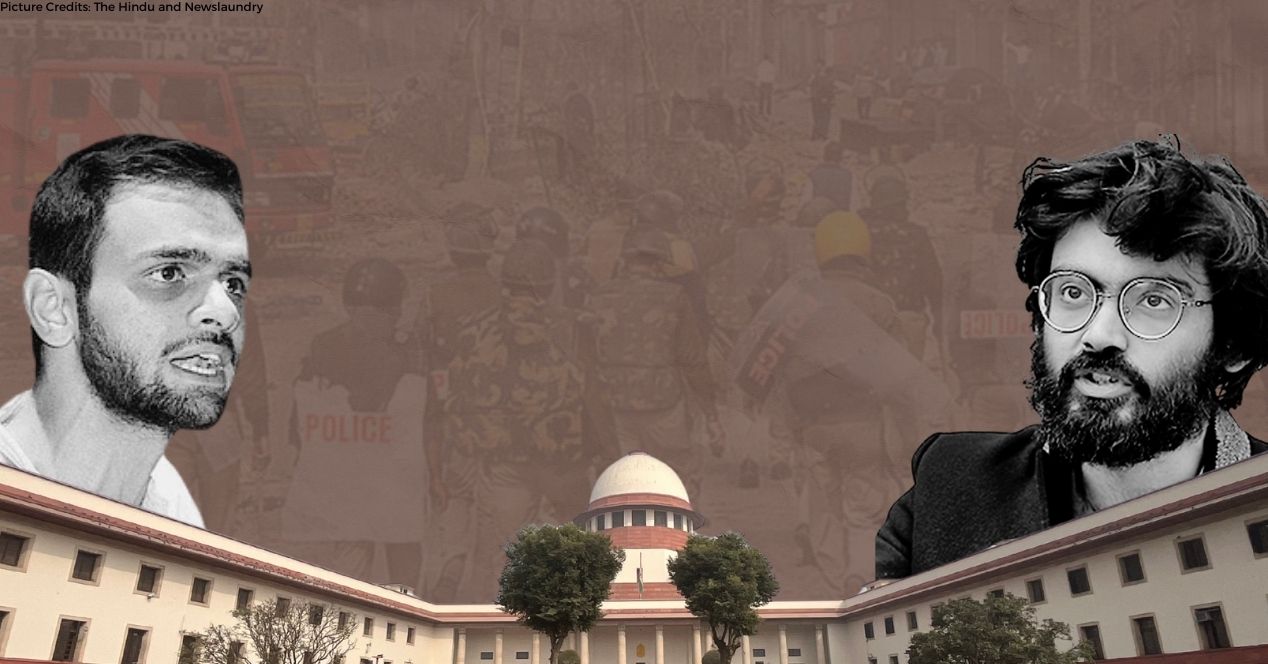
In this piece
The Supreme Court has sought a response to fresh bail pleas filed by Umar Khalid and Sharjeel Imam in the Delhi riots conspiracy case. Supreme Court Observer…
The Supreme Court has issued notice on fresh bail pleas by Umar Khalid and Sharjeel Imam in the Delhi riots conspiracy case, according to Supreme Court Observer. The move brings their applications before the court for a response but does not itself grant either applicant bail.
The report identifies both applications as fresh pleas, distinguishing them from earlier efforts to secure bail. However, the supplied report does not set out their grounds or explain how the arguments differ from those raised previously. It therefore does not establish what new circumstances, if any, the applicants have asked the court to consider.
Issuing notice is a procedural step through which a court seeks a response before considering a request further. It should not be read as an indication that the Supreme Court has accepted the applicants’ arguments. The reported development also does not establish that the court has rejected the position opposing their release.
The applications concern bail in the Delhi riots conspiracy case, rather than a final determination of the allegations. Bail proceedings address whether an accused person should be released while the legal process continues. A decision at that stage is distinct from a judgment establishing guilt or acquittal, and the issuance of notice settles neither question.
The immediate significance is that the fresh requests have reached the stage of notice before the Supreme Court. For Khalid and Imam, the outcome sought through these applications is bail. The headline report records movement in that process, but it does not report an order directing their release or specify any conditions under which release might occur.
Details of the court’s reasoning are not included in the material supplied. It does not identify the judges hearing the applications, reproduce the notice order or provide a deadline for responses. Without those details, the scope of any observations made during the proceedings cannot be reliably described, nor can a timetable for a decision be stated.
The distinction between a procedural development and substantive relief is particularly important when reporting pending criminal proceedings. The notice concerns the handling of the bail requests; it is not a finding on the underlying conspiracy allegations. Those allegations remain separate from the limited action described in Supreme Court Observer’s headline.
The next development to watch is the response to the notices and any further directions from the Supreme Court on the two applications. The supplied report does not give a next hearing date or indicate when a bail ruling may follow. For now, the confirmed development is the issuance of notice, with the outcome of both fresh pleas still unresolved.
Primary source: Google News Delhi. Newzly rewrites and structures source reporting for clarity; verify critical details at the original.