Taiz residents describe life under Houthi siege to BBC
Seven people trapped in the Yemeni city of Taiz spoke to the BBC about life under Houthi siege, including a parent who tells their son the sounds outside are fireworks.
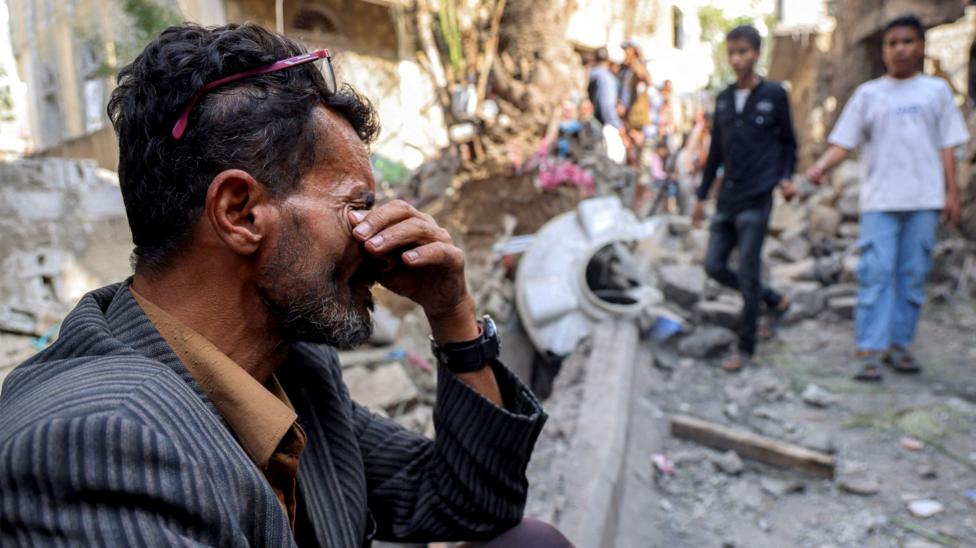
In this piece
BBC correspondent Orla Guerin spoke to seven people trapped in Taiz by the Houthis about life under siege. The report’s headline highlights a parent’s effort to…
Seven people trapped in the Yemeni city of Taiz by the Houthis have described life under siege to the BBC, offering personal accounts of conditions inside the city. Correspondent Orla Guerin’s reporting focuses on residents’ experiences, with the headline highlighting a parent’s words: “I tell my son it’s just fireworks.”
The remark puts the relationship between a parent and child at the centre of the story. Rather than describing the siege through military statements or political arguments, it conveys an attempt to make a frightening situation less alarming for a son. The supplied excerpt does not identify the speaker or give the child’s age.
The BBC says Guerin spoke to seven people trapped in Taiz, providing several individual perspectives on life under siege. Those interviews are the basis of the report, although the supplied summary does not reproduce their accounts. Beyond the words in the headline, it provides no further direct quotations from the residents.
The distinction between those personal accounts and a broader assessment of conditions matters. Interviews can reveal how people experience a siege, but the brief material available here does not establish how closely each person’s circumstances reflect those of other residents. Nor does it set out the specific restrictions affecting the interviewees or explain how those restrictions differ across the city.
The account nevertheless places civilians, rather than the forces surrounding them, at the forefront of the news. Its central concern is what being trapped means for people trying to live through the situation. The parent’s explanation to a child gives that concern a particularly intimate focus, showing how the siege enters conversations within a family.
The BBC identifies the Houthis as the force trapping the people interviewed in Taiz. The supplied material does not include a Houthi response, details of military positions or an account of the siege’s chronology. It also offers no figures for casualties, displacement or access to essential supplies, leaving the scale of those issues unquantified in this excerpt.
Those limits mean the report’s headline should be read as one person’s testimony, not as a complete description of conditions throughout Taiz. Its significance lies in the experience it conveys: a parent choosing reassuring language when speaking to a child. The other residents’ experiences are referenced in the summary but cannot be described individually from the information supplied.
The excerpt gives no timetable for relief, changes in access or an end to the siege, and it reports no next steps by the parties involved. For now, the BBC’s stated focus remains the testimony of the seven people Guerin interviewed and what their accounts reveal about living inside the besieged city.
Primary source: BBC World. Newzly rewrites and structures source reporting for clarity; verify critical details at the original.