Tennessee Democrat Explains How She Won a Conservative District With Almost No Ad Money
In an interview with PBS NewsHour, Representative-elect Victoria Broderick detailed how grassroots retail campaigning overcame massive spending disadvantages to flip Tennessee's conservative 4th Congressional District.
In this piece
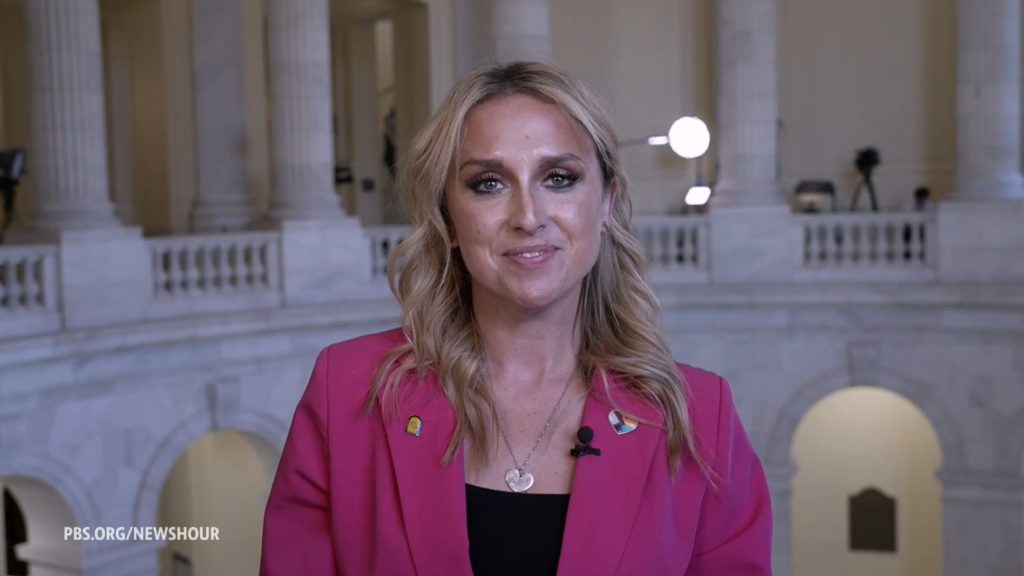
Democratic Representative-elect Victoria Broderick described how she flipped a heavily conservative Tennessee congressional district without national party…
Representative-elect Victoria Broderick detailed how her shoestring campaign flipped a rural, strongly conservative Tennessee congressional seat, explaining to PBS NewsHour that direct voter contact and localized economic messaging proved decisive. The Democrat mounted a narrow upset against eight-term Republican Representative Scott DesJarlais in Tennessee's 4th Congressional District. Her victory marked one of the cycle's most unexpected outcomes in a district that had overwhelmingly backed former President Donald Trump.
Broderick entered the race with minimal institutional backing, raising less than $100,000 across the entire election cycle. National Democratic campaign committees did not invest financial resources into the contest, viewing the rural district as safely Republican territory. Rather than relying on high-priced television advertisements, Broderick focused on door-to-door canvassing, small community gatherings, and volunteer-led outreach across the sprawling district.
Tennessee's 4th Congressional District spans a largely rural and small-town swath of southern and central Tennessee that has long been a Republican stronghold. DesJarlais, a physician first elected during the 2010 tea party wave, had routinely won reelection by double-digit margins for more than a decade. The political composition of the region led most political forecasters and party strategists to view the seat as noncompetitive heading into the election.
During her interview with PBS correspondent Liz Landers, Broderick emphasized that her background as a tech support worker helped her relate to the everyday economic pressures facing local residents. Her campaign focused heavily on kitchen-table concerns, including local healthcare access, public school funding, and the rising cost of basic living expenses. Broderick noted that many voters were eager to discuss tangible community challenges rather than partisan talking points.
Modern congressional campaigns routinely spend millions of dollars on television ad buys, direct mailers, and digital consulting. In contrast, Broderick described running a deliberately low-cost operation that prioritized personal conversations over broadcast airtime. She explained that voters frequently expressed fatigue with wall-to-wall negative attack ads, leaving an opening for a more personal, unvarnished retail approach.
Official election tallies showed Broderick edging out the long-serving incumbent by a margin of fewer than 300 votes, underscoring the high impact of granular turnout efforts. Local observers noted that even marginal shifts in voter participation and split-ticket voting in traditionally red counties proved consequential. Broderick credited a committed core of volunteers who reached voters often neglected by traditional political operations.
The result has sparked broader conversations among political analysts about how parties allocate resources in rural and historically conservative regions. Democratic strategists have faced long-standing debates over whether to invest in deep-red territory or concentrate capital exclusively in competitive suburban swing districts. Broderick’s performance demonstrates that localized engagement and relatable candidate profiles can occasionally yield breakthroughs even in unfavorable terrain.
As Broderick prepares to take her seat in the incoming Congress, she faces the challenge of representing a politically divided and heavily conservative constituency. She told PBS that her legislative focus will remain rooted in the pragmatic local issues that defined her campaign, particularly economic development and basic infrastructure. Both state and national political observers will be watching closely to see whether her grassroots formula can translate into durable governing in Washington.
Primary source: Google News Tennessee. Newzly rewrites and structures source reporting for clarity; verify critical details at the original.