world·Uttar Pradesh·Farrukhabad District
The Mystery of Sumitra: How an Indian Woman's Claim of Reincarnation Drew Global Researchers
After a rural Uttar Pradesh woman survived an apparent brush with death and claimed the identity of a deceased stranger, international investigators spent decades examining one of India's most baffling cases of reported reincarnation.
In this piece
In 1985, a young woman named Sumitra in Uttar Pradesh revived after being presumed dead, insisting she was Shiva Tripathi, an educated woman who had died months…
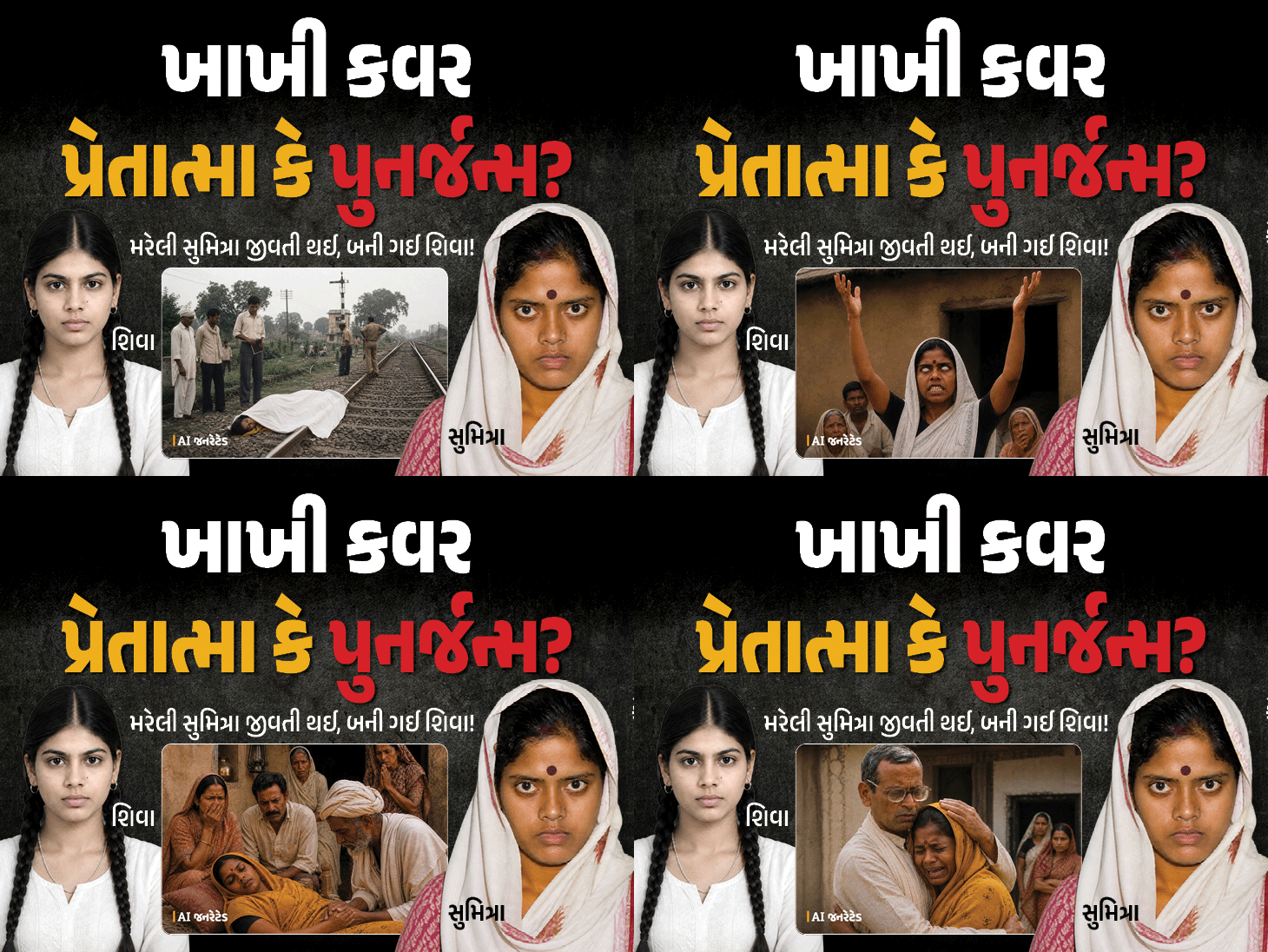
The perplexing story of Sumitra, a village woman from Uttar Pradesh who was presumed dead before abruptly reviving with the memories and mannerisms of another person, continues to captivate scholars and observers decades after the event. In the summer of 1985, the young married woman lost consciousness in the village of Sharifpura in Farrukhabad district following a severe illness. As family members prepared for her funeral rites, she suddenly regained consciousness, but adamantly rejected her original identity.
Upon waking, Sumitra announced that she was not the person her relatives knew, but instead identified herself as Shiva Tripathi, an educated Brahmin woman from the distant town of Dibiyapur. Shiva had tragically died two months earlier under disputed circumstances near a railway line. Sumitra displayed deep disorientation when confronted with her husband and child, refusing to recognize them and insisting on returning to what she described as her true family home.
The sudden shift in personality extended beyond mere verbal declarations to fundamental habits, dialect, and cultural customs. Although raised in an illiterate Thakur family, she began speaking with a distinctly refined vocabulary, strictly observing the dietary codes and rituals typical of orthodox Brahmin households. Villagers and relatives reported that she appeared utterly unfamiliar with her daily household chores, yet demonstrated literacy and familiarity with urban social conventions.
Intrigued and unsettled by the claims, relatives of the late Shiva Tripathi traveled to Sharifpura to interrogate the woman claiming their daughter's soul. During recorded meetings, Sumitra correctly identified dozens of Shiva's family members, acquaintances, and childhood possessions without prior formal introductions. She also recounted private domestic interactions and personal hardships from Shiva's life that were not widely known outside immediate family circles.
The extraordinary nature of the development soon reached beyond the district, drawing parapsychologists and mental health professionals from India and abroad. Researchers from the University of Virginia's Division of Perceptual Studies, led by Dr. Ian Stevenson alongside Indian investigator Dr. Satwant Pasricha, initiated an exhaustive field inquiry. The team conducted independent interviews across both settlements to document timelines and determine whether any prior communication between the families had occurred.
Medical professionals and skeptical observers proposed alternative explanations rooted in cognitive and psychiatric science. Critics argued that the episode might represent an extreme form of dissociative identity disorder, sparked by severe fever, psychological trauma, or subconscious distress within rural domestic life. Under this theory, details regarding Shiva's high-profile death might have traveled along regional rumor networks, providing latent material that an impressionable mind absorbed unconsciously.
For the investigating parapsychologists, however, the case challenged conventional paradigms because it differed sharply from typical reincarnation reports involving young children speaking of past lives. Researchers classified the episode under possession or replacement reincarnation, a rare category where an adult consciousness appears displaced following a severe medical crisis. Despite rigorous attempts to uncover fraud, investigators found no evidence of financial collusion or prior contact between the two distant households.
In northern India, where traditional beliefs in soul transmigration and spiritual possession coexist with rapid modernization, the account quickly embedded itself into regional folklore. For local communities, the narrative resonated with traditional philosophical concepts of the immortal soul entering another physical vessel. Meanwhile, social commentators observed that adopting the persona of a deceased, educated woman offered a complex psychological refuge from the rigid expectations placed on rural brides.
Decades later, the case of Sumitra remains one of the most thoroughly analyzed case studies in the international literature on anomalous consciousness. While mainstream neurology and psychiatry continue to attribute such phenomena to dissociative conditions and cryptomnesia, the detailed field notes compiled in Uttar Pradesh remain a benchmark for consciousness research. The unsolved questions surrounding her revival illustrate the enduring tension between empirical science and the mysterious boundaries of human memory.
Primary source: Divya Bhaskar Original. Newzly rewrites and structures source reporting for clarity; verify critical details at the original.