Thousands in Czech Republic Protest Proposed State Media Funding Changes
Protesters gathered in the Czech Republic to oppose proposed changes to public media financing, warning the reforms could grant the government undue control over state broadcasting.
In this piece
Thousands of demonstrators have rallied across the Czech Republic against proposed public media funding reforms. Critics and civil society groups warn the…
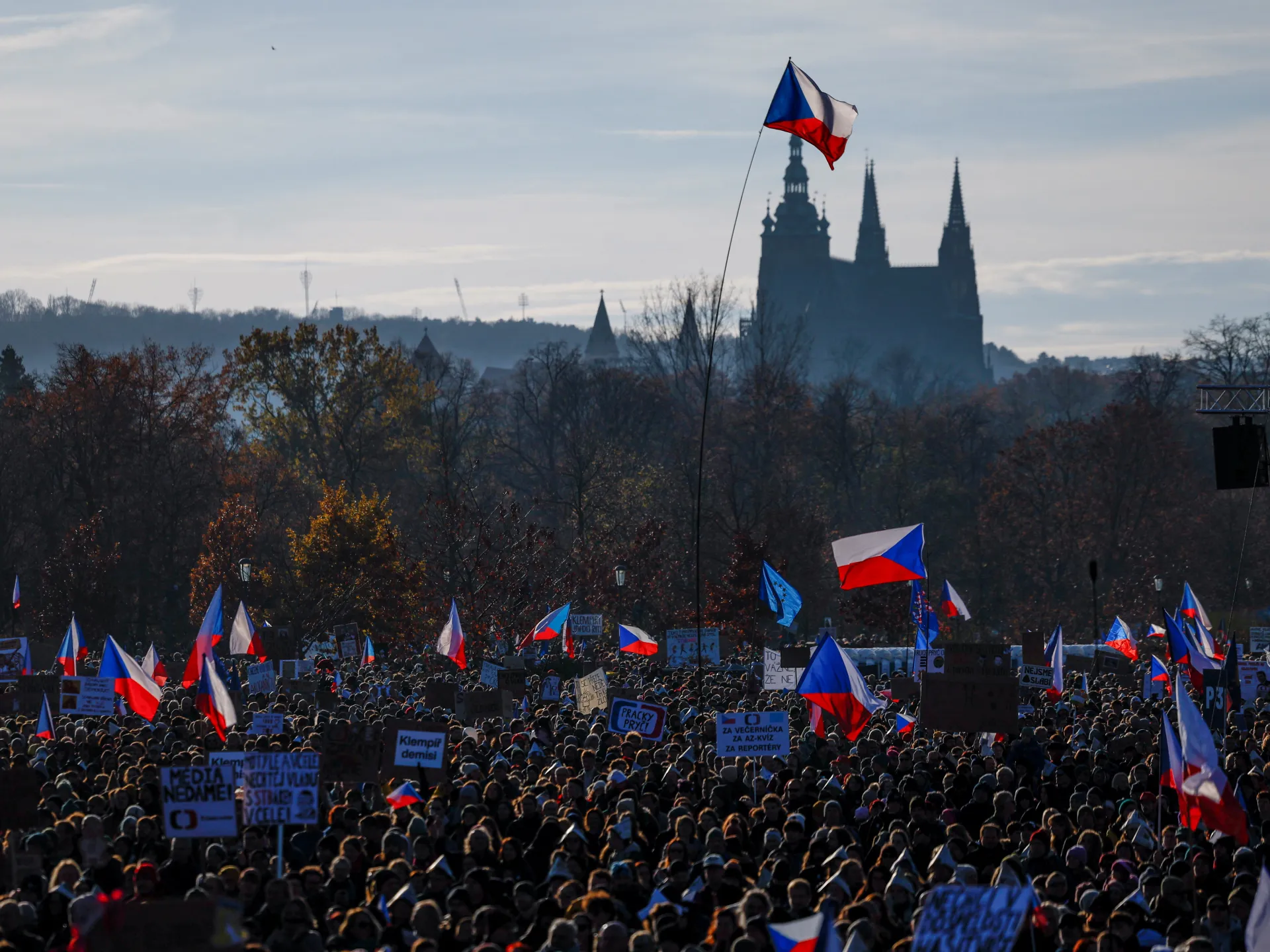
Thousands of demonstrators gathered in the Czech Republic to voice strong opposition to proposed reforms in how state media is financed, signaling mounting public apprehension over press freedom. Crowds assembled in protest against legislative changes that critics caution could compromise the independence of public broadcasting. The demonstrations brought together civic groups, media professionals, and members of the public concerned about potential government overreach.
At the center of the dispute are planned adjustments to the financial framework that underpins the country's public television and radio operations. Critics, civil rights advocates, and independent watchdogs assert that revising current funding structures could inadvertently grant state authorities greater sway over editorial direction and administrative management. The dispute underscores broader concerns that any move diminishing dedicated funding lines could leave journalists vulnerable to political pressure.
Public broadcasters across Central and Western Europe have traditionally relied on dedicated license fees paid directly by households rather than direct allocations from the state budget. This arrangement is widely viewed by media analysts as a critical firewall designed to shield public broadcasters from political retribution or financial leverage by whichever governing coalition holds power. When governments attempt to alter or absorb these funding mechanisms, questions inevitably arise regarding how editorial distance will be maintained.
Protesters marching through Czech streets carried banners and voiced warnings that modifying these revenue channels risks establishing a dangerous precedent for political interference. Opponents argue that if state media outlets become reliant on annual budgetary decisions or government-controlled distribution formulas, future administrations could punish critical reporting by withholding operational resources. Civic leaders speaking at the gatherings emphasized that an autonomous press remains fundamental to sustaining democratic checks and balances.
While demonstrators focused on the risks to journalistic independence, debates over public media funding often emerge from logistical and technological shifts in modern media consumption. Lawmakers and proponents seeking reforms typically argue that traditional funding schemes require modernization as audiences move away from legacy broadcasting toward digital and streaming platforms. However, finding a consensus that balances financial sustainability with airtight protections against political tampering remains an intricate challenge across many European legislatures.
The debate in the Czech Republic unfolds against a backdrop of heightened scrutiny surrounding media autonomy across Central and Eastern Europe. Over the past decade, neighboring democracies have witnessed fierce political clashes regarding the management, editorial posture, and supervisory councils of national broadcasters. These regional developments have made media advocates and the public particularly vigilant regarding even minor shifts in legal or financial safeguards for state media.
Media analysts note that public broadcasters provide vital educational programming, investigative journalism, and comprehensive regional reporting that commercial networks may not prioritize. Ensuring that these institutions operate without the threat of financial retribution is considered paramount by civil society organizations. For many who joined the rallies, preserving the institutional autonomy of national broadcasters is not merely an administrative issue, but an essential defense of democratic accountability.
The substantial turnout at the demonstrations highlighted the level of public resonance the issue has generated beyond parliamentary halls. Participants from diverse backgrounds gathered peacefully to register their dissent, demanding transparent consultations before any legislative modifications take final form. Media associations and watchdog groups have echoed these appeals, urging officials to engage directly with independent experts to evaluate the long-term ramifications of the proposals.
As the legislative process moves forward, the controversy is expected to remain a prominent focal point in national political discourse. Lawmakers are likely to face continuing pressure from civil society and press freedom organizations as committee debates and parliamentary sessions continue. Whether parliament chooses to adjust the contentious provisions or press ahead with the existing proposal will serve as a decisive indicator for the future relationship between state governance and public journalism in the country.
Primary source: Al Jazeera. Newzly rewrites and structures source reporting for clarity; verify critical details at the original.