Thousands Without Power as Storm Austen Batters Southern UK
Storm Austen has left thousands of homes without electricity and paralyzed southern UK transport networks, while forecasters warn of another powerful system approaching northern regions this weekend.
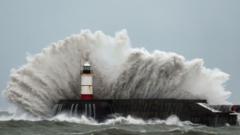
Severe weather swept across the southern United Kingdom on Friday as Storm Austen brought damaging gale-force winds and heavy rain, cutting power to thousands of homes and triggering widespread travel disruption. Coastal communities and transport corridors across southern England and Wales took the brunt of the Atlantic system, with fallen trees and debris blocking key rail routes and roads. Peak gusts topped 75 miles per hour in exposed coastal areas, prompting meteorologists to urge residents to remain indoors during the worst of the storm.
Electricity networks reported substantial damage to overhead infrastructure, leaving more than 16,000 households without electricity at the height of the gales, particularly across Devon, Cornwall, and the Isles of Scilly. Utility crews worked throughout Friday in hazardous conditions to clear fallen branches and reconnect damaged transmission lines. Emergency responders in coastal towns noted localized flooding from surging tides and driving rain, while rough maritime conditions forced the suspension of ferry crossings.
Transport operators faced widespread difficulties as high winds caused speed restrictions, cancellations, and extensive delays on major commuter lines. Train operators, including Southern and South Western Railway, reported that multiple routes were blocked by up toppled trees across tracks. Highways and local roads saw scattered closures, with motorists warned to avoid travel in exposed upland and coastal districts where severe crosswinds made driving hazardous.
The powerful winds also caused visible structural damage to local infrastructure and historic landmarks along the English Channel. Along the coast in East Sussex, sections of Brighton’s historic West Pier collapsed into the sea under the relentless force of battering waves and gale-force gusts. Local authorities confirmed the temporary closure of several public parks, schools, and outdoor facilities across the south as a precaution against falling branches and masonry.
Forecasters noted that Storm Austen deepened rapidly as it tracked across the Atlantic, undergoing explosive cyclogenesis before striking the British Isles. The phenomenon, sometimes described colloquially as a weather bomb, occurs when atmospheric pressure plummets rapidly within a 24-hour period. This rapid intensification unleashed sudden, violent winds across the English Channel, southern Ireland, and parts of northern France.
The UK Met Office issued widespread amber and yellow weather warnings covering large swaths of southern England, central England, and Wales. Forecasters cautioned that flying debris, large waves along coastal promenades, and saturated ground created compounding hazards. The official alerts warned of potential danger to life along coastlines exposed to strong onshore winds and high tides.
Storm Austen marks the arrival of the first major named storm of the current seasonal cycle, signaling a turbulent start to autumn across northwestern Europe. Climate analysts and emergency services have frequently highlighted how saturated soil from successive rainfall events leaves trees and utility grids increasingly vulnerable to high winds. The suddenness of the low-pressure system left little preparation time for maritime and agricultural sectors in the western counties.
The disruption is unlikely to subside quickly, as recovery teams race against the clock to restore essential services before another weather front arrives. Forecasters warn that cleanup efforts across the United Kingdom will be complicated by an incoming system designated as Storm Boelo. With soil already waterlogged and infrastructure strained, secondary impacts from subsequent rainfall and renewed winds could exacerbate localized flooding and travel bottlenecks.
Storm Boelo is forecast to sweep in from the Atlantic over the weekend, bringing another surge of heavy rain and severe gales primarily to Scotland, Northern Ireland, and parts of northern England. The Met Office has already published updated warnings for northern regions, anticipating gusts that could reach up to 80 miles per hour in exposed coastal reaches. Transport agencies and local councils have advised travelers across the UK to monitor regional forecasts and check service updates before embarking on journeys.
Primary source: BBC Science. Newzly rewrites and structures source reporting for clarity; verify critical details at the original.