Three Asian Central Banks Unite to Connect Regulated Stablecoins Across Borders
Central banks in Singapore, Malaysia, and Thailand have expanded the BLOOM initiative to establish shared standards for moving regulated stablecoins and tokenized bank deposits across borders, aiming to slash cross-border transaction frictions.
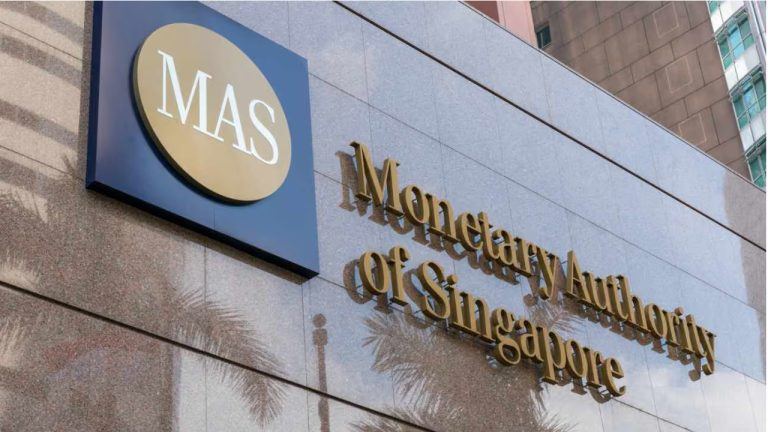
Three prominent Southeast Asian central banks have joined forces under the BLOOM initiative to establish standardized frameworks for moving regulated stablecoins and tokenized digital bank deposits across national borders. The Monetary Authority of Singapore announced that Bank Negara Malaysia and the Bank of Thailand have formally joined the project as policymaker members, significantly widening regional central bank cooperation on digital asset settlement.
The BLOOM initiative, short for Borderless, Liquid, Open, Online, Multi-currency, seeks to reduce the high costs, delays, and structural friction associated with existing cross-border payment rails. By harmonizing regulatory expectations and operational models, the coalition intends to provide financial institutions across participating jurisdictions with a common blueprint for direct digital money transfers. Participating authorities hope this shared infrastructure will eventually supplant legacy clearing bottlenecks with near-instantaneous multi-currency liquidity.
Cross-border settlements have traditionally relied on fragmented correspondent banking networks or bespoke bilateral arrangements between individual institutions. These conventional conduits often involve multiple intermediaries, complex reconciliations, and unpredictable foreign exchange markups. Central banking officials see the expanded multilateral framework as a crucial step toward preventing market fragmentation as commercial institutions increasingly experiment with disparate private blockchain networks.
A central premise of the project is its exclusive focus on regulated digital assets, differentiating it from speculative cryptocurrency markets. Regulators are targeting asset-backed stablecoins issued under clear prudential oversight alongside tokenized commercial bank deposits that maintain a direct link to sovereign fiat currencies. This regulatory boundary ensures that cross-border settlement mechanisms preserve financial stability while adopting the efficiency benefits of distributed ledger technology.
Alongside central bankers, the initiative incorporates dozens of commercial financial institutions, global card networks, and digital asset technology providers. Industry heavyweights including Mastercard, Visa, Circle, Coinbase, and Ripple are participating alongside regional commercial lenders to design real-world interoperability architectures. The collaboration enables market operators to road-test technical integration while central banks define consistent supervisory guardrails.
Technical work streams within the collaborative effort are prioritizing programmable compliance, including automated identity verification, anti-money laundering controls, and sanctions screening. By baking regulatory checks directly into the shared protocol layer, participating authorities aim to preserve strict financial crime safeguards without impeding transaction speed. This automated architecture ensures that digital tokens cannot execute cross-border transfers without meeting the legal standards of every jurisdiction involved.
Southeast Asia has rapidly emerged as a testing ground for digital payment innovations, driven by strong intra-regional trade and substantial cross-border remittance flows. The tripartite regulatory alignment reflects growing regional momentum toward multi-currency wholesale digital settlement platforms that can operate continuously without relying on conventional clearing house schedules. Observers note that Southeast Asian financial authorities have consistently favored coordinated experimentation over fragmented national mandates.
For corporate treasuries and institutional market participants, successful integration could dramatically cut settlement times from days to seconds while eliminating costly foreign exchange intermediaries. Standardized digital liquidity rails could also lower working capital burdens for businesses engaged in trade throughout the region. Faster liquidity turnover and predictable settlement windows could deliver significant cost savings for multinational firms operating across Southeast Asia.
Moving forward, participating central banks and private sector partners will conduct joint technical trials and evaluate shared policy principles to govern cross-border digital transactions. While broad commercial implementation will depend on finalizing comprehensive legal standards and resolving cross-jurisdictional liability questions, the joint project marks a pivotal advance toward an integrated regional digital currency ecosystem. Future test phases are expected to validate settlement stability and liquidity management under real-world market conditions.
Primary source: Bitcoin.com News. Newzly rewrites and structures source reporting for clarity; verify critical details at the original.