Trader Kimchi Faces Rug Pull Allegations After Token Crash on Pump.fun
A newly launched memecoin promoted by popular trader Kimchi surged to a 15 million dollar valuation before crashing 98 percent within minutes, triggering widespread rug pull allegations and questions over account security.
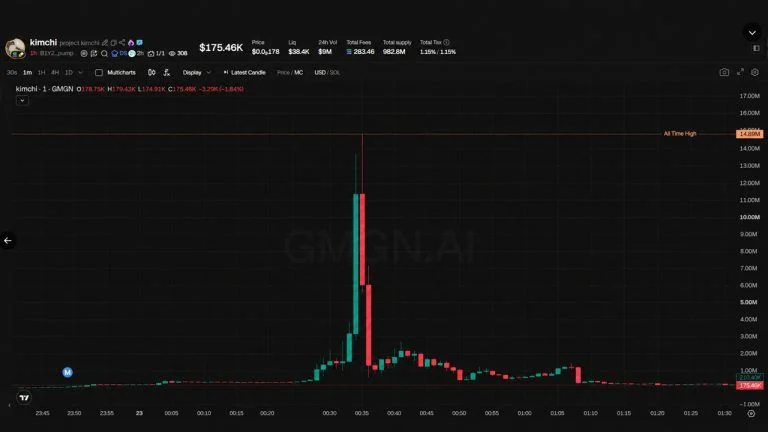
A promotional post from the social media account of prominent cryptocurrency trader Kimchi sent a newly issued memecoin surging to a 15 million dollar market capitalization before the token abruptly collapsed. Within minutes of reaching its peak, the token plunged by more than 98 percent, erasing nearly all of its gains and leaving retail traders with severe financial losses.
The incident unfolded in the early afternoon of October 22 when Kimchi’s account on X published an image featuring a Manhattan sidewalk accompanied by a quick-response code. Scanning the code directed users directly to a newly minted token on the Solana-based launchpad Pump.fun called Project Kimchi.
Momentum accelerated rapidly after Pump.fun co-founder Alon reposted the promotional message to his own followers. The dual endorsement from the platform’s leadership and a high-profile influencer ignited an immediate speculative frenzy, driving millions of dollars of trading volume into the fledgling contract within moments of deployment.
The rally ended just as quickly as it began when the promotional post vanished from Kimchi’s account and Alon removed his repost. The quick-response code was simultaneously deactivated, and liquidity rapidly drained from the token, sending its market capitalization crashing toward a fraction of its peak valuation.
Retail participants who bought into the rally quickly expressed outrage across social media platforms, accusing the organizers of orchestrating a rug pull. Investors demanded accountability and questioned the timing of large sell orders that coincided with the removal of promotional materials.
In the aftermath of the crash, speculation emerged across crypto communities suggesting that Kimchi’s social media account may have been compromised by unauthorized third parties. Observers noted that social media takeovers remain a frequent tactic used by malicious actors to pump fraudulent tokens using trusted industry handles.
However, on-chain analysts and traders voiced skepticism regarding the hack explanation, pointing to the rapid coordination surrounding the token’s rollout. Critics highlighted that the immediate amplification by Pump.fun leadership and the subsequent scrub of social media feeds occurred without prompt clarifying statements from the parties involved.
The controversy follows a high-profile collaboration announced between Pump.fun and Kimchi, who gained prominence in retail trading circles after claiming major profits on memecoins such as TRUMP. The platform had positioned Kimchi as a creative partner to spearhead retail outreach and broaden the launchpad’s mainstream appeal.
The episode highlights persistent risks embedded within the fast-moving memecoin sector, where decentralized launchpads allow anonymous actors to mint and market speculative assets in seconds. The reliance on social media endorsements frequently leaves retail participants exposed to violent price swings, manipulation, and potential security lapses.
Following the incident, Kimchi removed mentions of Pump.fun from his social media profile, and neither party has provided a full forensic accounting of the events. As regulatory and community scrutiny surrounding launchpad platforms intensifies, market participants await formal disclosures regarding whether the incident stemmed from an account breach or coordinated promotional negligence.
Primary source: Bitcoin.com News. Newzly rewrites and structures source reporting for clarity; verify critical details at the original.