Trezor Warns of Compromised Hardware Wallet Linked to Rogue Reseller
Trezor has issued an urgent warning after uncovering a tampered hardware wallet linked to a former reseller, underscoring growing supply-chain risks across the cryptocurrency cold-storage industry.
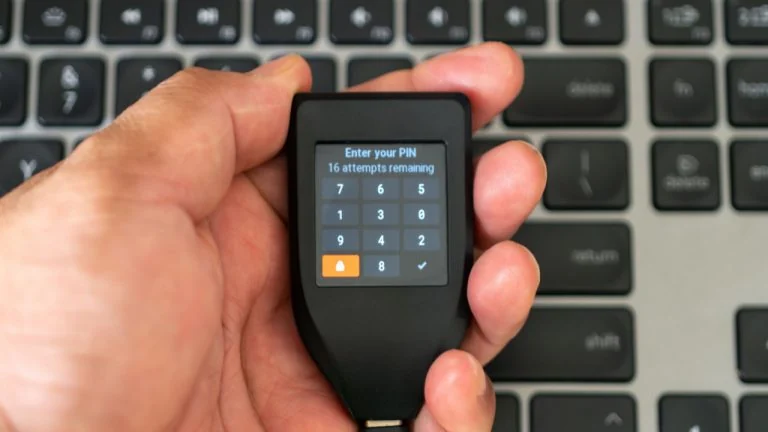
Cryptocurrency hardware wallet manufacturer Trezor has alerted users to a potential supply-chain compromise after receiving a credible report of a modified device distributed by a former authorized reseller. The alert centers on an altered Trezor Safe 5 unit discovered by a customer in Indonesia who bought the hardware through third-party merchant CryptoBilis. Company officials stated that an internal review was launched immediately to assess the scope of the incident.
According to preliminary findings, the suspect device had been physically opened and modified before reaching the end buyer. A rogue microchip assembly, complete with an independent cellular transmission module and antenna, was allegedly installed between the unit's main circuit board and its display. Security analysts believe the malicious implant was engineered to secretly capture sensitive on-screen data, including master recovery seed phrases, and broadcast them over mobile cellular frequencies.
The disclosure lands in the wake of an escalating crisis that has rattled the cold-storage sector following a massive 93 million dollar exploit tied to Ledger devices. Investigators previously traced compromised Ledger hardware back to the same regional distributor network operated by CryptoBilis across Southeast Asian e-commerce marketplaces. That earlier campaign demonstrated how sophisticated threat actors could bypass digital encryption by physically tampering with hardware during warehouse distribution.
Trezor had already formally terminated its partnership with CryptoBilis on October 9 after the retailer was implicated in the initial Ledger security fallout. Despite the swift removal from its approved vendor directory, Trezor acknowledged that tampered units could have circulated to unsuspecting consumers earlier in the year. The hardware maker noted that while it had not yet physically received the reported unit for laboratory examination, the photographic evidence and technical descriptions warranted an urgent consumer advisory.
In its official advisory, Trezor instructed all customers who purchased devices from CryptoBilis on or after March to cease using them immediately. Owners were advised to generate a completely new wallet on a verified, untampered device and migrate all digital assets without delay. The firm emphasized that users must never import their existing recovery seed phrases into a replacement device, as the original mnemonic phrase may already have been intercepted.
The revelation highlights an acute vulnerability in the cryptocurrency ecosystem, where offline cold storage is universally championed as the gold standard of asset protection. While hardware wallets feature tamper-evident packaging and cryptographic firmware verification, supply-chain interdiction attacks physically alter the hardware substrate beneath those defenses. By deploying microscopic cellular components, attackers create a clandestine bypass that standard firmware integrity checks may fail to register.
The breach has triggered broader anxiety across the blockchain industry regarding third-party logistics and regional retail fulfillment networks. Cryptocurrency security specialists have repeatedly warned that maintaining tight custody over specialized hardware becomes exponentially harder once inventory enters decentralized e-commerce channels. Manufacturers now face mounting pressure from institutional investors and retail users alike to overhaul their distribution models and implement stricter point-of-origin verification.
Moving forward, Trezor is conducting a sweeping audit of its remaining global reseller partnerships to minimize the risk of similar vulnerabilities elsewhere. The company stated that it will tighten oversight across regional distribution hubs and explore enhanced physical tamper-proofing mechanisms for future device revisions. Trezor is also coordinating with independent cybersecurity researchers to analyze the implant schematics and publish detailed guidance for spotting unauthorized modifications.
As forensic teams continue investigating the extent of the distributor's inventory tampering, crypto investors are urged to purchase cold-storage hardware strictly through direct manufacturer storefronts. Law enforcement agencies in several jurisdictions are reportedly examining the broader network responsible for targeting crypto retail channels. For hardware wallet providers, restoring consumer confidence will depend on proving that physical custody chains can withstand increasingly sophisticated interdiction tactics.
Primary source: Bitcoin.com News. Newzly rewrites and structures source reporting for clarity; verify critical details at the original.