Trump Backs Jensen Huang Returning as Nvidia CEO, Citing No National Security Risk
President Donald Trump said he sees no national security risk in Jensen Huang returning as Nvidia's chief executive, dismissing concerns following Huang's departure over an affair.
In this piece
President Donald Trump stated that former Nvidia CEO Jensen Huang's past affair did not compromise U.S. national security, indicating he supports Huang…
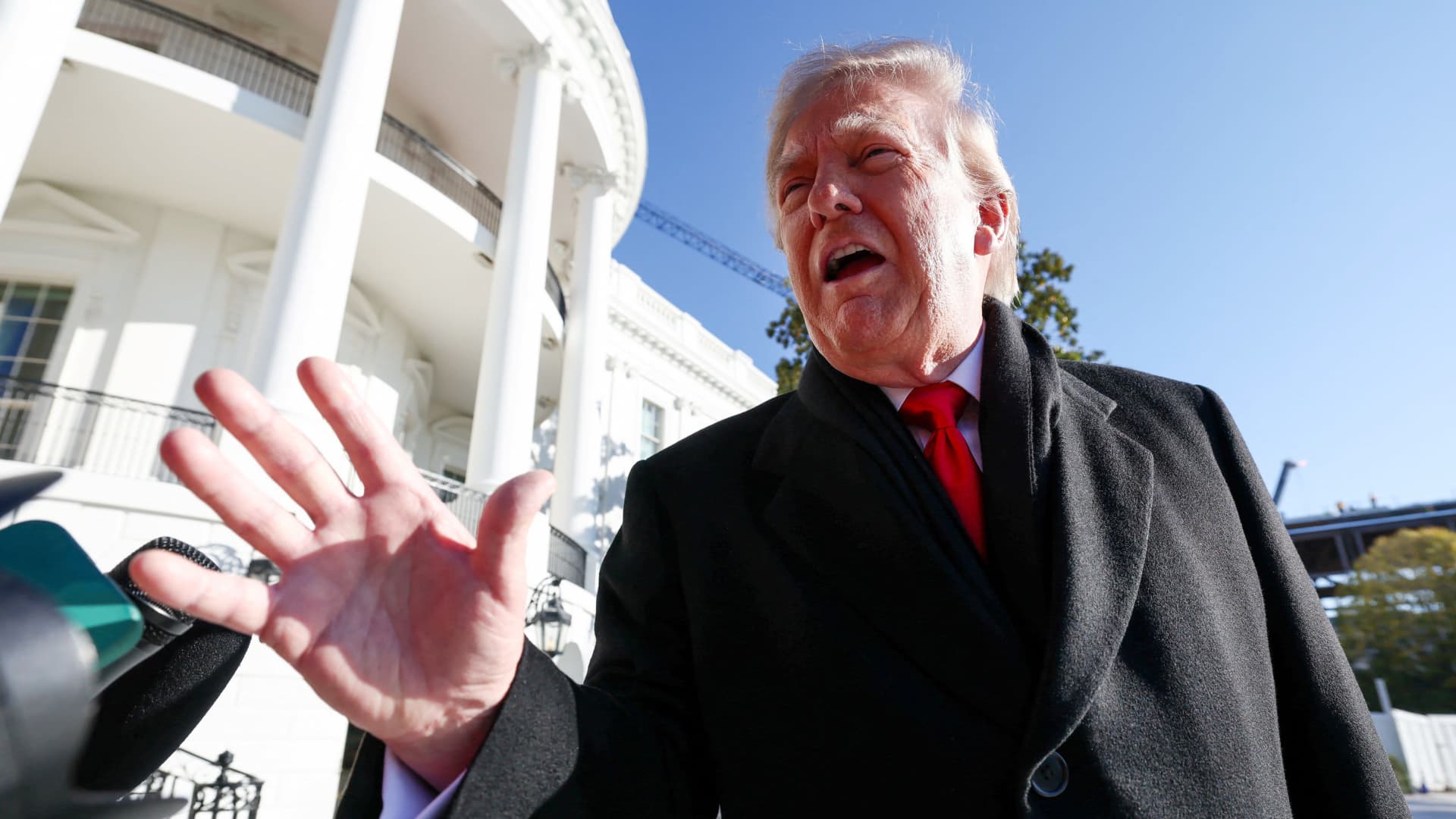
President Donald Trump stated that he is open to Jensen Huang returning to his former role as Nvidia chief executive, telling reporters that an affair involving Huang did not compromise U.S. national security. Speaking to the press ahead of his scheduled departure for a trip across Asia, Trump addressed the public controversy and scrutiny that had recently surrounded the prominent semiconductor leader. The remarks marked the first high-level federal response to questions regarding the circumstances surrounding Huang's departure from the chipmaker.
The president's comments directly confront the central question of whether personal conduct within the executive leadership of critical technology firms could intersect with federal security interests. By explicitly dismissing national security risks in Huang's case, Trump signaled that the administration does not view the controversy as an impediment to Huang resuming leadership at the company. His statement effectively softens concerns that federal authorities would seek to challenge or scrutinize any potential reappointment.
Scrutiny around the executive initially intensified after Huang stepped down from his position at Nvidia following disclosures regarding an affair. The situation quickly prompted public debate over whether sensitive corporate matters, proprietary information, or critical national technological capabilities might have been compromised during the incident. Observers had questioned whether government oversight bodies would review the matter given Nvidia's critical role in the semiconductor supply chain.
Nvidia occupies a foundational position in global technology infrastructure, serving as the dominant designer of advanced processors and systems powering modern artificial intelligence, high-performance computing, and enterprise data centers. Because advanced microelectronics are widely regarded as vital to American technological competitiveness and defense resilience, executive developments at major domestic chipmakers regularly draw close government attention. Any instability at the highest levels of the company naturally reverberates across both the technology sector and national policy discussions.
National security assessments involving corporate leaders typically focus on whether sensitive research, proprietary commercial secrets, or critical supply chain dependencies could be exposed to outside pressure. Trump’s direct assertion that no security breach occurred offers significant political clarity at a moment when technology leadership remains closely watched by federal authorities. The clear dismissal indicates that the administration sees the matter as an internal corporate affair rather than a state vulnerability.
For Nvidia and the broader semiconductor ecosystem, the public posture of the White House often carries substantial weight in steering regulatory oversight and enterprise stability. While corporate boards retain independent authority over governance and executive hiring decisions, the absence of an executive branch security objection removes what could have been a formidable regulatory obstacle. Market participants have closely monitored whether political headwinds would hinder the company's strategic leadership trajectory.
Trump delivered his remarks just before boarding his flight for an official tour of Asia, a region that serves as the epicentre of global semiconductor assembly, packaging, and manufacturing partnerships. The timing and setting of the comments highlight how deeply personal tech leadership matters have become intertwined with international trade, geopolitical diplomacy, and cross-border tech supply chains. Global technology partners frequently watch statements made during such diplomatic trips for signals about American tech policy.
Whether Nvidia's board of directors intends to reinstall Huang remains uncertain, as the company has not publicly confirmed any prospective changes to its executive structure. Furthermore, representatives for Huang and Nvidia have not issued formal responses to the president's statements regarding a potential reinstatement. For now, Trump’s explicit clearance leaves the ultimate decision regarding Huang's executive future entirely within the private jurisdiction of the company's governing leadership.
Primary source: CNBC Top News. Newzly rewrites and structures source reporting for clarity; verify critical details at the original.