Trump Claims Putin Wants Peace in Ukraine Even as Moscow Vows to Fight
President Donald Trump told European allies that Vladimir Putin is ready to settle the war in Ukraine, but the Russian leader swiftly contradicted him by vowing fierce military retaliation and rejecting ceasefire talks.
In this piece
President Donald Trump told European leaders that Russian President Vladimir Putin is eager to negotiate an end to the war in Ukraine. However, Putin quickly…
U.S. President Donald Trump told European leaders and Ukrainian President Volodymyr Zelensky that Russian President Vladimir Putin is eager to reach a peace agreement to end the war in Ukraine. The assertion, delivered during a virtual diplomatic session, stood in sharp contrast to Moscow's public posture as Putin reaffirmed his commitment to pursuing military objectives.
Speaking to allies following high-profile diplomatic engagements in Asia, Trump claimed that the Russian leader was weary of the protracted conflict and now willing to accept compromise terms previously deemed unacceptable. Trump urged European governments to embrace a negotiated settlement, arguing that winding down Western military and financial assistance would allow European nations to redirect resources toward domestic priorities.
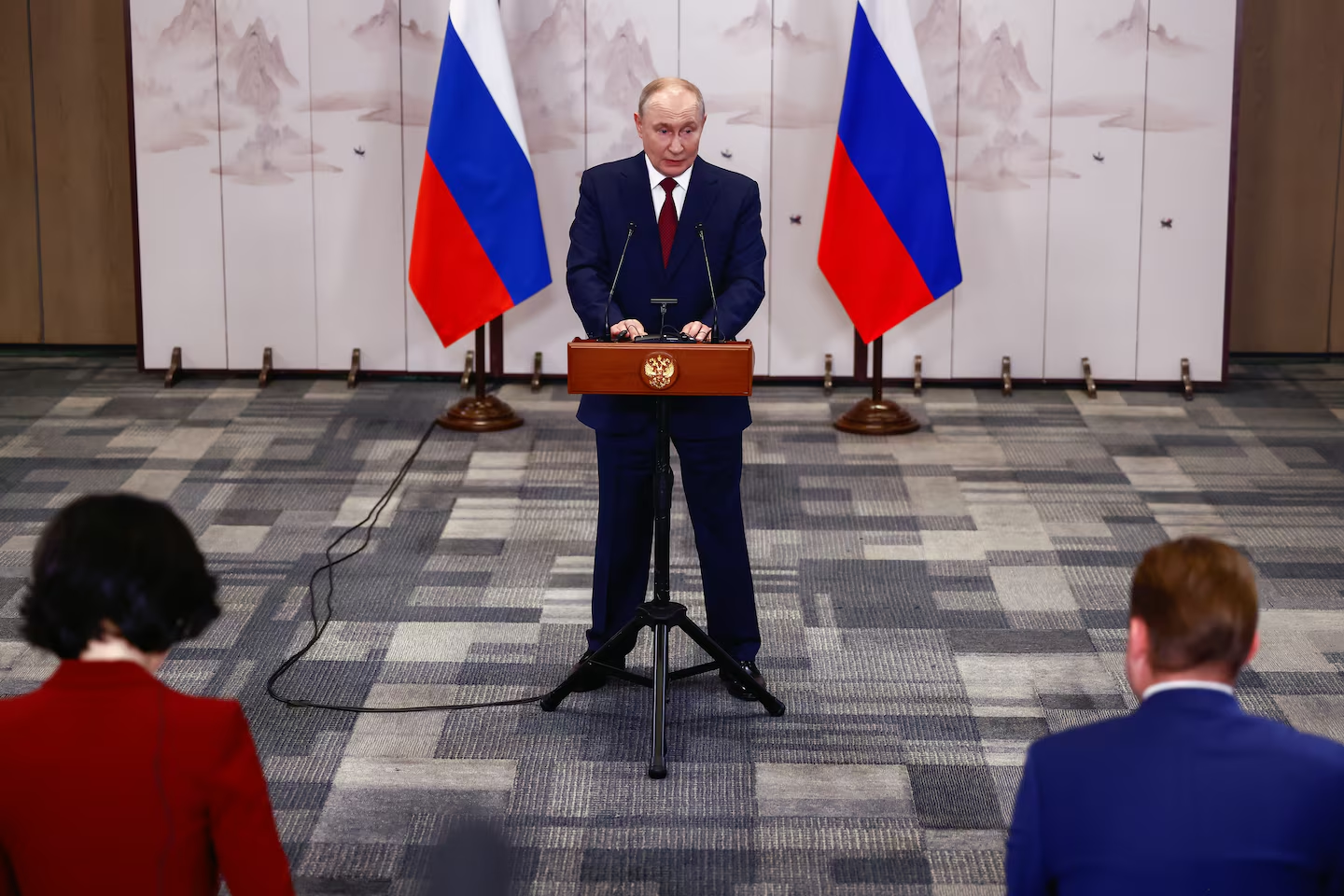
Yet even as Washington promoted the prospect of imminent negotiations, Putin presented a decidedly defiant stance in comments to reporters in Shenzhen, China. The Russian president explicitly dismissed the possibility of resuming discussions on limited ceasefire arrangements, including proposals to safeguard energy facilities and commercial shipping in the Black Sea.
Putin pointed to recent Ukrainian strikes on the strategic Kerch Bridge linking mainland Russia to the occupied Crimean peninsula as justification for hardening his stance. Vowing decisive military retaliation rather than diplomatic compromise, the Kremlin leader indicated that cross-border attacks had effectively derailed nascent indirect talks mediated by international partners.
Moscow underscored that aggressive rhetoric within hours by unleashing waves of missile and drone strikes against Kyiv and other Ukrainian urban centers. The bombardments inflicted severe damage on civilian energy infrastructure and caused casualties, illustrating that Russia remains actively committed to escalating combat operations on the ground.
The stark contradiction between Trump's optimistic assessment and Putin's escalatory actions has intensified anxiety across European capitals and in Kyiv. Ukrainian officials have consistently cautioned that Moscow uses peace overtures as tactical pauses to regroup forces, warning Western partners against accepting security arrangements that compromise Ukrainian sovereignty or territorial integrity.
European leaders participating in the conference call echoed those concerns, reiterating that any genuine peace framework must be anchored by verifiable security guarantees rather than verbal assurances. Officials in Brussels and Eastern European capitals have emphasized that reducing defense assistance prematurely could leave Ukraine vulnerable to renewed Russian territorial advances.
The divergent messaging underscores the deepening divide over how Western powers should handle the war's endgame. While Trump has repeatedly pledged to broker a swift end to the fighting through direct personal diplomacy, critics and defense analysts warn that overstating Moscow's willingness to make concessions risks undermining allied unity and weakening Kyiv's leverage at the negotiating table.
Looking ahead, international mediators face a steep challenge in bridging the gap between Trump's push for rapid talks and Putin's uncompromising operational goals. With Ukrainian forces continuing targeted strikes against Russian logistical hubs and Moscow pressing ahead with sustained aerial assaults, the prospects for a viable diplomatic breakthrough remain remote as both sides brace for protracted fighting.
Primary source: Google News Washington. Newzly rewrites and structures source reporting for clarity; verify critical details at the original.