Trump Demands Investigation Into Major Third-Quarter GDP Revision
President Donald Trump called for an immediate probe into third-quarter gross domestic product data on Thursday, labeling a massive upward revision a record-setting error in economic reporting.
In this piece
President Donald Trump demanded an immediate investigation on Thursday after third-quarter gross domestic product figures received a massive revision higher.…
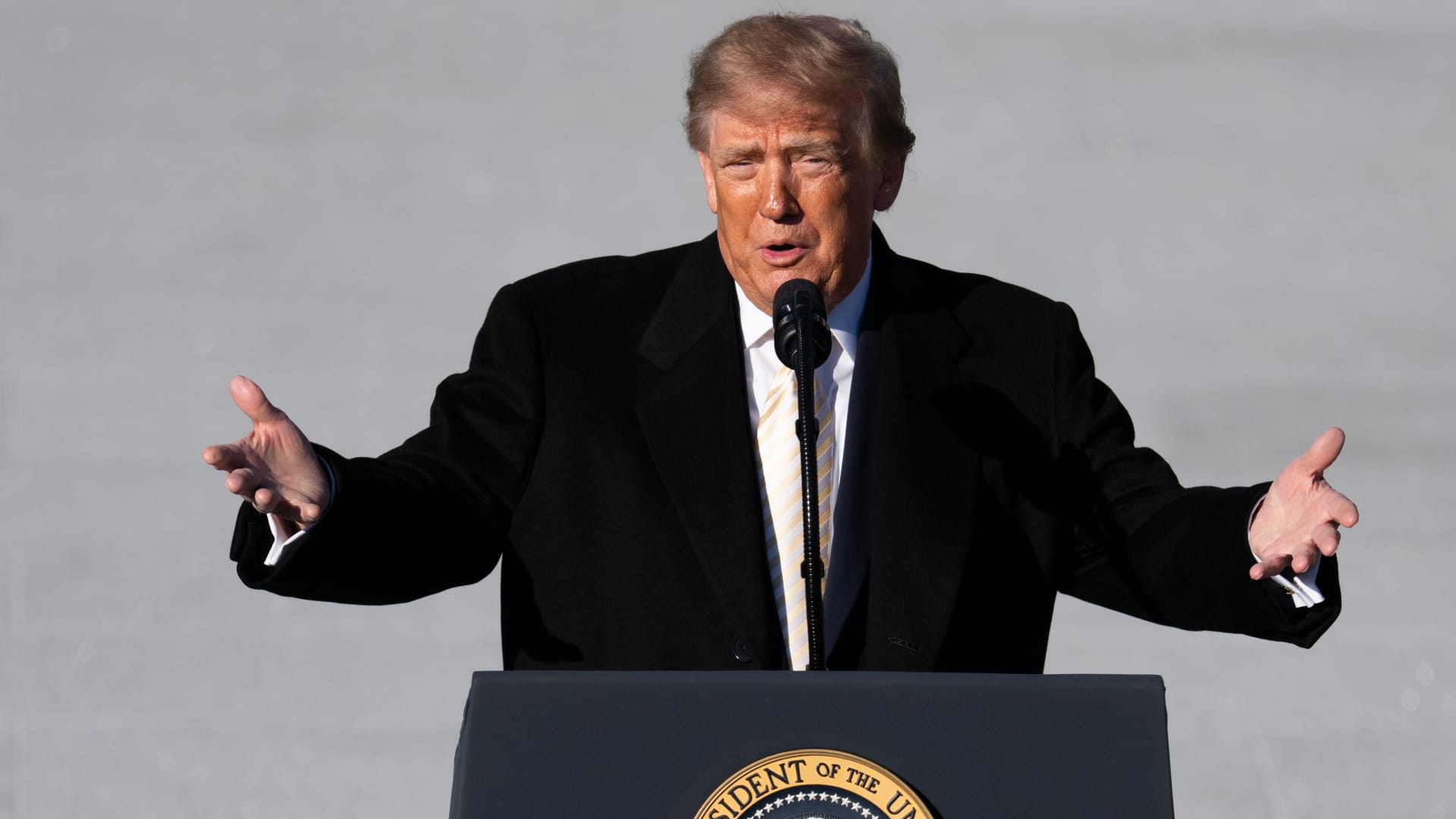
According to a report by CNBC, President Donald Trump called on Thursday for an immediate investigation into what he characterized as a record-setting error in official economic statistics. Trump publicly disputed the latest gross domestic product figures after third-quarter growth calculations received a massive revision higher. He insisted that such a large adjustment raised serious questions regarding the reliability of the government's economic measurement process.
The president asserted that the significant upward adjustment was an unacceptable mistake rather than a standard statistical update. In his public statements, Trump argued that the scale of the change warranted formal scrutiny, claiming that the development should be immediately investigated. His remarks quickly sparked widespread discussion among economic observers and market analysts following the release.
The dispute centers on third-quarter gross domestic product data, which measures the total monetary value of all goods and services produced across the nation. The government's latest revision sharply upgraded earlier estimates, indicating that economic output expanded at a much stronger clip than initially published. Trump, however, rejected the explanation of routine statistical adjustments, framing the large change as a historic inaccuracy.
Standard macroeconomic reporting routinely incorporates multiple rounds of adjustments as more complete data becomes available over time. Initial gross domestic product calculations rely on preliminary estimates and sampled figures, which are later updated when comprehensive tax receipts, international trade balances, and enterprise revenue surveys are finalized. Revisions occur across quarters, though the magnitude of individual changes can vary widely depending on data collection conditions.
A public demand for an inquiry into national economic data represents an uncommon challenge to institutional statistical reporting. Federal macroeconomic data releases serve as foundational benchmarks for commercial enterprises, institutional investors, and global financial markets. Any uncertainty surrounding the credibility of official numbers has the potential to complicate economic forecasting and business planning.
Substantial adjustments to gross domestic product can exert a direct impact on national monetary policy and financial market expectations. Stronger headline growth numbers can alter forecasts regarding inflation pressures, borrowing costs, and interest rate trajectories determined by central bankers. Financial analysts and corporate leaders frequently recalibrate their risk models and capital expenditure plans when output data shifts notably.
The dispute also carries broader political ramifications, as macroeconomic performance metrics often define public debates over fiscal governance and national prosperity. Gross domestic product figures remain one of the most prominent scorecards for evaluating presidential administrations and prevailing economic policies. Disagreements over the accuracy of these figures highlight the intense focus placed on top-line indicators by political leadership.
Comprehensive technical documentation regarding the exact underlying factors that prompted the sharp third-quarter revision was not immediately detailed alongside the president's statements. Economic researchers typically point out that large post-pandemic data fluctuations, supply chain adjustments, and response rates have occasionally introduced wider variances in initial reporting. Whether the current upward revision stemmed from newly received private sector surveys or altered seasonal adjustments remains subject to further statistical review.
Looking ahead, it remains uncertain whether formal inquiries will be initiated by federal oversight bodies or congressional committees in response to the president's demands. Market participants and economic institutions will likely watch for any additional commentary from government data agencies clarifying the precise calculations behind the third-quarter numbers. For now, the debate underscores ongoing friction regarding the measurement and interpretation of complex modern economic indicators.
Primary source: CNBC Top News. Newzly rewrites and structures source reporting for clarity; verify critical details at the original.