Trump, Putin, and Xi Release Joint Peace Declaration After Rare Trilateral Summit
Meeting in Shenzhen for a rare trilateral summit, Donald Trump, Vladimir Putin, and Xi Jinping signed a joint peace declaration reaffirming nuclear deterrence, though analysts noted limited progress on underlying geopolitical disputes.
In this piece
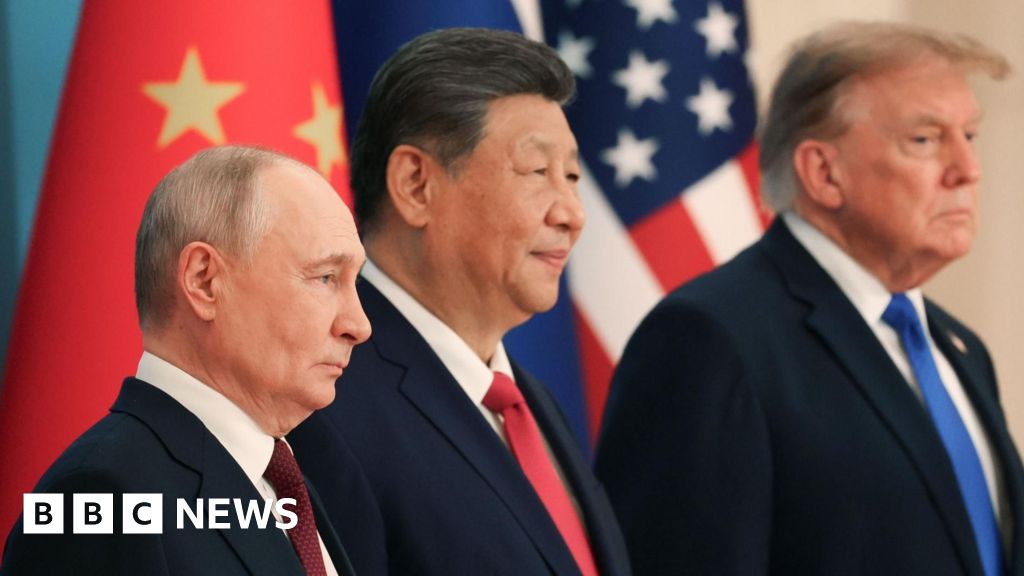
U.S. President Donald Trump, Russian President Vladimir Putin, and Chinese President Xi Jinping signed a joint peace declaration following a landmark trilateral…
U.S. President Donald Trump, Russian President Vladimir Putin, and Chinese President Xi Jinping convened for a rare trilateral summit in Shenzhen, China, culminating in a joint statement dubbed a peace declaration. According to reports from the BBC and CBS News, the leaders representing the world's leading nuclear powers held approximately 90 minutes of closed-door discussions before releasing the document. The landmark meeting marked the first time the three heads of state have sat down together in such a format.
The formal text, designated the China-Russia-U.S. Heads of State Declaration toward Peace, reaffirmed a long-standing diplomatic principle that a nuclear war cannot be won and must never be fought. The declaration urged continued dialogue among the major powers to mitigate strategic risks and preserve global stability. In addition, the text expressed mutual interest in exploring institutional reforms at the United Nations and expanding international petroleum supply.
The joint declaration also addressed international legal bodies, stating that institutions such as the International Criminal Court must not abuse their jurisdiction. This language reflects recurring objections from Moscow and Washington regarding outside legal oversight of their officials and state sovereignty. Beijing has likewise consistently emphasized national jurisdiction and state immunity in multilateral affairs.
The summit carried significant diplomatic spectacle, highlighted by elaborate ceremonial welcomes and public expressions of goodwill between the delegations. President Trump praised the host nation enthusiastically, telling reporters that he would rate China a twelve out of ten for its staging of the event. While bilateral and trilateral engagements were presented cordially, the public remarks offered few details on the specific mechanics of future cooperation.
Despite the high-profile staging and symbolic declaration, network analysts and foreign policy observers noted that the gathering appeared to achieve little substantive breakthrough on contentious geopolitical divisions. CBS News reported that while the talks were historic in appearance, deep-seated disagreements over trade policy, technological competition, and territorial security remained unaddressed. Diplomats acknowledged that releasing a joint statement was an accomplishment in itself, yet tangible policy shifts were absent from the text.
The meeting generated immediate unease across European capitals and in Ukraine, where officials closely watched for signs of unilateral agreements among the superpowers. Allied leaders voiced apprehension that a trilateral framework could resemble historical great-power bargaining, potentially bypassing smaller nations directly impacted by regional conflicts. Western diplomats emphasized that enduring security arrangements cannot be settled without comprehensive multilateral consultation.
The summit occurred against a backdrop of prolonged friction across multiple strategic theaters, including the ongoing war in Eastern Europe and rivalry in the Indo-Pacific. Relations between Washington, Beijing, and Moscow have been characterized by mutual economic sanctions, naval posturing, and competing diplomatic blocs. Bringing all three leaders into one room highlighted an effort to establish direct communication channels at the highest level, even as structural tensions persist.
The declaration's emphasis on stabilizing petroleum production and broader commodity markets underscored common concerns regarding global economic uncertainty. Energy markets have experienced volatility due to supply chain realignments, sanctions regimes, and fluctuating international demand. By citing energy stability, the leaders signaled an awareness that ongoing international disruptions threaten their domestic economic agendas.
Moving forward, international observers and diplomatic sources will be scrutinizing whether working-level negotiations translate the Shenzhen declaration into concrete policy actions. While the joint document outlines shared aspirations for dialogue and risk reduction, substantial hurdles remain before any formal treaties or economic compacts can materialize. Global partners intend to press Washington, Beijing, and Moscow for clarity on how this trilateral engagement will impact existing treaties, alliance obligations, and unresolved regional conflicts.
Primary source: Google News U.S.. Newzly rewrites and structures source reporting for clarity; verify critical details at the original.