Trump Says Pardoning Nvidia CEO Jensen Huang Remains an Option
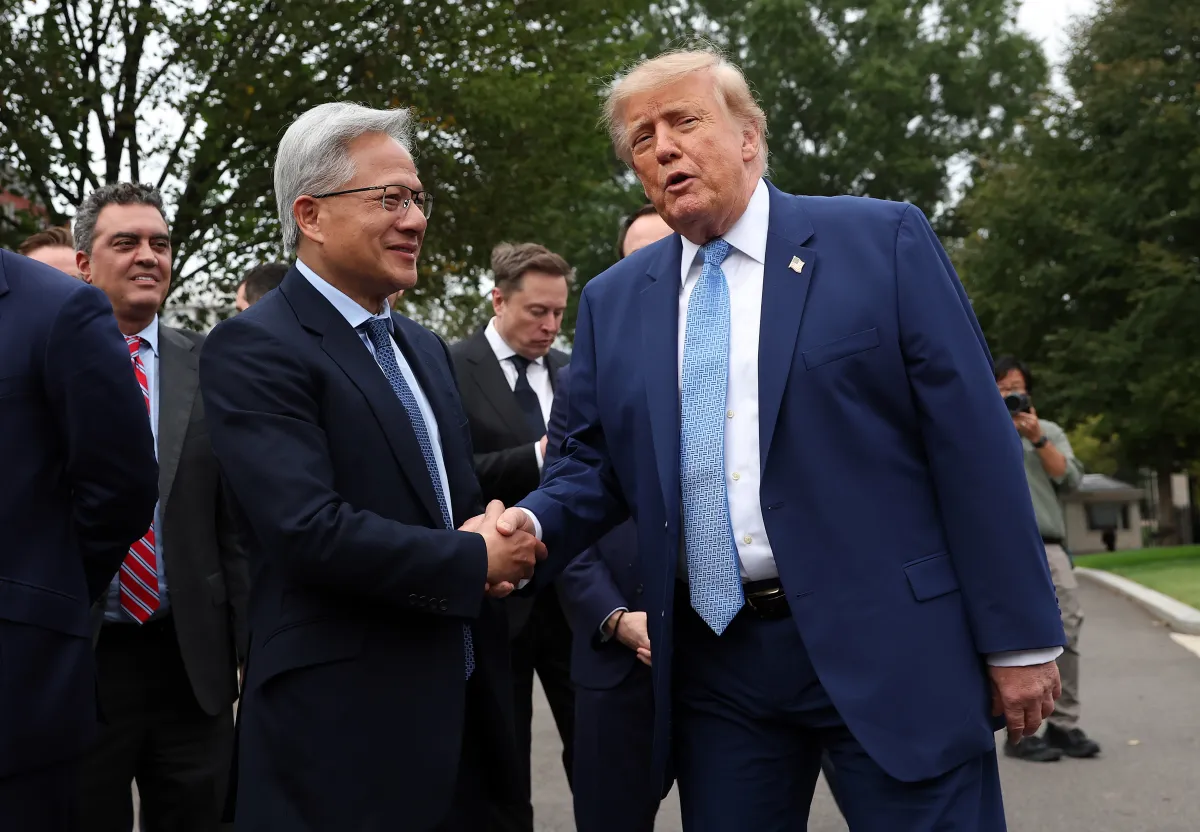
President Donald Trump told the New York Post that pardoning reinstated Nvidia CEO Jensen Huang remains an option amid questions over Huang's ties to an alleged Chinese intelligence asset, though he expects it will not be needed.
In this piece
President Donald Trump stated that pardoning Nvidia CEO Jensen Huang is an option, though he does not believe it will be necessary. Huang faces scrutiny over…
President Donald Trump said granting a presidential pardon to Nvidia chief executive Jensen Huang remains an option, though he asserted he does not believe clemency will be necessary, according to an interview with the New York Post reported by TechCrunch. Trump told the publication that he maintains confidence in Huang, whom he publicly supported during a recent corporate shakeup at the artificial intelligence chip giant. The remarks come as federal officials and congressional lawmakers examine Huang's past interactions with an alleged Chinese intelligence asset.
Trump indicated that Huang should be completely transparent when addressing congressional committees looking into the matter. The president stated that he wants the semiconductor executive to tell the truth rather than invoke his Fifth Amendment rights against self-incrimination during anticipated questioning on Capitol Hill. While emphasizing that a pardon could be considered if circumstances warranted, Trump maintained that the executive has done nothing that would require formal legal relief.
The political commentary follows weeks of intense scrutiny surrounding Huang's personal ties to Alice Huang, a tech executive who formerly worked at Singapore-based firm Megaspeed. According to intelligence memos and reports, Alice Huang was allegedly targeted by China's Ministry of State Security to establish a relationship with Nvidia's leadership. The two executives, who share a surname but are not related, reportedly had a personal relationship that drew the attention of national security officials.
U.S. national security agencies have focused attention on Megaspeed amid allegations that the company took part in diverting restricted Nvidia graphics processing units into China. Under strict export restrictions enacted in recent years, advanced processors capable of training state-of-the-art artificial intelligence models are barred from shipment to Chinese entities. Investigators have been evaluating whether the relationship between the two executives created vulnerabilities or compromised sensitive compliance standards.
The controversy previously led to a leadership crisis at Nvidia, during which Huang briefly stepped down from his role as chief executive. Nvidia's board of directors initiated an independent review into the executive's conduct and the company's internal safeguards. The sudden turmoil shook Silicon Valley and raised questions about stability at the world's most valuable semiconductor manufacturer, whose graphics hardware powers major global AI infrastructure.
Huang's departure proved short-lived following vocal political intervention from Trump and members of his administration, who advocated for his prompt return to Nvidia. The White House applied significant public pressure on Nvidia's board of directors, arguing that Huang's continued leadership was vital to maintaining American dominance in artificial intelligence development. Following the administration's outreach, the board reinstated Huang to his executive post.
The intersection of presidential rhetoric, national security inquiries, and corporate governance underscores the extraordinary geopolitical stakes surrounding the artificial intelligence sector. Nvidia occupies a central role in the strategic competition between the United States and China over semiconductor supply chains and computing supremacy. Analysts note that any ongoing legal exposure for Nvidia's chief could complicate the company's regulatory compliance and foreign trade relations.
Lawmakers on Capitol Hill continue to demand deeper answers despite Trump's public defense of the chipmaker's leadership. Key congressional committee leaders have sought detailed briefings from intelligence agencies and corporate leadership regarding whether any export protocols were circumvented. Bipartisan members of Congress have signaled that national security compliance across the semiconductor industry remains an active investigative priority.
Nvidia has not indicated that any formal criminal charges have been filed against Huang, and company representatives have reiterated their commitment to federal export laws. Observers expect congressional hearings to proceed in the coming months, where lawmakers will assess both corporate supply chain vigilance and intelligence agency findings. Whether Trump's floated pardon ever becomes relevant will depend largely on the findings of those ongoing federal reviews.
Primary source: TechCrunch. Newzly rewrites and structures source reporting for clarity; verify critical details at the original.