Trump signs order aimed at blocking future presidents from altering the Oval Office
The White House move follows a run of major Oval Office decor changes and landmark construction projects across Washington, according to a BBC report on the order.
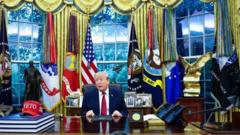
President Trump has signed an order meant to prevent future presidents from changing the Oval Office, the BBC reported. The account links the directive to a period in which Trump has already made a series of big changes to the room’s decor and launched landmark construction projects across Washington.
The BBC’s report is brief on the order’s legal mechanics. It does not, in the material available here, quote the text, name a signing ceremony, or spell out how a successor would be constrained. What it does establish is the stated aim: locking the Oval Office against later alteration by presidents who follow him.
The Oval Office is the working office of the U.S. president and one of the most photographed rooms in American public life. Incoming administrations have long treated furnishings, art, and color as theirs to reset. An order framed as binding on later presidents would sit outside that customary practice, which is why the BBC’s account is notable even without further detail.
According to the report, the order arrives after Trump’s own substantial reworking of the office’s appearance. The story describes those changes as a series of big decor shifts rather than a single adjustment. It does not inventory rugs, paintings, or other objects, so the scale is clear in the BBC’s wording while the inventory is not.
The same report places the directive in a wider building program. It says Trump has launched landmark construction projects across Washington. Those projects are not named or costed in the material at hand, and this account does not add locations or budgets that the source does not provide.
Why the order matters depends on what it can actually do. A presidential order can direct the current executive branch. Whether it can stop a later president from redecorating a room, or from revising White House spaces, is a separate question the BBC summary does not resolve. Successors have historically set their own look for the office, and they also have tools to revise or replace earlier directives.
The timing, as framed by the BBC, is sequential rather than abstract. Decor changes and Washington construction came first. The order follows those moves and is presented as an effort to keep the Oval Office from being changed again by someone else.
For readers, the immediate news is the existence and stated purpose of the order, not a catalog of design choices. Claims about specific furnishings, project names, dollar figures, or legal citations would go beyond what this report supplies. The BBC is the primary account of the signing and of the link to decor and construction.
Politically, the story joins two threads already visible in the report: a personalized Oval Office and a construction push in the capital. An attempt to freeze the office’s look would extend those threads past the current term, at least on paper. How courts, Congress, or a future White House would treat that attempt is not addressed in the source.
What happens next is likely to turn on the order’s text and on whether later administrations accept it. The BBC report establishes that Trump signed a measure aimed at preventing future presidents from changing the Oval Office after his own decor changes and landmark Washington projects. Further clarity would require the directive itself and any official explanation that accompanies it.
Primary source: BBC World. Newzly rewrites and structures source reporting for clarity; verify critical details at the original.